
Description
Symptoms
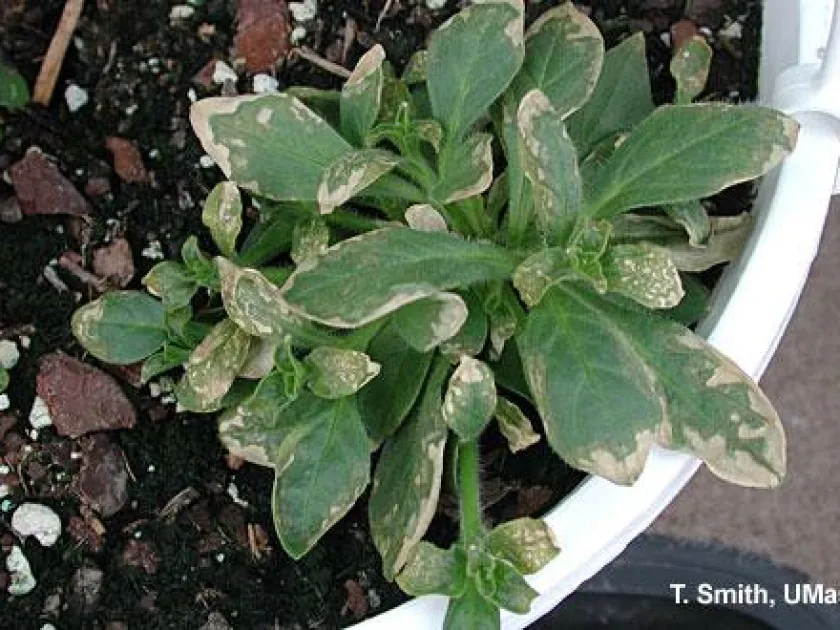
External signs of cold injury manifest through changes in coloration and turgor of vegetative organs. Chlorosis (yellowing of leaves) is common, which eventually transitions into necrosis (tissue death), turning brown or nearly black in color.
In corn under cold stress, anthocyanin pigmentation is often observed; leaves acquire a reddish-purple hue due to the accumulation of pigments when photosynthesis is disrupted. Leaf rolling and a significant slowdown in growth rates are also characteristic.
Watery spots may appear on stems and petioles, which subsequently dry out and become thin. In some cases, plants exhibit wilting despite moist soil conditions, which is linked to restricted water uptake by the roots at low temperatures.
Root systems cease active growth under cold influence and may turn brownish. This leads to nutrient deficiency, even if nutrients are abundant in the soil, because the root metabolism is suppressed.
- Yellowing or reddish discoloration (anthocyanosis) of leaves.
- Development of watery spots followed by tissue necrosis.
- Delayed growth and development of seedlings.
- Leaf curling and loss of turgor.
- Death of the growth point during severe frosts.
Pathogen
Cold injury is not an infectious disease caused by a biological pathogen such as a fungus, bacteria, or virus. It is a non-parasitic (physiological) disorder caused by an abiotic stress factor — exposure to temperatures below the specific biological minimum of a given crop.
The mechanism involves the disruption of metabolic processes and the physical-chemical state of the cell cytoplasm. At low temperatures, cytoplasm viscosity increases, slowing down enzymatic processes and metabolic reactions. Cell membrane destabilization occurs, leading to loss of integrity and leakage of cellular content into intercellular spaces.
A particular danger is the formation of ice in intercellular spaces. Extracellular freezing causes protoplast dehydration, as water leaves the cells to compensate for the decrease in moisture potential outside. This leads to mechanical damage to cellular structures.
Crops most sensitive to cold include corn, tomatoes, cucumbers, and other warm-season plants. For corn, temperatures near 0 °C are considered critical, especially during the early stages of seed germination and seedling emergence, when tissues are not yet adapted.
The scale of physiological damage depends on the species' resistance and the plant's growth stage. Damage to critical growth points, such as the growing tip, can lead to complete plant death, even if the above-ground parts appear relatively healthy.
Conditions for development
The primary condition for cold injury is a sudden drop in air or soil temperature below the critical threshold. For warm-season crops like corn, damage can occur even at temperatures slightly above freezing if accompanied by high humidity or prolonged periods of coolness.
The rate of cooling plays a significant role. Sudden fluctuations (e.g., a sharp cold snap following a warm period) cause more severe damage than gradual cooling because plants do not have time to go through the hardening process, which is necessary to adjust their metabolism for increased cold tolerance.
Soil conditions are also critical. In moist, compacted soils, cold injury is more pronounced because such soil has lower heat capacity and is prone to deeper freezing. The presence of crop residues on the surface can sometimes facilitate cold retention.
Topography influences stress development. In low-lying areas and enclosed basins, cold air accumulates like "lakes," leading to more intense damage compared to elevated areas with better air circulation.
The duration of exposure to low temperatures determines the degree of irreversibility of the processes. Short-term frost may cause temporary inhibition, whereas prolonged periods of cold lead to crop failure and the need for reseeding.
Why it matters
The harmfulness of cold injury is expressed in a sharp decline in crop productivity. In corn, this manifests as reduced plant population density due to sparse emergence, which directly lowers yield potential in the very early stages of vegetation.
Physiological stress depletes the plant's internal resources, making it more vulnerable to secondary infections. Fungal diseases, such as root rots and seed molding, actively develop on cold-weakened tissues, which would not cause significant damage under normal conditions.
Developmental delays caused by cold shock shift the timing of flowering and maturity phases. This can lead to grain filling occurring under unfavorable conditions or reaching maturity too late to avoid the first autumn frosts, which critically reduces grain quality.
In cases of severe growth point damage, complete death of the main shoot occurs. The plant may attempt to recover through tillering, but such shoots generally provide extremely low yields or fail to form a full ear.
Economic losses include costs for reseeding, loss of yield, and expenditures for additional growth-stimulating measures. Globally, this is one of the main factors of yield instability for corn in temperate regions.
Protection
Prevention begins with selecting locally adapted hybrids with high germination energy and cold tolerance. Using seeds treated with high-quality fungicides helps protect them from soil-borne pathogens during the period when the plant is weakened by low temperatures.
Optimization of planting dates is a key agronomic technique. Corn should not be sown into cold soil; targeting soil temperatures of 10–12 °C at the seeding depth ensures fast and uniform germination.
Applying anti-stress products containing amino acids and growth regulators after a cold snap helps plants restore metabolic processes more quickly. Foliar application of micronutrients helps strengthen cell walls and improves adaptation to adverse conditions.
Agronomic measures include proper soil tillage to create an optimal structure that facilitates better warming of the top layer. Avoid creating deep furrows and excessive compaction, which can contribute to the stagnation of cold air.
Monitoring weather forecasts allows for preventive measures, such as using overhead irrigation systems (frost protection irrigation) to release heat through water crystallization, which helps protect plant tissues from reaching critical temperatures.
Pathogens and affected parts
Affects crops · 1
Discussion
No discussions yet — be the first.