
Coffee wilt disease
Fusarium xylarioides
The disease is caused by the fungus Fusarium xylarioides (teleomorph: Gibberella xylarioides), a destructive pathogen affecting coffee crops.
What the section contains
Coffee wilt disease
It acts as a vascular pathogen, invading the xylem tissue of the coffee tree and systematically disrupting the movement of water and nutrients.
The fungus produces spores (conidia) and chlamydospores that allow it to survive in soil for extended periods, making it highly persistent.
Infection usually occurs through root wounds, pruning sites, or naturally occurring cracks in the bark of the coffee stem.
As the fungal hyphae colonize the vessels, they release phytotoxins that trigger a wilting response, ultimately leading to plant death.
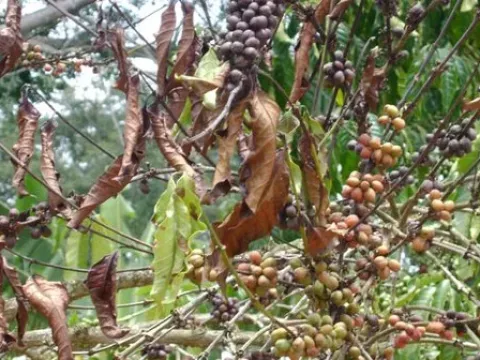
The first symptoms typically appear as yellowing and wilting of the leaves, starting at the canopy level and progressing downward.
The leaves eventually become necrotic, curl up, and drop prematurely, leaving branches bare and dehydrated.
A diagnostic sign is the presence of brown or black vascular streaks within the wood when the stem or roots are cut open.
In humid conditions, small, dark fungal fruiting bodies may appear on the bark of the infected trunk or branches.
The progression of the disease is rapid, and trees often die within a few months after the initial visual symptoms are identified.
Fusarium xylarioides thrives in tropical environments with high humidity and temperatures between 20°C and 28°C.
Soil moisture levels play a critical role, as waterlogged conditions facilitate the dispersal of spores throughout the root zone.
Mechanical damage to roots caused by weeding tools, insect borers, or soil cultivation acts as a primary entry point for the pathogen.
Close plant spacing can promote the spread of the disease between adjacent trees through underground root contact.
Nutrient deficiency and lack of shade can weaken trees, making them more susceptible to the stress induced by the fungal infection.
Coffee wilt disease is one of the most severe threats to coffee production, capable of causing total failure of entire plantations.
There is no effective chemical cure for infected plants, which necessitates the removal and burning of affected trees to prevent further spread.
The disease causes significant economic loss, reducing both the yield and the longevity of the coffee plantation.
Once established in the soil, the pathogen persists, effectively forcing farmers to abandon the land for coffee production for many years.
The rapid transmission of spores makes it extremely challenging to control, especially in plantations where sanitation practices are poor.
Sanitation is the most effective defense, requiring the immediate rogueing and destruction of any trees showing signs of wilting.
Regular monitoring of plantations is essential to catch early symptoms before the pathogen spreads to neighboring healthy trees.
Tools used for pruning or weeding should be cleaned and disinfected regularly to prevent them from acting as vectors of the disease.
- Selection and breeding of coffee cultivars resistant to Fusarium xylarioides.
- Maintaining proper soil drainage to reduce the pathogen's ability to thrive.
- Minimizing root damage during all agricultural and maintenance operations.
Implementing strict quarantine protocols for introducing new seedlings onto the farm is crucial to prevent the initial introduction of the fungus.