
Coffee phyllosticta leaf spot
Phyllosticta coffeicola
The causative agent of this disease is the fungus Phyllosticta coffeicola, which primarily impacts the foliage of coffee plants.
What the section contains
Coffee phyllosticta leaf spot
The pathogen overwinters as mycelium and pycnidia within infected leaf debris, serving as a primary source of inoculum for the subsequent growing season.
During favorable weather, the fungus produces pycnospores that are dispersed by wind, splashing rain, or agricultural machinery within the plantation.
The infection process begins when spores germinate on the leaf surface and enter the plant tissue through natural openings or small surface wounds.
As an opportunistic pathogen, Phyllosticta coffeicola thrives in conditions where the host plant is under stress, utilizing the plant's resources for its reproductive cycle.
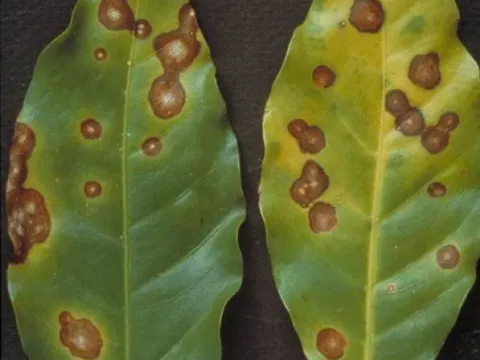
Symptoms of the disease initially appear as small, circular, or irregular spots that are reddish-brown or dark brown in color, often surrounded by a distinct halo.
As the lesion matures, the central area of the spot turns gray or light brown, becomes necrotic, and may eventually dry out and fall away.
Small, dark, pinhead-sized structures known as pycnidia are typically visible in the center of the necrotic spots, which is a diagnostic feature of this fungal infection.
If left unchecked, multiple spots can merge and cover significant portions of the leaf surface, causing the entire leaf to become brittle and yellowish.
Heavy infection results in premature defoliation, which severely limits the plant's ability to produce energy and sustain fruit development.
The development of coffee phyllosticta is highly dependent on humidity levels; prolonged rain, high atmospheric humidity, and heavy dews are primary drivers of outbreaks.
Warm temperatures ranging between 20°C and 30°C facilitate the rapid reproduction and infection cycle of the fungus across the plantation.
Poor plantation management, such as overcrowding of trees and lack of pruning, limits airflow and traps moisture, creating an ideal microclimate for the disease.
Plants weakened by poor soil fertility or pest damage show a higher susceptibility to Phyllosticta coffeicola colonization.
Seasonal weather patterns, specifically periods of high moisture, are the most critical times for the pathogen to cause epidemic-level damage.
The primary economic harm comes from the loss of photosynthetic leaf surface, which directly impacts the plant’s health and future bean yield.
Premature leaf drop leads to poor development of cherries, resulting in lower bean quality and reduced commercial value of the harvested coffee.
Chronic infestation weakens the structural integrity of the tree, leading to sparse foliage and decreased resilience against environmental stresses.
In severe cases, the disease can compromise the productivity of an entire farm, necessitating expensive replacement or intensive rehabilitation of the trees.
The reduction in vigor also makes the plants more prone to other opportunistic pathogens and secondary infestations, compounding the agricultural losses.
Cultural practices are the first line of defense; regular pruning of coffee trees is essential to promote air circulation and reduce the humidity around the leaves.
Sanitation is critical; gathering and burning or composting infected leaf litter helps to significantly reduce the inoculum present in the environment.
Applying copper-based fungicides or other systemic protective agents before the wet season can effectively prevent the onset of the disease.
Ensuring balanced nutrient management, particularly with adequate potassium and micro-nutrients, helps boost the plant's natural resistance to fungal pathogens.
Continuous monitoring and early detection of the initial spots allow for localized management, preventing the spread of the infection to healthy parts of the farm.