
Coffee leaf rust
Hemileia
Description
Symptoms
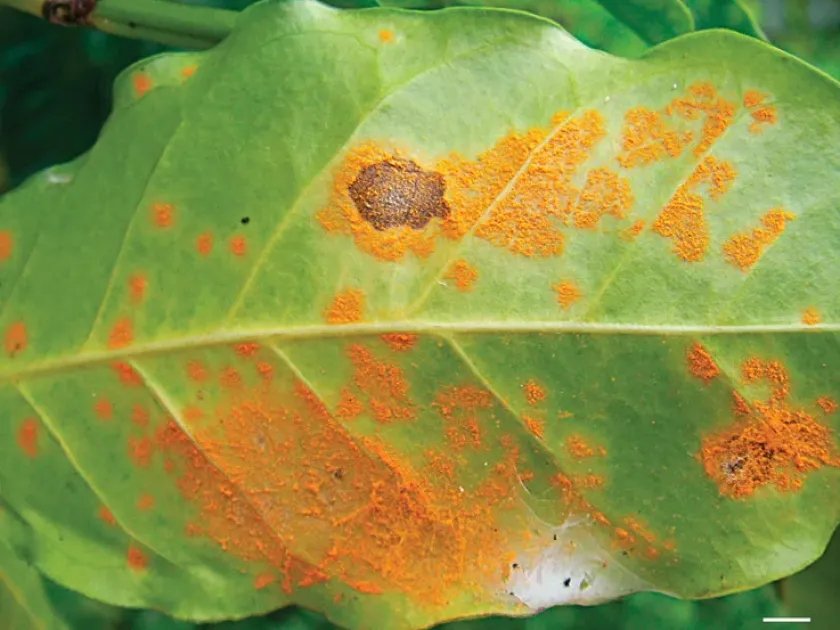
The first signs of infection appear as small, chlorotic yellow spots on the underside of coffee leaves, which soon develop into a powdery orange-red mass of spores.
As the infection progresses, these spots expand, causing the leaf tissue to die, leading to severe chlorosis and premature leaf drop across the entire canopy.
Severely affected trees may experience complete defoliation, leaving branches bare and unable to support fruit development or maintain basic physiological functions.
In addition to leaves, the fungus can sometimes affect young green stems and berries, although the foliage is the primary target for the pathogen.
The orange dust visible on the leaves consists of thousands of urediniospores, which are easily detached and transported by environmental factors to neighboring plants.
Pathogen
The causal agent of coffee leaf rust is the fungus Hemileia vastatrix, an obligate parasite that belongs to the order Pucciniales and the family Pucciniaceae.
This fungus requires living host tissue to complete its life cycle and specifically attacks plants within the genus Coffea, posing a global threat to coffee production.
The pathogen is highly efficient at reproducing, producing large quantities of spores that can persist in the environment and survive for varying periods.
Its ability to undergo genetic mutation allows the fungus to evolve and overcome the resistance of previously stable coffee varieties over time.
Hemileia vastatrix is biologically specialized to infiltrate the stomata of the leaves, where it develops its mycelial network to absorb nutrients from the host plant.
Conditions for development
High humidity and consistent rainfall are the primary drivers for the spread of rust, as water droplets are required for the germination of the fungal spores.
Temperatures between 21 and 25 degrees Celsius are considered optimal for the pathogen, allowing it to colonize leaves rapidly during favorable weather windows.
Plantations with dense canopy growth and poor air circulation create high-humidity pockets, which significantly accelerate the infection rate of the trees.
Spore dispersal occurs predominantly through wind-blown water droplets and rain splash, though human activity and contaminated tools can also contribute to the spread.
Extended dry seasons can suppress the disease, but once the rainy period begins, the residual spores quickly re-establish the infection on new growth.
Why it matters
Coffee leaf rust causes significant economic damage by drastically reducing the photosynthetic capacity of the plants, which leads to lower yields.
Trees weakened by the disease produce smaller, lower-quality beans, failing to meet market standards and resulting in reduced income for farmers.
Over several seasons, heavy infection can lead to "dieback," where branches wither and die, potentially killing the entire tree if left unmanaged.
The cost of disease management, including chemical inputs and labor for spraying, imposes a massive financial burden on small and large-scale coffee producers.
In regions where the rust is endemic, it forces the entire industry to shift towards more resistant but sometimes less productive or lower-quality cultivars.
Protection
The primary control strategy involves the deployment of resistant coffee varieties, which is the most sustainable way to reduce the impact of the disease.
Copper-based fungicides are standard for preventive treatment, providing a protective barrier on the leaves that kills spores before they can penetrate the surface.
Pruning is essential to reduce humidity within the canopy, ensuring better airflow and exposure to sunlight, which makes the microclimate less hospitable for the fungus.
Maintaining balanced plant nutrition and soil health helps trees withstand infection and recover more effectively if they do become diseased.
- Regular monitoring of plantation health.
- Systemic fungicide applications as a preventive measure.
- Proper distance between plants to improve airflow.
- Safe disposal of severely infected plant debris.
Discussion
No discussions yet — be the first.