
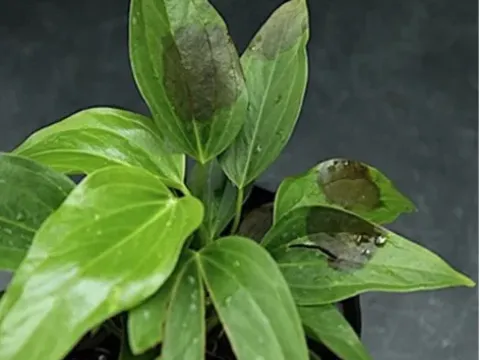
Cold Phytophthora
Phytophthora frigida
The causal agent of this disease is the oomycete Phytophthora frigida. Unlike many other species of the Phytophthora genus, this pathogen has adapted to flourish in cooler environmental conditions, which defines its specific ecological niche.
What the section contains
Cold Phytophthora
The biology of this organism involves a complex lifecycle, including the production of motile zoospores that require water films to navigate towards host tissues. These zoospores serve as the primary inoculum for spreading the infection within a field.
The pathogen is highly capable of surviving in soil debris and infected plant material through the formation of robust oospores. These resting spores can remain viable in the soil for several years, waiting for favorable cold and wet conditions to germinate.
Phytophthora frigida is known for its ability to penetrate roots and stem bases, disrupting the plant's vascular tissue. Its enzymatic activity facilitates the degradation of host cells, leading to rapid tissue necrosis and the eventual collapse of the affected plant.
Recent studies in plant pathology emphasize the distinct aggressive nature of P. frigida in nurseries and cool-climate plantations. Understanding the molecular mechanisms of its infection process is a current focus for developing more resistant plant varieties.
The primary environmental condition favoring the development of the disease is a combination of high soil moisture and low to moderate ambient temperatures. Periods of prolonged rainfall in early spring or late autumn are particularly critical.
Soil structure plays a vital role in the spread of the pathogen. Heavy, waterlogged, and poorly drained soils provide the perfect medium for zoospore movement, significantly increasing the infection rate compared to well-aerated, light soils.
Temperature range is a key factor; Phytophthora frigida shows optimal growth at temperatures significantly lower than those preferred by the notorious potato late blight pathogen. This makes it an early or late-season threat.
The infection is exacerbated by poor cultural practices, such as excessive irrigation or high planting density, which hinder airflow and keep the foliage and soil surface wet for extended periods, facilitating secondary spread.
The presence of water-saturated soil following heavy precipitation events is often the trigger for widespread outbreaks. As long as the soil remains saturated, the pathogen's activity remains high, making management difficult until conditions dry out.
The disease causes significant economic damage through root rot and basal stem necrosis. The damage to the vascular system prevents water and nutrient transport, leading to yellowing of foliage, wilting, and eventual death of the entire plant.
In forest and fruit nurseries, Phytophthora frigida can result in catastrophic losses, killing entire batches of seedlings. The latent period of infection makes it difficult to detect the disease before significant damage has occurred.
The indirect impact includes the loss of land utility. Once a plot is contaminated with this oomycete, the farmer faces years of limited crop choices and the need for expensive soil remediation efforts to lower the inoculum load.
Furthermore, the pathogen can be easily transported via contaminated machinery, irrigation water, or trade of infected planting stock, leading to rapid geographical spread across previously unaffected regions.
Economic losses also include the increased costs of frequent fungicide applications and the intensive labor required to rogue infected plants and disinfect facilities, impacting the overall profitability of the agricultural operation.
Management starts with rigorous sanitation practices, including the use of certified pathogen-free nursery stock and the disinfection of all tools and machinery used in the field to prevent cross-contamination.
Improving soil health is paramount. Implementing raised beds and installing tile drainage can significantly reduce the risk of waterlogging, effectively depriving the pathogen of the aqueous environment it needs for reproduction.
Chemical control involving fungicides, specifically those targeting oomycetes (such as metalaxyl or phosphonates), can be effective when applied preventively during high-risk cool and wet weather windows.
Biological control agents, particularly beneficial Trichoderma species or Bacillus strains, can be applied to the soil to compete with the pathogen and suppress its growth in the rhizosphere.
- Practice strict crop rotation to break the pathogen's lifecycle.
- Ensure adequate spacing between plants for better air circulation.
- Avoid over-irrigation during cool periods.
- Promptly remove and incinerate symptomatic plant debris.