
Bipolaris leaf spot
Bipolaris setariae
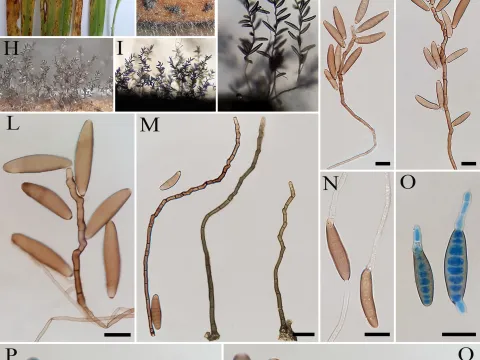
The causal agent of this disease is the fungus Bipolaris setariae, a member of the Hyphomycetes class of imperfect fungi. It is a specialized pathogen that primarily targets various grass species, including important cereal crops and wild grasses.
What the section contains
Bipolaris leaf spot
The fungus survives during unfavorable periods as mycelium or conidia within crop debris and the soil. When environmental conditions improve in the spring, the pathogen reactivates and initiates the primary infection of susceptible plants.
The biological cycle of the fungus is closely linked to the developmental stages of its host plants. Mass sporulation typically coincides with periods of high humidity and active vegetative growth of the host.
Dissemination of fungal spores occurs primarily via wind currents, rain splash, and the movement of agricultural machinery through infested fields. Once spores land on the leaves, they germinate and penetrate the host tissue through stomata or epidermal micro-wounds.
Under favorable conditions, the pathogen can complete multiple life cycles within a single growing season, leading to rapid disease progression and significant spread across the crop canopy.
The first symptoms of Bipolaris setariae appear as small, yellowish or greyish spots on the lower leaves. As the infection progresses, these spots expand into characteristic elongated, elliptical, or spindle-shaped lesions.
Mature lesions typically exhibit a dark brown necrotic center surrounded by a lighter chlorotic halo. In high humidity, an olive-black, velvety layer of fungal conidia develops on the surface of these spots, which is a diagnostic sign of the pathogen.
The infection starts from the lower canopy and moves upward to the younger leaves and sheaths. In severe cases, individual spots may coalesce, resulting in widespread tissue necrosis and premature wilting of the entire leaf blade.
While the disease is primarily foliar, it can occasionally manifest on stems and panicles, particularly under conditions of heavy inoculum pressure. Such infections can interfere with nutrient transport and grain development.
- Yellowish-grey initial lesions
- Elongated, spindle-shaped necrotic spots
- Olive-black velvety sporulation
- Premature leaf senescence and death
The development of Bipolaris setariae is heavily favored by high relative humidity and warm temperatures. The optimal range for spore germination and mycelial growth is between +20°C and +28°C.
Frequent rainfall, heavy dews, and persistent fogs are critical factors that promote infection. The presence of free moisture on the leaf surface for an extended period is a prerequisite for successful penetration of the fungus.
Dense crop stands and poor air circulation within the field encourage disease outbreaks by trapping moisture. These conditions allow the pathogen to thrive and spread more efficiently through the plant population.
Imbalanced soil fertility, particularly high nitrogen levels without adequate potassium or phosphorus, can increase plant susceptibility. Stressed or injured plants are often more prone to rapid colonization by the fungus.
Weed infestation, especially by species like Setaria (foxtail grass), serves as a reservoir for the pathogen, providing a continuous source of inoculum that can infect nearby cereal crops throughout the summer.
The primary damage caused by Bipolaris leaf spot is the significant reduction of the photosynthetic leaf area. This limits the plant's ability to produce energy, which is critical for biomass accumulation and grain filling.
Infected crops often exhibit reduced grain weight, poor grain quality, and lower seed viability. In severe instances, yield loss can be substantial, as the plants are unable to sustain healthy development through the grain-filling stage.
The disease weakens the overall vigor of the plant, making it more vulnerable to secondary infections and abiotic stressors like drought or chilling injury. Weakened plants are also more susceptible to lodging during the late stages of growth.
From an economic standpoint, the disease results in decreased market value of the harvested produce and increased production costs due to the need for fungicide interventions.
Severe early-season infections can lead to seedling blight and reduced stand establishment, necessitating replanting in the most heavily affected areas of the field.
Effective management begins with robust crop rotation practices, ensuring that susceptible cereals are not planted in the same field for several consecutive seasons. Removing host weeds is essential to eliminate local inoculum sources.
Good agronomic practices, such as deep plowing to bury crop debris, help to accelerate the decomposition of fungal structures and reduce primary inoculum levels. Maintaining balanced crop nutrition is key to improving natural plant resilience.
If environmental conditions are favorable for disease, preventive or early-stage application of systemic and contact fungicides is recommended. Monitoring fields at the tillering and heading stages allows for timely chemical intervention.
The use of resistant or tolerant cultivars is a highly effective, long-term strategy for managing the disease. Additionally, seed treatments with broad-spectrum fungicides can protect seedlings from early infection.
Regular field scouting is vital for early detection, allowing growers to manage the disease before it reaches the threshold for widespread economic impact.