
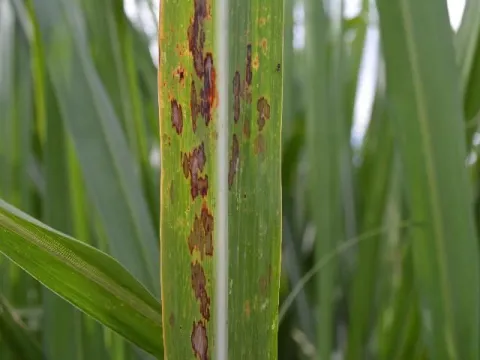
Bipolaris stenospila
Bipolaris stenospila
The causal agent of this disease is the fungus Bipolaris stenospila, an anamorphic fungus (formerly known as Helminthosporium stenospilum) characterized by dark-pigmented spores.
What the section contains
Bipolaris stenospila
The fungus is a facultative parasite that survives between growing seasons in crop residues, soil, and occasionally on the surface or inside seeds as mycelium or conidia.
Dissemination occurs primarily through wind-blown conidia and rain splash, which spread the pathogen from infested debris to the lower leaves of susceptible grass hosts.
The infection process involves the attachment of spores to the leaf surface, followed by the formation of germ tubes and penetration into host epidermal cells.
The pathogen produces secondary metabolites and toxins that induce chlorosis and necrosis in host tissues, facilitating the rapid progression of the fungal mycelium.
The first clinical signs appear as small, chlorotic lesions that elongate over time to form typical narrow, brown, or reddish-brown stripes along the leaf veins.
As the infection advances, the lesions may coalesce, leading to extensive necrosis, yellowing of the foliage, and eventual drying of the leaves.
Under high humidity, an olive-black, velvety layer of conidiophores and conidia develops on the surface of the lesions, making them appear fuzzy to the naked eye.
Affected plants often exhibit reduced vigor, and in severe cases, the entire canopy may show symptoms of blight, which mimics natural senescence.
Lesions can also be observed on leaf sheaths and occasionally on stems, further contributing to the stress and overall decline of the plant’s physiological state.
The development of Bipolaris stenospila is favored by warm, humid conditions, typically with temperatures between 20°C and 28°C and frequent moisture.
Periods of prolonged leaf wetness, such as dew, fog, or intermittent rainfall, are essential for the germination of conidia and the successful penetration of the fungus.
Dense planting patterns that restrict air circulation in the lower canopy create a stagnant, humid microclimate that significantly accelerates disease spread.
Plants subjected to environmental stress, such as mechanical injury or nutrient imbalances (particularly excessive nitrogen), show higher vulnerability to infection.
Lack of proper field sanitation allows the pathogen to build up high inoculum levels, which increases the probability of epidemic development during favorable weather.
The disease significantly reduces the total photosynthetic area of the leaves, which directly impacts the plant's ability to produce energy and store nutrients.
Severe infections lead to significant yield losses, including reduced biomass, decreased grain weight, and impaired development of the reproductive structures.
In addition to yield quantitative losses, the quality of the harvested product is compromised, which may impact marketability and long-term storage viability.
The fungal infection weakens the plant's natural defense systems, making the crop more susceptible to secondary invasions by other pests and environmental stressors.
The economic impact of Bipolaris stenospila often includes increased production costs due to the necessity of fungicide applications and management interventions.
Implementing a comprehensive crop rotation strategy is vital, moving away from host crops to break the pathogen's life cycle and deplete soil inoculum.
Effective sanitation practices, such as deep plowing or the removal of crop residues, significantly reduce the primary sources of infection in the field.
Utilizing high-quality, fungicide-treated seeds and selecting resistant or tolerant cultivars are foundational approaches to minimizing the risk of early-season infection.
Foliar fungicide applications, when timed correctly based on weather monitoring and early detection, provide effective suppression of the disease during active growth.
Maintaining optimal field density and balanced soil fertility levels helps improve plant vigor, allowing the crop to better withstand potential fungal challenges.