
Bigyra
Bigyra
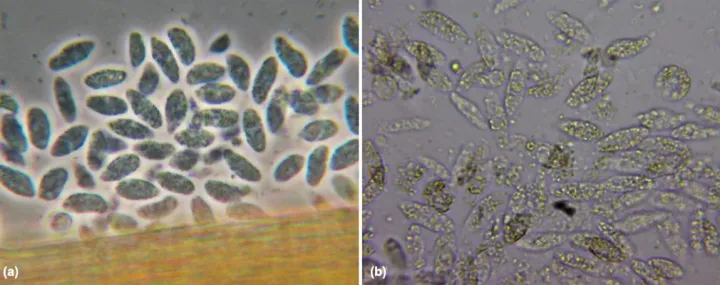
Description
Symptoms
Early symptoms include chlorosis and yellowing of the leaf tissue, often starting at the margins or near veins.
Lesions develop over time, appearing as water-soaked spots that eventually transition into necrotic tissue.
Wilting is a common sign as the pathogen impacts the plant's vascular integrity and water uptake capacity.
Under humid conditions, a characteristic mycelial growth may appear on the surface of the affected plant parts.
Advanced infection stages often show stem rot or root degradation, leading to premature plant collapse.
Pathogen
Bigyra is a group of heterokont organisms that includes various serious plant pathogens, primarily within the class Labyrinthulomycetes.
These organisms are characterized by unique cellular machinery that allows them to move and penetrate host tissues effectively.
They act as opportunistic or obligate parasites, often thriving in moist environments and targeting aquatic and terrestrial plants.
The pathogen reproduces via motile zoospores, which utilize chemical signals in the soil or water to locate susceptible hosts.
Given their biological affinity to other oomycetes, they are notoriously difficult to control once they establish themselves in a field.
Conditions for development
High humidity and consistent moisture are the primary environmental drivers for the development of Bigyra.
Moderate temperatures allow for rapid sporulation and colonization of new tissue on healthy plants.
Poor aeration in greenhouses or overly dense planting layouts exacerbate the risk of rapid disease spread.
Stagnant water in fields provides the ideal medium for zoospores to swim and reach susceptible plant roots.
Cultural practices that favor high canopy humidity create a microclimate that strongly encourages pathogen propagation.
Why it matters
Bigyra causes significant reductions in crop yield by damaging the photosynthetic capacity of the plants.
Infected crops often fail to reach full maturity, resulting in poor quality harvest and limited marketability.
Economic losses are often compounded by the need for repeated fungicide applications and increased labor costs for sanitation.
The disease can cause total loss in sensitive crops, especially during seasons with prolonged rainfall or persistent dampness.
Beyond crop death, the presence of the pathogen in the soil can restrict future planting options for sensitive species.
Protection
Management of Bigyra requires an integrated approach focusing on sanitation and moisture regulation.
Implementing proper soil drainage and ventilation systems is essential for minimizing the risk of infection.
Chemical control involving systemic fungicides specifically targeted at oomycete-like organisms is highly recommended.
Crop rotation and the removal of infected debris are critical steps in reducing the pathogen reservoir in the soil.
- Sanitizing tools and equipment to prevent cross-contamination
- Selecting resistant or tolerant plant varieties for cultivation
- Optimizing irrigation schedules to keep foliage dry
- Monitoring fields regularly for early signs of disease symptoms
Discussion
No discussions yet — be the first.