
Birch diaporthe canker
Diaporthe betulae
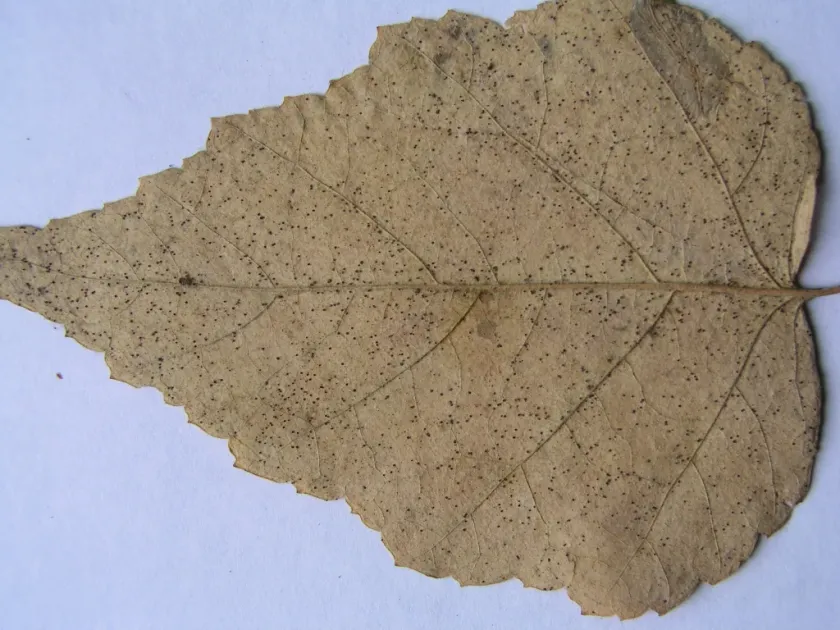
Description
Symptoms
The primary symptom is the appearance of local necrosis on branches and trunks, which gradually turns brown. The bark in the infected areas becomes sunken and often splits.
Small fruiting bodies (pycnidia and perithecia) develop under the epidermis of the infected bark. They appear as tiny black dots that erupt through the surface of the bark as small pimples.
Early stages of infection show premature yellowing and leaf drop on individual branches. As the disease progresses, the canopy thins noticeably, and the tops of the trees begin to dry out.
Deep ulcers or cankers often form at the infection site, which may girdle the branch or trunk, leading to the death of all parts of the tree located above the lesion.
- Darkening and necrosis of bark patches.
- Formation of black fungal fruiting bodies (pycnidia).
- Drying out and brittleness of affected branches.
- Formation of necrotic cankers on the trunk.
Pathogen
The disease is caused by the fungus Diaporthe betulae, which belongs to the class of ascomycetes. The pathogen has both conidial and sexual stages in its life cycle, allowing it to survive during unfavorable conditions in infected plant tissues.
The fungus primarily attacks weakened birch trees, entering through bark injuries, frost cracks, or wounds caused by pests. The mycelium spreads within the cambium and phloem, disrupting nutrient flow and causing necrosis.
Birch species (Betula) in dense stands or areas with unfavorable water conditions are most susceptible. Young seedlings in nurseries are particularly vulnerable to this pathogen.
The fungus can persist in dead branches, fallen bark, and plant debris for several years. Spores are actively dispersed by wind, raindrops, and insect vectors.
The biology of the pathogen is closely linked to the host's health: on healthy trees, it often acts as an endophyte, remaining dormant until the tree is stressed by environmental factors.
Conditions for development
The development of diaporthe canker is favored by prolonged periods of high humidity and moderate temperatures. Spore production is especially active during wet spring and autumn seasons.
Trees weakened by long-term drought, waterlogging, or mechanical damage are highly susceptible, as these factors provide easy entry points for the infection.
Dense stands with poor air circulation create an ideal microclimate for spore germination and the colonization of healthy tissues by the fungus.
The presence of large amounts of dead or diseased wood in a forest stand provides a heavy inoculum load, significantly accelerating the spread of the disease.
Specific environmental conditions, such as sudden spring temperature fluctuations causing frost cracks, create entry points for the pathogen to colonize the wood.
Why it matters
Diaporthe canker is a serious threat to forestry, as it leads to widespread branch dieback, reducing biomass accumulation and the aesthetic value of birch stands.
Persistent fungal activity causes premature death of the entire tree. In nurseries, the disease can lead to a total loss of commercial-grade seedlings.
Infected wood loses its mechanical properties, becoming brittle, which results in branches and trunks breaking under wind or snow loads.
The disease disrupts the tree's physiological processes, making it highly susceptible to secondary pests like bark beetles, which accelerate the tree's decline.
Economic losses include reduced productivity of forest resources and the need for expensive sanitation harvests to manage infection centers.
Protection
The foundation of disease management is maintaining high sanitary standards in forest stands, including the prompt removal and disposal of diseased, dead, or damaged trees.
To prevent the spread of infection, it is crucial to avoid overcrowding by performing regular thinning to improve air circulation and canopy health.
In nurseries and landscape plantings, the application of copper-based fungicides is recommended to treat wounds after pruning and mechanical damage.
Ensuring balanced fertilization and proper water management helps increase the tree's overall resistance to diseases and supports vigorous growth.
Protecting the bark from damage by insects, rodents, or sunscald significantly reduces the risk of primary infection by Diaporthe betulae spores.
Discussion
No discussions yet — be the first.