
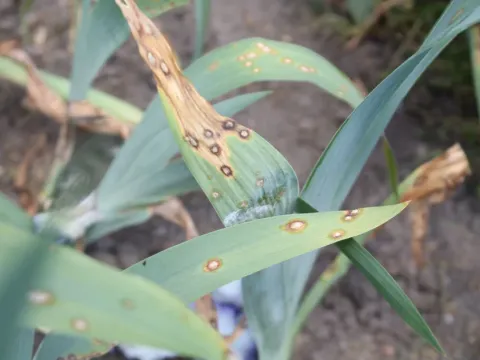
Bipolaris leaf spot of iris
Bipolaris iridis
The causative agent of this disease is the fungus Bipolaris iridis, which is classified within the group of anamorphic fungi. It is a persistent pathogen that can survive in soil and on plant debris.
What the section contains
Bipolaris leaf spot of iris
This fungus specifically targets the iris genus. It relies on environmental moisture to complete its life cycle and disseminate its spores to new host plants.
The reproduction is primarily asexual through the formation of conidia. These spores are highly mobile and are spread by wind currents, rain splashes, and physical contact during maintenance work.
Once the conidia land on the leaf surface, they germinate and penetrate the plant tissue. The fungus secretes enzymatic compounds that break down cell walls, causing localized cell death.
Studies indicate that Bipolaris iridis is well-adapted to surviving across various seasons. It can remain dormant in the crown or rhizome area of the iris until conditions become favorable for infection.
Initial symptoms are characterized by small, brown lesions that appear on the leaf blades. As the infection progresses, these spots expand and often develop an irregular, necrotic shape.
A distinctive feature is the development of a chlorotic or yellowish halo surrounding the brownish dead tissue. This indicates the spread of fungal toxins into the healthy leaf cells.
In humid conditions, a dark, olive-black velvety layer develops on the lesions. This layer consists of the mass production of fungal spores, which are ready to infect nearby tissues.
The disease typically progresses from the lower foliage upwards. As the area of necrotic tissue increases, the leaves become brittle, dry out, and eventually collapse, destroying the plant's appearance.
Severe infestations lead to a overall decline in plant vigor. The foliage may appear scorched, which prevents the plant from maintaining its natural structural integrity and visual appeal.
Bipolaris leaf spot is most problematic during periods of high humidity and moderate temperatures. Frequent rainfall provides the necessary moisture for the conidia to adhere and penetrate leaf tissue.
Poor aeration in dense plantings significantly contributes to the spread of the disease. When foliage remains wet for extended periods due to lack of wind, the fungal colony grows rapidly.
Over-fertilization with nitrogenous products leads to lush, succulent growth. These tender leaves have thinner cell walls and are much more susceptible to the fungal invasion of Bipolaris iridis.
Improper sanitation, such as leaving fallen, infected leaves in the garden bed during autumn, allows the pathogen to overwinter and re-infect new shoots in the spring.
Optimal growth temperatures for this pathogen range between 18 and 25 degrees Celsius. However, it can remain viable under a wide variety of climatic conditions found in temperate gardening zones.
The primary harm is the complete loss of aesthetic value. Because irises are primarily grown for their ornamental foliage and flowers, a diseased plant becomes unsuitable for landscaping.
By damaging the leaves, the disease severely limits photosynthesis. This results in weaker rhizomes that struggle to survive through harsh winter months or drought periods.
Infection cycles significantly reduce the blooming potential of the iris. The plant diverts all its stored energy into defending against the infection rather than developing healthy flower stalks.
If left unmanaged, the disease spreads rapidly across entire iris beds. This necessitates the destruction of large numbers of plants to prevent further infestation of the collection.
Commercial growers face high costs associated with disease management, including the requirement for frequent fungicide applications and the quarantine of potentially infected nursery stock.
Management of Bipolaris leaf spot requires an integrated approach. The most effective step is the immediate removal and destruction of all infected plant materials to lower the spore load.
Cultural practices are essential for prevention. Ensuring proper plant spacing promotes air circulation, which helps keep the foliage dry and inhibits fungal spore germination.
Chemical control involving systemic fungicides is recommended during the active growing season. Preventive applications are particularly effective before the onset of humid, rainy weather.
- Removing and burning all infected leaves immediately
- Application of copper-based fungicides for prevention
- Using systemic triazole-based fungicides for treatment
- Sterilizing gardening tools with bleach or alcohol after maintenance
- Applying balanced fertilizers to boost overall plant immunity
Finally, garden sanitation is a non-negotiable aspect of long-term disease management. Cleaning up the iris beds thoroughly before winter prevents the fungus from finding a host for the next cycle.