
Bipolaris leaf spot
Bipolaris bicolor
The causal agent of Bipolaris leaf spot is the imperfect fungus Bipolaris bicolor (synonym Helminthosporium bicolor), belonging to the hyphomycetes class. The pathogen exhibits high survival rates in soil and plant debris.
What the section contains
Bipolaris leaf spot
The fungus produces conidiophores with multicellular, olive-brown conidia. A saprophytic stage plays a key role in the pathogen's lifecycle, allowing it to remain viable under adverse environmental conditions.
The infection is transmitted via contaminated seeds, infested soil, and crop stubble from the previous harvest. During the growing season, conidia are dispersed by wind, rain splashes, and insects.
During its metabolic activity, the fungus releases specific toxins that suppress physiological processes in plant cells. This leads to rapid necrosis of the host tissues.
Bipolaris leaf spot affects a wide range of agricultural crops, including cereals (wheat, barley, corn, millet), sorghum, and certain types of technical crops.
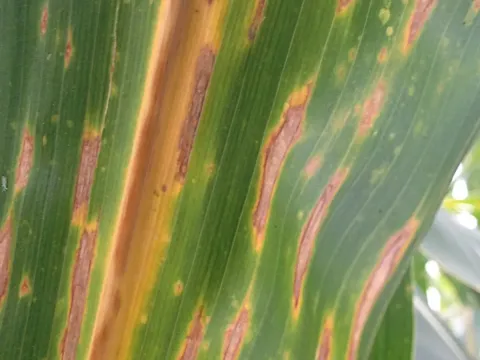
The primary symptom of Bipolaris leaf spot is the appearance of spots of varying shapes — from oval to elongated, brown or reddish-brown in color — on leaves and leaf sheaths.
Often, a chlorotic halo develops around the necrotic spots, indicating the active impact of the pathogen's toxins on plant tissues.
As the disease progresses, the spots merge, covering significant areas of the leaf blade, which leads to premature drying of the foliage.
In high-humidity conditions, a characteristic velvety growth of mycelium and spores, having an olive-black or grey hue, forms on the surface of the infected areas.
- Infection of lower leaves during early developmental stages.
- Presence of dark stripes on stems and tillering nodes.
- Deformation and darkening of heads or panicles in cases of early infection.
Warm and humid weather with frequent rainfall favors the development of Bipolaris leaf spot. The optimal temperature range for spore germination is +22...+28°C.
High relative humidity (above 80%) is a critical factor for active sporulation and the infection of healthy plant tissues.
Poor agricultural practices, such as high-density sowing, create a microclimate with increased humidity in the lower crop canopy, accelerating the spread of the infection.
A lack of mineral nutrition, especially potassium deficiency, reduces the plant's natural immune system, making them more susceptible to fungal invasion.
Large amounts of undecomposed plant residue on the soil surface serve as the primary reservoir for the infection at the beginning of the growing season.
The damage caused by Bipolaris leaf spot involves a significant reduction in the photosynthetic leaf surface area, which halts the plant's food production.
Severe infection leads to shriveled grain, a decrease in thousand-kernel weight, and a sharp drop in overall crop yield.
The disease negatively impacts seed quality, reducing germination energy and viability, which creates risks for poor crop stands in the following season.
The infection often triggers root rot, leading to lodging, which complicates mechanized harvesting operations.
Economic losses can reach 15–30% during epiphytotic years that are favorable for the pathogen.
The primary method of control is the implementation of crop rotation to avoid continuous cultivation of susceptible crops, which breaks the pathogen's accumulation cycle in the soil.
Incorporating crop residues into the soil is an important practice, as they decompose faster under the influence of soil microorganisms.
Using certified, disease-free seed treated with high-quality fungicides protects seedlings from primary infection.
Applying foliar micronutrient fertilizers helps strengthen the plant's defense mechanisms, increasing resistance to leaf spot complexes.
Chemical control using systemic fungicides (from the triazole or strobilurin groups) is effective when the first signs of the disease are detected promptly.