
Bifusella linearis
Bifusella linearis
The causative agent of this disease is the ascomycete fungus Bifusella linearis, which belongs to the order Rhytismatales. This pathogen is specialized, specifically infecting the needles of various pine species.
What the section contains
Bifusella linearis
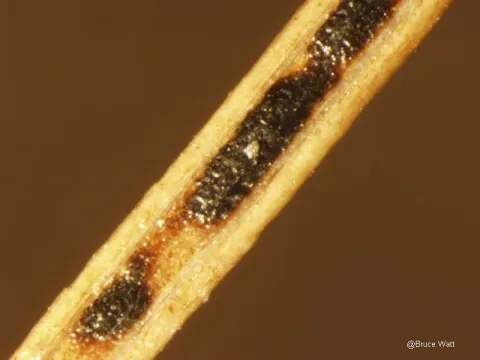
The life cycle involves the formation of apothecia, which appear as narrow, longitudinal black strips on the surface of the infected needles. These structures are essential for the survival and reproduction of the fungus.
Spores are disseminated by air currents and rain splashes, especially during humid periods. The pathogen can persist in fallen needles for several years, forming a durable reservoir for recurring infections.
The mycelium develops within the needle tissues, penetrating through the stomata. It gradually destroys the internal structure of the needle, leading to necrosis and eventually the death of the tissue.
This fungus is recognized as a serious pathogen in both silviculture and forest nurseries, where it can cause localized outbreaks if the environmental conditions are favorable.
The initial symptoms include the chlorosis of needles, which gradually turn yellow and then brown as the fungal infection progresses and the tissues die.
A diagnostic characteristic is the presence of long, thin, black fruiting bodies (apothecia) that erupt through the needle epidermis along its axis.
Premature needle cast is a common sign, usually starting from the lower branches where humidity levels are typically higher than in the upper parts of the crown.
Infected needles become brittle and break easily. As the disease advances, the tree's crown shows significant thinning, which is particularly visible during late summer and autumn.
These thin black lines on the needles help foresters distinguish Bifusella linearis from other needle-cast diseases that often present with more rounded or irregular fungal structures.
Bifusella linearis thrives under cool, humid weather conditions, particularly during the spring and early summer when new needles are developing and highly susceptible.
Densely planted stands or orchards restrict airflow, creating a humid microclimate that allows the fungus to flourish. Stagnant air prevents the rapid drying of foliage after rainfall.
Poorly lit areas within the lower crown provide ideal conditions for fungal growth. The lack of sunlight keeps the needles damp for extended periods, facilitating spore germination.
Trees that are already under physiological stress from drought, poor nutrition, or previous pest damage are much more likely to be infected than healthy, robust trees.
The presence of large amounts of needle litter beneath the trees serves as the primary inoculum source, especially in forest stands that have not been maintained properly.
The primary damage is caused by premature needle loss, which severely limits the tree's photosynthetic capacity, resulting in lower carbohydrate production and reduced vigor.
Persistent infections lead to stunted growth and reduced timber yield over time, making it a significant economic concern in timber production and commercial nurseries.
Defoliated trees are significantly more vulnerable to secondary attacks by bark beetles and stem pathogens that target trees already weakened by fungal stress.
In landscape gardening, the aesthetic value of ornamental pines is severely diminished by the yellowing and shedding of needles, rendering the trees unsightly.
Repeated annual infections can lead to the long-term decline of a tree stand, potentially causing tree mortality if the infection rate remains consistently high over multiple seasons.
Sanitation is the most effective management strategy; removing and destroying infected fallen needles helps to break the disease cycle and significantly lowers the inoculum levels.
Implementing proper spacing between trees during planting promotes better air circulation, which helps keep the foliage dry and discourages the development of the fungus.
Fungicide applications, particularly those containing copper, can be used in nurseries or high-value landscapes to protect young foliage during the critical spring infection window.
Improving the overall health of the trees through balanced fertilization and appropriate site selection helps the trees maintain a stronger natural defense against fungal pathogens.
Regular monitoring of the stand is essential to detect the disease early. Quick action upon spotting the first symptoms can prevent the disease from spreading throughout the entire tree crown.