
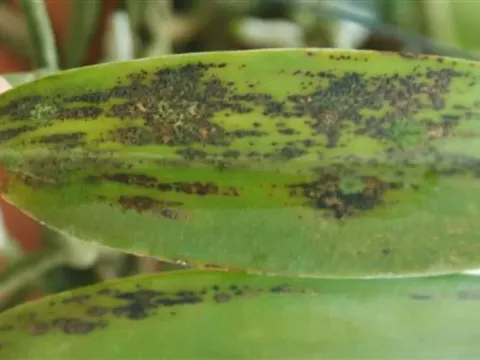
Bifrenaria phyllosticta
Phyllosticta bifrenariae
The causative agent of this disease is the pathogenic fungus Phyllosticta bifrenariae, which belongs to the class of imperfect fungi. This organism is specialized in infecting epiphytic plants, particularly species of the genus Bifrenaria.
What the section contains
Bifrenaria phyllosticta
The life cycle of the pathogen involves the formation of pycnidia, small fruiting bodies where spores mature. These spores serve as the primary source of infection in greenhouses and indoor orchid collections.
The fungus enters plant tissues through stomata or minor mechanical injuries. Once inside, the mycelium develops in the intercellular spaces, secreting toxins that cause tissue necrosis and damage.
Inoculum can persist for long periods on plant debris, in the potting substrate, or on cultivation tools. Failure to sterilize equipment is a common factor in spreading the infection among plants.
The biological characteristics of Phyllosticta bifrenariae allow it to adapt to greenhouse environments, making it a persistent threat that can rapidly colonize orchid collections if left unchecked.
The initial signs appear as small, yellowish or light brown spots on the leaves. Over time, these spots expand in diameter and develop a distinct, dark, or nearly black margin.
In the center of the affected areas, tiny black dots—the pycnidia—start to form. The presence of these structures is a key diagnostic feature distinguishing this disease from physiological sunburns.
As the disease progresses, the affected tissues dry out and become brittle, often leading to leaf deformation. In severe cases, spots coalesce, causing premature leaf drop and weakening the entire plant.
The infection can also affect pseudobulbs, forming sunken, dark lesions. This is particularly dangerous as pseudobulbs act as essential nutrient storage organs, and their damage severely impacts the plant's vitality.
Early-stage symptoms may be subtle, resembling regular pigmentation. However, close observation with a magnifying glass will reveal the characteristic zonal pattern and the presence of fungal fruiting bodies.
Excessive humidity combined with poor air circulation is the primary factor driving the disease. Water lingering on the leaf surface creates the perfect conditions for spore germination and colonization.
Temperatures ranging from 20 to 25 degrees Celsius are considered optimal for the rapid growth of the pathogen, allowing it to spread quickly through an orchid collection.
Improper watering practices, such as allowing water to pool in leaf axils, significantly increase the risk of infection. Watering in the evening is especially risky as leaves do not dry sufficiently before nightfall.
Lack of adequate sunlight and a weakened immune system due to poor fertilization make Bifrenaria plants more susceptible. Stressed plants are always the first to succumb to the infection.
Crowding plants on benches prevents proper airflow, creating stagnant microclimates where spores easily spread from infected plants to healthy ones via water splashes or air movement.
Phyllosticta leaf spot causes significant aesthetic damage, reducing the value of ornamental orchids. The loss of functional leaf tissue impairs photosynthesis, hindering the plant's growth and ability to bloom.
If the infection becomes severe, it exhausts the plant's energy reserves. Without intervention, long-term exposure to the fungus can result in the total decline and death of the orchid.
The disease is particularly insidious due to its latent phase. Growers often fail to notice the problem until it has already become widespread, complicating control efforts and increasing the cost of treatment.
Infections on pseudobulbs and growth points may permanently damage the plant's ability to regenerate. Weakened plants are also more prone to secondary bacterial infections that thrive on diseased tissue.
Dealing with an outbreak requires strict quarantine measures, which limit the ability to manage the collection properly and require substantial time and effort for ongoing monitoring and fungicide application.
The first step in managing the disease is the immediate isolation of infected plants. Carefully prune away all symptomatic leaf tissue using a sterile blade, including a small margin of healthy tissue.
Always disinfect cutting tools between each cut to prevent cross-contamination. Apply an antiseptic—such as charcoal powder, cinnamon, or a professional wound sealer—to the cuts to prevent re-infection.
Systemic fungicides, particularly those containing copper or specialized groups like triazoles and strobilurins, are effective for treatment. Apply these as a spray following the label instructions until symptoms clear.
Maintain high standards of hygiene by regularly disinfecting your tools, pots, and growing area. Ensure that the potting substrate is fresh and well-draining to prevent moisture retention.
Optimize environmental conditions by improving light and airflow. A healthy, robust plant is much more resistant to pathogens, making it less likely to be negatively impacted by fungal spores.