
Balsam fir fungus
Polyporus balsameus
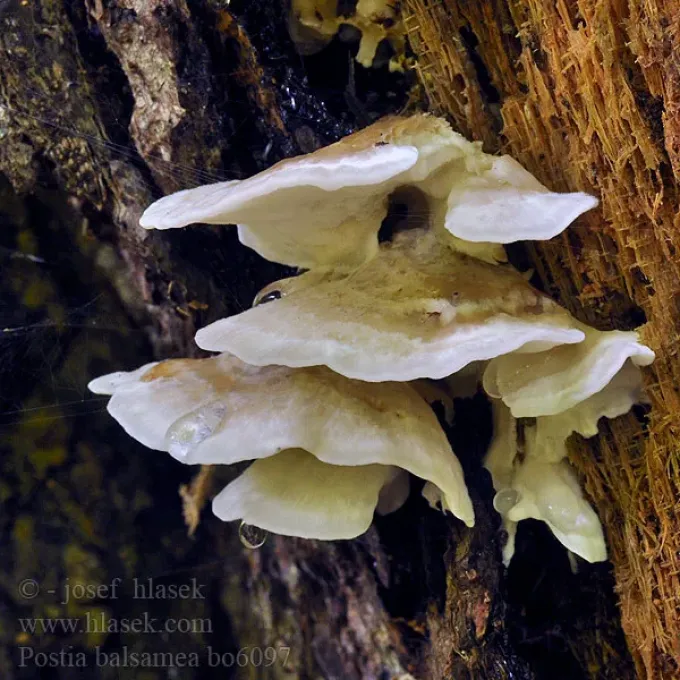
Description
Symptoms
The primary external sign of infection is the appearance of characteristic fungal fruiting bodies at the base of the trunk. They have a leathery or corky consistency and are colored in brownish or ochre tones.
Inside the infected wood, an intense brown rot develops. The tree tissues become brittle, lose mechanical strength, turn brown in color, and crumble into cubes when subjected to transverse pressure.
In affected conifers, premature yellowing and shedding of needles are often observed, especially in the upper crown. This is linked to the disruption of the vascular system in the roots and root collar.
In the advanced stages of the disease, a noticeable decline in growth is observed, and the trunk may become hollow due to active heartwood decay. The tree becomes susceptible to windthrow, creating a serious safety hazard in forested areas.
- presence of fruiting bodies at the root collar;
- brown coloration of the wood;
- cracking of wood into cubic fragments;
- general degradation of crown health.
Pathogen
The causal agent of this disease is the fungus Polyporus balsameus, which belongs to the class of Basidiomycetes. This pathogen specializes in decomposing the wood of coniferous tree species, resulting in a characteristic brown destructive rot.
Biologically, the fungus is a saprotroph but can exhibit traits of a facultative parasite, attacking weakened or injured trees. The fungal mycelium penetrates through bark cracks, frost shakes, or broken branches, gradually colonizing the inner wood layers.
Fruiting bodies of the fungus are annual or overwintering structures formed near the base of the trunk or on the roots. They are small, often arranged in overlapping clusters, with a tubular hymenophore typical of the Polyporaceae family.
Spores of the pathogen are dispersed by air currents over long distances. Once they land on a wounded surface of a tree under favorable conditions, they germinate and initiate the enzymatic decomposition of cellulose.
Scientific classification and accurate species identification are essential for monitoring forest ecosystems. Its presence is often an indicator of the compromised physiological state of a forest stand or shelterbelt.
Conditions for development
The development of the fungus is favored by high air and soil humidity. Optimal infection conditions occur in dense, stagnant stands where natural air circulation is restricted.
The presence of open wounds on the trunks is a critical factor for spread. Damage caused by insects, wildlife, machinery, or extreme weather events serves as an entry point for the infection.
Temperatures in temperate latitudes support the activity of Polyporus balsameus during the spring and summer. Prolonged rainfall significantly accelerates the germination of basidiospores on fresh bark injuries.
Poor sanitary conditions in stands, along with the presence of excessive coarse woody debris and decaying stumps, provide a stable food source for the survival of the fungus in the soil over long periods.
Age characteristics of the stand also play a role: overmature trees with weakened immune systems are infected much more frequently than young, vigorous specimens.
Why it matters
The balsam fir fungus is a dangerous pest that renders timber technically unsuitable for use. The rot makes the trunk unusable for construction or wood processing purposes.
Infection of the root system and trunk base leads to a loss of tree stability. This triggers mass windthrow events, causing direct economic damage to the forestry industry.
Stands infested with this pathogen become hubs of infection for neighboring healthy trees. The spread of spores leads to the contamination of large areas, complicating disease control efforts.
The environmental impact includes accelerated degradation of forest ecosystems, disruption of the hydrological balance, and changes in the floristic composition of the damaged forest sites.
Long-term costs are associated with the need for sanitary logging and forest cleaning, which are required to prevent further spread of the pathogen among valuable coniferous species.
Protection
The primary control method is the timely implementation of sanitary logging. Infected trees must be removed from the stand, including their root systems, to prevent contact between healthy roots and infected ones.
It is important to minimize all mechanical damage to trees during forestry operations. The application of protective pastes on accidental wounds can prevent the entry of fungal spores.
Maintaining optimal stand density is essential to ensure proper ventilation and sunlight exposure. Regular cleaning of the forest from deadwood and old stumps reduces the overall inoculum load in the forest.
When infection centers are detected, it is recommended to use biological control agents or controlled burning of logging residues, provided it complies with fire safety regulations.
Monitoring the health status of conifer crops should be conducted on a regular basis, involving plant pathologists to detect early signs of fungal fruiting bodies.
Discussion
No discussions yet — be the first.