
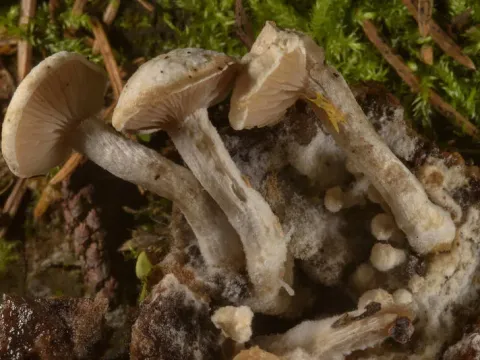
Asterophora
Asterophora
The genus Asterophora comprises a group of mycophilic fungi that are obligate parasites, specifically targeting the fruiting bodies of other basidiomycetes, primarily Russula and Lactarius species.
What the section contains
Asterophora
The biological hallmark of these fungi is the production of unique, star-shaped chlamydospores. These structures allow the fungus to endure unfavorable conditions and facilitate rapid reproduction on the surface of its host.
The parasite colonizes the hymenophore (gill layer) of the host mushroom, absorbing nutrients and eventually replacing the host's reproductive tissue with its own sporulating structures.
Unlike agricultural pathogens, Asterophora does not infect crops, making it ecologically significant as a population regulator within forest environments rather than an economic pest.
The lifecycle is strictly synchronized with the host's development, meaning the parasite only becomes visible and active during the later stages of the host's maturation.
The primary symptom is the appearance of a dusty, powdery coating on the cap and gills of the host mushroom, which often obscures the original surface.
The host's tissues exhibit premature softening and decay, often appearing water-logged and distorted compared to healthy specimens of the same species.
The color of the infected area changes significantly, typically shifting to dull shades of gray, brown, or off-white due to the dense accumulation of chlamydospores.
In advanced stages, the original form of the mushroom cap becomes completely unrecognizable, turning into a collapsed, powdery mass that releases spores upon touch.
Microscopic analysis of these tissues reveals a dense network of hyphae and developing chlamydospores that replace the host's basidia.
The growth of Asterophora is heavily dependent on high ambient humidity and the presence of moist leaf litter, which supports both the host and the parasite.
Moderate temperatures, generally ranging between 15°C and 22°C, create the optimal physiological environment for the rapid germination of chlamydospores.
High population densities of host species, such as woodland mushrooms, are required for the effective transfer of spores and the successful establishment of new infection sites.
Periods of prolonged rain followed by mild, damp weather act as a trigger for the mass release of spores, leading to visible outbreaks in the forest habitat.
The maturity level of the host mushroom is a critical factor; the parasite most effectively exploits mature or decaying fruiting bodies where the host's own immune defenses have declined.