
Astraeus
Astraeus
The genus Astraeus, commonly referred to as the "false earthstar," belongs to the phylum Basidiomycota. While it bears a superficial resemblance to the Geastraceae family, modern taxonomic research has classified it within the distinct family Astraeaceae.
What the section contains
Astraeus
As a saprotrophic soil-dwelling fungus, it is not considered a primary plant pathogen. It lives by breaking down organic matter and often forms associations within forest soils and rhizosphere environments.
The life cycle is characterized by the development of mycelium in the substrate, followed by the emergence of fruit bodies. These fruit bodies are remarkably resilient to desiccation, allowing the fungus to survive in varying environmental conditions.
Biological studies of the fungus emphasize its role in the decomposition of plant debris, which is vital for nutrient cycling in many woodland and nursery environments.
Taxonomically, differentiating Astraeus from true earthstars is essential for accurate identification, as their ecological niches and environmental requirements can differ significantly.
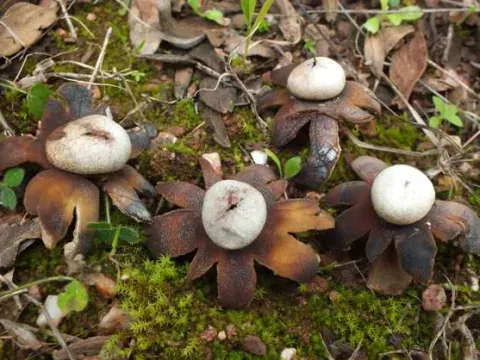
The primary sign of Astraeus presence is the emergence of distinctive, star-shaped fruit bodies on the soil surface. Initially, these appear as round, buried structures before transitioning into their mature form.
When mature, the outer layer (exoperidium) splits into several rigid, leathery rays that fold backward, exposing the central spore-containing sac. This appearance is the diagnostic hallmark of the genus.
The accumulation of spores within the soil can be detected through microscopic analysis. Visually, the fungus is characterized by its tough, brownish exterior and woody texture.
Mycelial growth within the soil does not typically manifest as plant tissue necrosis or wilting. Instead, it forms fine networks that integrate with the organic matter present in the topsoil.
In woodland areas or tree nurseries, the presence of these fruit bodies serves as an indicator of the specific organic content and moisture levels of the soil horizon.
The development of Astraeus is highly dependent on specific soil moisture levels and the availability of woody debris. It thrives best in well-drained soils that provide a balance of oxygen and moisture.
Active fruit body formation typically occurs after heavy rainfall events followed by sunny intervals. This pattern triggers the hygroscopic opening of the rays and subsequent spore dispersal.
Temperature plays a crucial role in mycelial growth, with the optimal range typically lying between 18 and 25 degrees Celsius. It is highly adapted to temperate climates.
The fungus prefers sandy or loamy soils, where moisture movement is stable, and it is frequently associated with the root zones of conifers and broad-leaved trees.
The absence of intense competition from other aggressive soil microorganisms allows Astraeus to establish itself in stable, nutrient-rich soil patches over several seasons.
Astraeus is not regarded as a significant threat to agricultural crops. It lacks the parasitic mechanisms required to cause disease or significant yield loss in commercial plants.
Potential harm is limited to minor physical disturbances in soil structure within nurseries, where dense mycelial mats might marginally affect water infiltration or root access to oxygen.
It does not produce systemic toxins or pathogenic enzymes that target plant vitality. Therefore, its impact on plant health is generally considered to be negligible or neutral.
In horticultural settings, its growth is often viewed as a biological indicator rather than a pest problem, signifying that the soil contains decomposed organic matter.
The economic impact of this fungus on agriculture is minimal, as it participates in beneficial soil processes like organic matter breakdown rather than plant degradation.
Since Astraeus does not pose a direct disease threat to crops, targeted chemical control is rarely necessary or recommended. Management focuses primarily on sanitation and cultural practices.
Mechanical removal of the fruit bodies before they fully release their spores can help limit the spread of the fungus within a confined area like a nursery.
Good soil management practices, such as removing excess leaf litter and ensuring proper drainage, effectively limit the substrate available for fungal growth.
Preventing soil compaction and maintaining an appropriate soil pH balance can discourage the establishment of fungal colonies that prefer specific forest-like conditions.
In most scenarios, the best approach is to ignore the presence of the fungus, as it performs a natural role in soil ecology without negatively affecting crop productivity.