
Asteroid mosaic
Asteroid mosaic
Asteroid mosaic, also associated with the fleck-complex, is a viral disease primarily affecting grapevines (Vitis vinifera) and other woody plant species.
What the section contains
Asteroid mosaic
The disease is caused by flexuous filamentous viruses which are often transmitted during grafting and vegetative propagation processes in nurseries.
Since this pathogen resides within the plant tissues, it is systemic, meaning the entire vine eventually becomes infected once the virus enters the vascular system.
The transmission is predominantly linked to the movement of infected plant material, emphasizing the necessity of strict quarantine and phytosanitary regulations.
While the role of insect vectors remains a subject of research, the primary mode of dissemination in professional viticulture is the use of contaminated grafting tools.
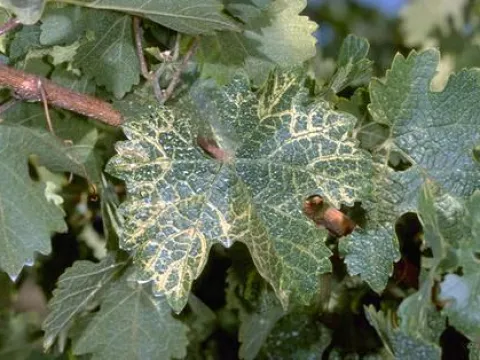
The most characteristic symptom is the appearance of small, light-colored, star-shaped spots on the leaf surface, which give the disease its specific name.
As the infection progresses, these spots often coalesce into mosaic-like patterns, leading to significant chlorosis and a decrease in photosynthetic efficiency.
In some grape varieties, the leaves may show distortion, crinkling, or stunted development, which affects the overall architecture of the shoot.
Early-stage infection might remain latent, presenting no visible symptoms, which makes the disease particularly dangerous for young vineyard blocks.
Reproductive organs are also impacted, with frequent flower cluster shriveling and poor berry set, resulting in lower yields and inferior fruit quality.
Environmental stress, including drought or waterlogging, can trigger more severe symptom expression in already infected grapevines.
The viral spread within the vineyard is highly dependent on agricultural practices, specifically the lack of sterilization of shears during pruning operations.
Older vineyards that have not undergone clonal selection or health testing for mother blocks are more likely to serve as persistent reservoirs for the virus.
Climatic conditions do not necessarily influence the initial infection, but they can affect how quickly the vine succumbs to the overall weakening effect of the virus.
Proper soil management and fertilization help the vine maintain vitality, though they cannot eradicate the virus once it has colonized the plant tissue.
The economic impact of Asteroid mosaic involves a gradual but steady decline in vineyard productivity over the lifespan of the infected blocks.
The accumulation of the virus leads to poor shoot maturation, making vines significantly more susceptible to winter frost damage and other environmental stressors.
Fruit quality is compromised as infected vines fail to accumulate sufficient sugars, which affects the balance and aging potential of the produced wine.
Over time, the vine loses its vigor, leading to thinning of the canopy and a reduction in the number of healthy clusters that can reach maturity.
Eventually, the total yield loss and the potential for secondary infections necessitate the premature removal and replanting of the affected vineyard area.
The foundational approach to controlling the disease is the utilization of certified, virus-free planting material sourced from reliable nurseries.
Strict disinfection protocols for all pruning and grafting tools must be implemented, using appropriate sanitizing solutions after every single vine.
Regular visual inspections of the vineyard are essential, especially during the spring, to identify and rogue out symptomatic plants as quickly as possible.
Avoiding the movement of infected scion wood or rootstocks between different vineyard sites is crucial to maintaining a healthy regional grape industry.
Since there are no chemical pesticides to treat viral infections in vines, preventative measures focused on biosecurity are the only viable management option.