
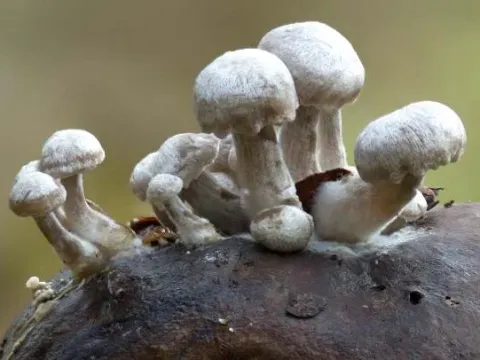
Asterophora parasitica
Asterophora parasitica
Asterophora parasitica is a specialized mycophilic fungus belonging to the Lyophyllaceae family. Unlike typical plant pathogens, this organism does not infect crops, as it specifically parasitizes the fruiting bodies of other fungi.
What the section contains
Asterophora parasitica
This species is an obligate parasite that relies on hosts from the Russula and Lactarius genera. Its survival is entirely dependent on the availability and health status of these specific mushroom hosts.
The pathogen propagates through spores that settle on the surface of the host mushroom. Upon germination, the mycelium penetrates the host tissues, eventually colonizing them to derive nutrients for its own reproduction.
A distinctive biological feature of Asterophora parasitica is the production of chlamydospores—thick-walled, star-shaped structures that ensure the fungus can survive in diverse environmental conditions.
In the context of agricultural science, this fungus is considered non-harmful and possesses no economic impact on crop cultivation, serving primarily as a subject of mycological interest.
The primary symptom of infection is the development of a dense, powdery, or crust-like growth on the cap and gills of the host mushroom.
As the infection progresses, these areas often change color to a dark gray or brownish hue, caused by the mass production of the parasite's spores.
The host's tissue typically becomes soft, mushy, and degraded, showing significant structural decay as the parasite consumes the organic matter.
Microscopic analysis reveals the presence of characteristic star-shaped chlamydospores, which are the definitive diagnostic feature distinguishing this infection from standard decomposition.
Symptoms are usually most visible during the later stages of the host's lifecycle, often appearing when the host mushroom is already beginning to age or decay naturally.
The development of Asterophora parasitica is strictly limited to the presence of compatible host mushrooms, typically found in moist, forested environments.
High humidity and consistent moisture levels are essential for the germination of spores and the subsequent colonization of the host tissue.
The fungus thrives during the peak mushroom season, typically late summer and autumn, when temperature and humidity levels are optimal for fungal growth.
Forest leaf litter acts as a reservoir, helping to maintain the necessary microclimate and potentially hosting dormant spores until a suitable host appears.
Dispersal is primarily facilitated by wind, rainwater, or interaction with insects, ensuring that spores can reach new hosts within the dense forest floor environment.
This fungus poses no threat to agricultural or horticultural crops. It is strictly limited to mycophilic interactions within forest ecosystems.
The ecological impact is minor, limited to reducing the spore output of individual host fungi, which has a negligible effect on overall population dynamics in the forest.
There is no economic harm associated with this fungus, as it does not affect any marketable plants or forestry timber products.
In some cases, it may impact wild mushroom foragers by rendering the infected host mushrooms inedible due to the structural degradation of the tissues.
Overall, the fungus contributes to the natural turnover of nutrients within the forest floor, acting as a decomposer of fungal organic matter.
There are no control measures recommended or utilized for this fungus, as it is not a pest or a disease agent in any agricultural context.
Preventative strategies are unnecessary because the species does not interact with agricultural fields, orchards, or managed landscape plants.
Natural population regulation is maintained by biological competition within the forest floor microbiome, which effectively manages the parasite's levels.
Chemical intervention is neither required nor recommended, as such actions would be ecologically damaging and pointless against a non-threat species.
Research and monitoring are confined to mycological field studies aimed at understanding the complex symbiotic and parasitic relationships found in forest habitats.