
Aspergillus restrictus
Aspergillus restrictus
The disease is caused by the microscopic mold fungus Aspergillus restrictus, which belongs to the Aspergillus glaucus group. It is a xerophilic species capable of growing under extremely low substrate moisture conditions.
What the section contains
Aspergillus restrictus
The fungus actively reproduces via spores, which spread in large numbers through air currents within storage facilities. It is one of the most common agents responsible for the spoilage of grain commodities in storage.
Biologically, this microorganism is adapted to life in conditions of limited moisture availability, which allows it to dominate over other mold species in dry environments. Its mycelium is capable of penetrating deep into seed tissues.
During its life cycle, the fungus secretes specific metabolites that alter the chemical composition of the grain. This makes it a highly dangerous biological agent for the long-term storage of food and feed crops.
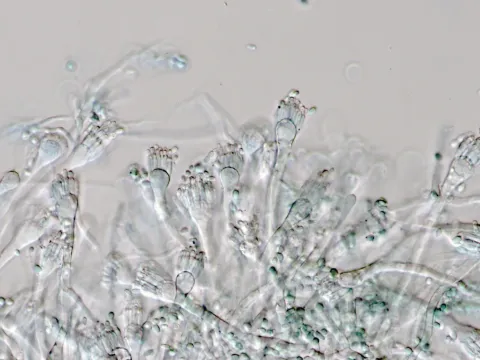
Microscopic examinations show that Aspergillus restrictus forms characteristic conidiophores, which enable the fungus to spread rapidly throughout the entire grain bulk.
The primary condition for the development of this fungus is increased humidity in storage facilities, even if the grain itself appears relatively dry. An equilibrium moisture content of the grain above 13–14% is sufficient to trigger active growth.
A critical factor is the lack of proper ventilation in grain heaps. Air stagnation creates microzones with high humidity and temperature, which are favorable for the rapid proliferation of the fungal mycelium.
High ambient temperature combined with poor aeration of warehouses significantly accelerates spore germination. The fungus is extremely resistant to temperature fluctuations, making it dangerous throughout the year.
Failure to follow primary cleaning and drying procedures after harvest creates a foundation for pathogen development. Poorly cleaned grain masses contain weed particles, which serve as an excellent nutrient substrate.
Failure to maintain sanitary protocols in grain storage facilities leads to the accumulation of infectious inoculum. Dust and residual old grain serve as reservoirs from which Aspergillus restrictus spores infect new batches of produce.
The main danger lies in the progressive spoilage of commercial grain, accompanied by a sharp decrease in its germination capacity. Infected seeds lose their ability to germinate, rendering them unsuitable for seeding purposes.
During metabolism, the fungus destroys organic compounds in the grain, leading to changes in its color, odor, and taste. Affected produce acquires a musty, moldy smell that cannot be removed.
The fungus is capable of producing mycotoxins, which make the produce dangerous for human consumption or animal feed. This can cause severe intoxication and systemic diseases in consumers.
When large volumes of grain are affected, the mass can undergo self-heating, which may lead to the total loss of the batch quality. The temperature inside the heap can rise to critical levels, triggering rot centers.
Economic damage includes direct weight loss of the grain, costs of cleaning, warehouse disinfection, and the inability to sell the produce at market prices due to the loss of commercial quality standards.
The basis of protection is strict adherence to grain moisture regulations during storage. It is necessary to maintain moisture levels below the critical threshold that inhibits the activity of xerophilic fungi.
A mandatory measure is the thorough cleaning of grain from weed impurities and broken seeds immediately after harvest. Clean grain is much less susceptible to colonization by mold fungi.
It is necessary to organize an effective ventilation and aeration system in storage facilities. This allows for the timely removal of excess moisture and heat, preventing the pathogen from activating.
Before loading a new batch, mandatory fumigation or disinfection of the storage facility should be performed. The use of approved fungicides and antiseptics helps suppress the infectious background.
An important aspect is regular monitoring of grain condition during storage. Upon detection of the first signs of molding, it is necessary to immediately turn over, cool, or emergency-dry the batch.