
Asperisporium spot
Asperisporium caricae
Description
Symptoms
Initial symptoms include the appearance of small, chlorotic spots on the leaf surface, which gradually expand and darken into brown or black necrotic areas.
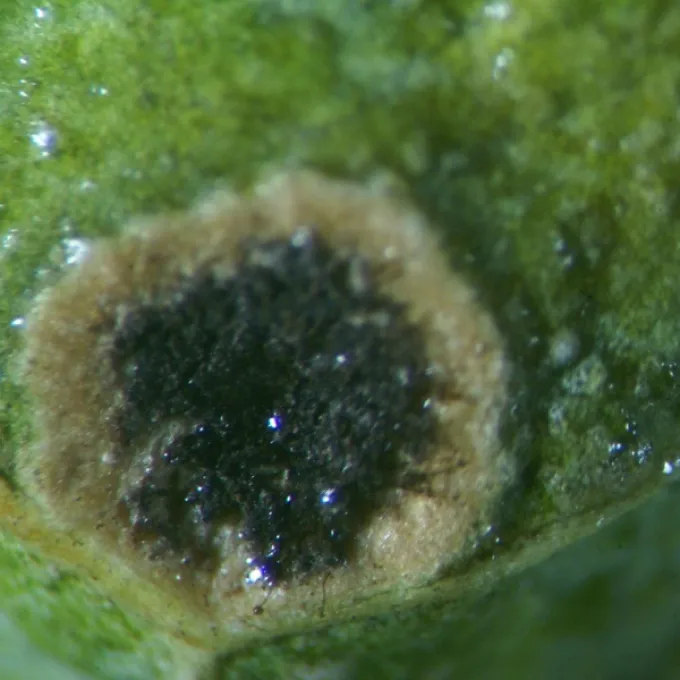
On the undersides of these lesions, characteristic velvety, dark-colored pustules develop, representing the conidiophores and spore masses of the fungus.
As the infection advances, multiple lesions often coalesce, covering large parts of the leaf and leading to premature yellowing and dropping of foliage.
The disease can also manifest on petioles and developing fruit, appearing as small, dark, and sunken spots that detract from the fruit's market quality.
Severe infestations result in significant defoliation, leaving the stems bare and drastically reducing the photosynthetic capacity of the plant.
Pathogen
The disease is caused by the fungus Asperisporium caricae (synonym Cercospora caricae), which is a host-specific pathogen of the Caricaceae family.
The fungus functions as an obligate parasite, invading the host tissues through stomata or wounds, where it develops its mycelium and produces abundant conidia.
The life cycle of the pathogen is closely tied to environmental moisture, as the fungus requires water films on the leaf surface for the spores to germinate and infect the plant.
The fungus persists in the environment by surviving on infected leaf litter and debris, providing a continuous source of inoculum for subsequent seasons.
By degrading the host cells, the pathogen disrupts the plant's metabolic pathways, eventually causing necrotic lesions that serve as reproductive sites for the fungus.
Conditions for development
High humidity levels, typically exceeding 80%, combined with warm temperatures (20°C to 28°C), create optimal conditions for the rapid spread of the disease.
Frequent rainfall and persistent dew promote the dispersal of fungal spores, which are easily carried by splashing water droplets or wind currents.
Dense planting schemes that restrict air circulation significantly increase the severity of the disease by preventing foliage from drying out quickly.
Plants under nutrient stress or those growing in poor soil drainage conditions are significantly more susceptible to infection by this fungus.
Outbreaks are most common during rainy seasons or in regions where a tropical climate persists year-round, allowing the pathogen to multiply continuously.
Why it matters
The primary economic impact of Asperisporium spot is the loss of photosynthetic leaf area, which stunts tree growth and leads to reduced fruit size and yield.
Fruit blemish caused by the fungal lesions makes the papaya unsuitable for fresh market sales, resulting in high post-harvest losses and reduced profitability.
Premature defoliation exposes the papaya trunk to direct sunlight, potentially leading to sunscald and further weakening the tree's structural integrity.
Recurring infections require intensive management programs, increasing operational costs for fungicide applications and labor-intensive sanitation practices.
Weakened trees become more prone to secondary infections and pest attacks, creating a cycle of decline that may lead to the total loss of the orchard.
Protection
Effective management begins with proper spacing of plants to maximize airflow within the orchard, which helps keep the leaf surfaces dry.
Sanitation is critical; all fallen, infected leaves must be gathered and destroyed promptly to eliminate the primary source of the fungal inoculum.
- Application of copper-based fungicides as a preventative measure during high-risk seasons.
- Usage of systemic fungicides when disease pressure is high to protect developing foliage.
- Implementation of balanced fertilization programs to keep plants vigorous and resilient.
Improved drainage and weed control beneath the canopy are essential to reduce the humidity levels that favor fungal spore germination.
Regular scouting of the orchard for early symptoms allows for localized treatment and prevents the need for broad-spectrum chemical interventions.
Discussion
No discussions yet — be the first.