
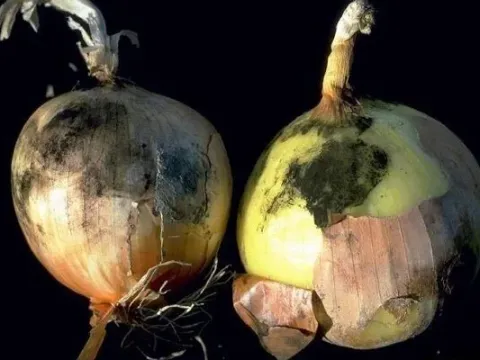
Aspergillus rot of onion
Aspergillus alliaceus
The causal agent of this disease is the soil-borne fungus Aspergillus alliaceus. It is a highly persistent pathogen known to cause severe post-harvest losses in onion and garlic crops worldwide.
What the section contains
Aspergillus rot of onion
The fungus reproduces via conidia, which are easily disseminated by air currents, splashing rain, or handling equipment. It survives in the soil and on crop debris as mycelium or resistant sclerotia.
Unlike some other fungal pathogens, Aspergillus alliaceus thrives in warm conditions, making it particularly problematic in regions with high temperatures during harvest and storage.
It enters the onion bulbs primarily through the neck or through wounds and bruises sustained during mechanical harvesting, transportation, or cleaning processes.
Once inside, the fungus secretes enzymes that break down onion tissue, using the released nutrients to produce a massive amount of characteristic black spores.
Initial symptoms appear around the neck area, where the tissues become soft and watery. In the early stages, the bulb may appear perfectly healthy from the outside, masking the internal rot.
A diagnostic sign of this disease is the presence of a dusty, black mass of spores between the outer and inner bulb scales. These spores eventually cover the entire surface of the bulb.
When an infected bulb is sliced, the internal tissues show signs of darkening and decay. The affected layers often turn brown or black, accompanied by an unpleasant musty odor.
As the infection progresses, the entire bulb softens, eventually collapsing into a mushy, blackened mass that can easily spread the pathogen to adjacent bulbs in storage.
- Softening of the neck tissue.
- Massive production of black spore powder.
- Darkening of inner fleshy scales.
- Musty, unpleasant decay odor.
- Total collapse of bulb structure.
The development of Aspergillus rot is highly dependent on environmental factors, with high temperatures being the primary trigger. The fungus grows optimally between 25°C and 30°C.
High relative humidity in storage facilities is critical for spore germination and colonization. Without proper ventilation, humidity levels rise, creating a perfect environment for the fungus.
Improper curing of onions is a major predisposing factor. If the onion neck does not dry out completely after harvest, it remains susceptible to penetration by Aspergillus alliaceus.
Mechanical damage is a key entry point. Onions handled roughly during harvest are significantly more prone to rot than those handled with care.
The pathogen can also be introduced via contaminated soil on the bulbs if they are not cleaned properly or if they are harvested under wet conditions.
Aspergillus rot is a major threat to onion storage profitability. It causes severe post-harvest decay that can result in the loss of entire batches within a very short time.
Beyond physical losses, the presence of Aspergillus spores can negatively affect the marketability of the product, as contaminated onions are discarded by buyers and processors.
The fungus is capable of spreading rapidly through crates and containers. A few infected bulbs can trigger a chain reaction, leading to an outbreak throughout the storage area.
Some species of Aspergillus are known to produce mycotoxins, which poses risks to food safety if infected produce is mistakenly used for processing or animal feed.
Operational costs increase significantly due to the need for rigorous culling, specialized storage disinfection, and potential waste management of the spoiled produce.
Proper curing is the most effective management tool. Onions must be dried thoroughly with warm, forced-air ventilation to ensure the neck is tight and moisture-free.
Strict sanitation protocols should be implemented for all storage facilities, containers, and handling equipment using approved disinfectants to minimize spore loads.
Sorting and grading before storage is essential. Removing damaged, bruised, or soft-necked bulbs will drastically reduce the risk of spreading the pathogen.
Maintaining a low temperature (near 0°C) and low humidity in the storage environment helps inhibit the growth and spread of the fungus.
Implementing a crop rotation program (3–4 years without alliums) helps to keep the soil pathogen population at manageable levels.