
Aspergillus tamarii mold
Aspergillus tamarii
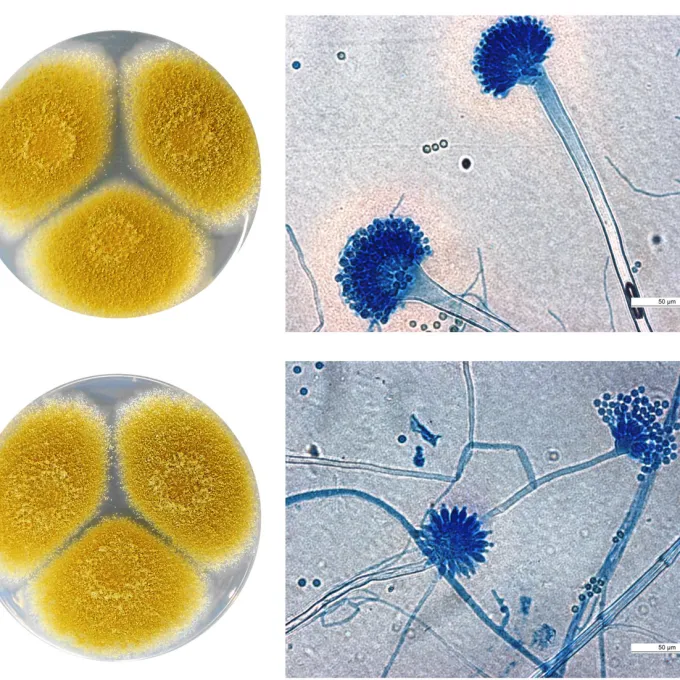
Description
Symptoms
The primary symptom of infection is the appearance of a dusty, olive-brown mold growth on the surface of seeds or grains. This distinctive coloration helps distinguish it from other Aspergillus species.
As the disease progresses, infected plant tissues begin to soften and darken, accompanied by a characteristic musty odor. In advanced cases, the grain loses its germination viability as the embryo dies.
Small spore colonies become visible on the surface of infected organs. These spores easily release a fine dust upon mechanical disturbance, which is a clear indication of heavy sporulation.
In stored grain, the infection often leads to clumping or caking of the mass, accompanied by localized heating. This process signifies the breakdown of grain quality and the onset of rotting.
The visual appearance of the seeds changes as they become shriveled and spotted, while the seed coat may crack, allowing the fungal mycelium to penetrate deeper into the internal nutrient tissues.
Pathogen
The causal agent of this disease is the microscopic mold fungus Aspergillus tamarii, which belongs to the Ascomycota division. It is a facultative parasite that can persist in soil and plant debris for long periods as conidia.
The fungus possesses high enzymatic activity, enabling it to efficiently decompose complex organic compounds. During its metabolic processes, it produces various secondary metabolites, including mycotoxins like kojic acid, which pose risks to humans and animals.
Typically a soil saprotroph, this microorganism becomes an active pathogen when storage conditions for seeds or grain are compromised. Its life cycle is heavily dependent on temperature and environmental humidity levels.
Morphologically, Aspergillus tamarii is characterized by the formation of globose conidial heads that appear olive-brown in color. Spores are easily dispersed by air currents, facilitating rapid spread across storage facilities.
The pathogen is highly adaptable to various substrates, including oilseeds and grains with high protein or fat content. This versatility makes it a major agent of biological deterioration in stored agricultural commodities.
Conditions for development
The development of Aspergillus tamarii is strictly dictated by hydrothermal conditions. The fungus thrives at temperatures between +25°C and +35°C, with a relative humidity level exceeding 75%.
The critical trigger for widespread infection is an increase in grain moisture content above 14-15%. Once this threshold is crossed, the fungus aggressively colonizes the grain surface.
Poor ventilation in storage facilities creates an ideal microclimate for the pathogen. Stagnant air leads to moisture accumulation and heat buildup, which are primary drivers of mold proliferation.
Mechanical damage to seed coats, often occurring during harvesting or processing, makes the grain significantly more susceptible to spore penetration. Damaged seeds act as primary infection foci.
The presence of contaminants, such as weed seeds or soil particles, acts as a catalyst for the spread of the disease. These impurities retain moisture and serve as an excellent nutrient medium for fungal growth.
Why it matters
The primary impact of Aspergillus tamarii is the significant degradation of seed viability and commercial grain quality. Contaminated products are rendered unsuitable for consumption due to mycotoxin accumulation risks.
The fungus actively consumes essential nutrients, leading to a depletion of proteins and carbohydrates in the grain. This results in weight loss and a reduction in the commodity's quality classification.
Mycotoxicosis poses a serious health risk. Metabolic products of the fungus can cause severe toxic reactions in livestock if contaminated grain is incorporated into animal feed.
Using infected seed for planting results in poor field emergence. Seedlings may die during early developmental stages, leading to thinning of the crop stand and reduced yields.
In warehouse conditions, the fungus can trigger self-heating, which may result in the total loss of massive grain stockpiles in a very short timeframe.
Protection
The fundamental method of control is drying grain to safe moisture levels. Proper drying is the most effective barrier against spore germination and subsequent mold development.
Regular disinfection of storage facilities, equipment, and containers is essential. Applying approved fungicides to storage surfaces can significantly reduce the infection pressure.
Cleaning grain to remove weed seeds, broken kernels, and other impurities before storage is highly effective. Cleaner grain batches are far more resistant to fungal colonization.
Active temperature control and ventilation within storage silos are necessary to prevent heat spots and moisture pockets that favor fungal growth.
Treating seeds with registered fungicides prior to planting provides protection against soil-borne inoculum and helps ensure healthy seedling establishment.
Discussion
No discussions yet — be the first.