
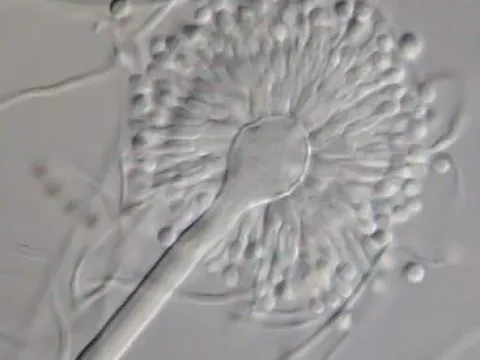
Aspergillus versicolor
Aspergillus versicolor
The causative agent of this plant disease is the microscopic mold fungus Aspergillus versicolor, a member of the Ascomycota division.
What the section contains
Aspergillus versicolor
This species is a saprotrophic fungus that thrives on diverse organic materials, causing significant post-harvest losses in agricultural settings.
It is characterized by its ability to grow over a broad temperature range and its efficiency in colonizing various moist substrates.
The fungus propagates via numerous conidia, which are efficiently dispersed by air currents, facilitating rapid spread within storage facilities.
It is noted for the production of secondary metabolites, including mycotoxins like sterigmatocystin, which pose health risks to humans and livestock.
The primary symptom of infection is the development of a colorful moldy growth on the surface of seeds, grains, or stored fodder products.
Colonies of the fungus display a wide range of colors—often white, yellow, green, or pink—which gave rise to its scientific name, versicolor.
Infested grains often exhibit signs of physiological deterioration, such as embryo darkening, loss of viability, and a friable texture of the endosperm.
A distinct musty or earthy odor is often detected in areas where the fungus is actively growing, signaling significant product contamination.
Microscopic examination typically reveals branched conidiophores with characteristic chains of spores, confirming the presence of the pathogen.
The growth and spread of Aspergillus versicolor are strictly dependent on the moisture levels present in the storage environment.
High relative humidity and poor air circulation in storage units provide the necessary conditions for the fungus to establish and colonize substrates.
The fungus is relatively resilient to moderate temperature fluctuations, allowing it to remain active during different seasons in non-climate-controlled storage.
Physical damage to the surface of seeds, often caused by insects or machinery, provides entry points for hyphae to penetrate deeper into the tissues.
The presence of organic debris, dust, and weed seeds within the bulk product increases the risk of mold outbreaks by providing alternative food sources.
The main impact of this pathogen is the degradation of crop quality, making the grain or produce unfit for animal feed or human consumption.
The synthesis of mycotoxins during the infection process leads to chemical contamination of the harvest, resulting in severe health implications.
Fungal enzymes break down starches, proteins, and lipids, causing a significant loss in the nutritional value of the stored commodities.
When used as seeds, infected samples demonstrate poor germination rates and reduced seedling vigor, leading to suboptimal crop stands.
Economic damage is substantial, encompassing the total loss of the product, remediation costs, and the expenses related to waste disposal.
Effective management begins with drying the crop to a safe moisture content level before it is moved into long-term storage.
Implementing reliable temperature control and active aeration systems is crucial for maintaining unfavorable conditions for fungal growth.
Regular sanitation of storage facilities, including walls, floors, and machinery, helps to reduce the initial spore load significantly.
Proper cleaning and grading of grains to remove dust, chaff, and damaged kernels minimize the availability of nutrients for fungal development.
Applying registered fungicidal seed treatments is recommended to protect seeds from soil-borne and seed-borne fungal infections during planting.