
Asperisporium
Asperisporium
The disease is caused by fungi of the genus Asperisporium, which are specialized plant pathogens. These fungi are well-known for causing severe leaf spot diseases in a wide range of botanical hosts, particularly in warmer climates.
What the section contains
Asperisporium
The life cycle involves the production of conidia (spores) that are dispersed by wind and rain splashes. Once these spores land on a susceptible leaf surface, they germinate under appropriate conditions and penetrate the plant's tissue.
The mycelium grows within the leaf tissue, specifically attacking the mesophyll cells. As the infection progresses, the pathogen erupts through the leaf surface, forming stromatic masses that produce a new generation of spores.
This pathogen is considered a serious threat because of its ability to produce large quantities of inoculum throughout the growing season, facilitating rapid secondary spread within the plantation.
Identification of the pathogen usually requires microscopic analysis of the conidiophores and conidia, which exhibit unique morphology characteristic of the Asperisporium genus, distinguishing it from other fungal leaf spots.
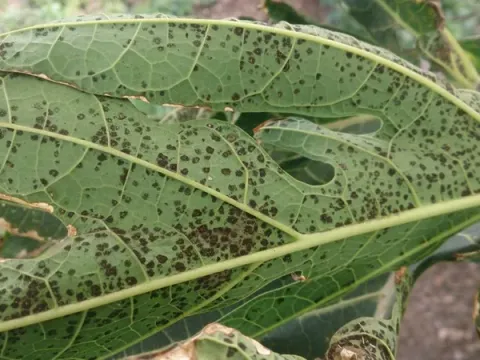
Symptoms initially manifest as small, chlorotic or light green spots on the leaves. As the disease progresses, these lesions turn dark brown or black, often becoming angular due to the leaf veins.
A distinctive feature of Asperisporium infection is the development of a velvet-like, dark-colored spore mass on the undersurface of the leaf directly beneath the visible spots.
In cases of severe infestation, the lesions may coalesce, leading to extensive necrosis of the leaf blade. This eventually causes the leaves to curl, yellow, and drop prematurely, leading to significant defoliation.
Fruit symptoms, often seen in crops like papaya, include sunken, black, water-soaked spots. These lesions can penetrate the fruit flesh, rendering the product unmarketable and susceptible to rotting.
Young twigs and shoots may also show signs of infection, appearing as elongated dark lesions that can lead to dieback of the terminals during periods of high humidity.
The development of Asperisporium is heavily dependent on high moisture levels. Relative humidity above 85 percent and the presence of free water on leaf surfaces are essential for spore germination.
Optimal temperatures for the spread and infection range between 20 to 26 degrees Celsius. Within this thermal window, the fungus can complete its life cycle in a relatively short period.
Poor orchard sanitation and high planting density exacerbate the disease spread. Stagnant air and lack of sunlight reaching the lower canopy create the perfect microclimate for the fungus to thrive.
Frequent rainfall or overhead irrigation acts as a dispersal mechanism for spores, splashing them from infected lower leaves to the healthy upper canopy or neighboring plants.
Plants under physiological stress, due to poor nutrient management or drought, are more susceptible to colonization as their natural defense mechanisms are weakened.
The primary damage caused by Asperisporium is the loss of photosynthetic leaf area. This leads to a reduction in the plant's ability to produce sugars, ultimately decreasing fruit size, yield, and quality.
Defoliation caused by the disease reduces the tree's vigor, making it more susceptible to environmental stress, pests, and other secondary infections, which may lead to long-term decline.
For commercial growers, the aesthetic damage to fruits is a major economic burden, as affected produce is often rejected by retailers or consumers, resulting in substantial financial loss.
The persistent nature of the fungus in plant debris means that, without proper control, the disease can build up over consecutive seasons, making it harder to manage over time.
In cases of epidemic proportions, the infection can significantly reduce the overall lifespan of the crop, forcing growers to invest in expensive replanting efforts earlier than expected.
Management starts with rigorous field hygiene, including the removal and destruction of all fallen leaves and infected plant debris, which serve as the primary source of overwintering inoculum.
Preventative applications of copper-based fungicides or other approved chemical treatments are highly effective when applied during periods conducive to infection, such as the rainy season.
- Ensure proper plant spacing to improve airflow and reduce canopy humidity.
- Implement balanced fertilization programs to keep plants robust.
- Use pruning techniques to remove infected twigs and open the canopy.
- Monitor crops regularly for the first signs of leaf lesions.
Rotation of fungicides with different modes of action is crucial to manage resistance and maintain the efficacy of available chemical control agents in the long term.
Integrating these cultural practices with targeted chemical applications provides the most sustainable defense against the disease, ensuring stable production levels.