
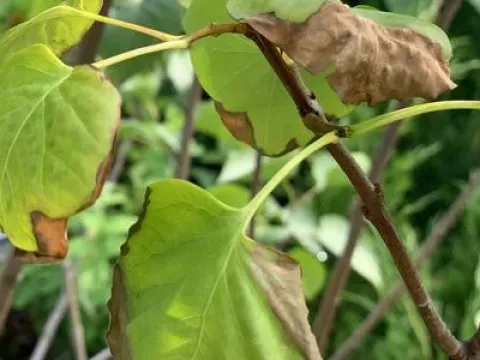
Ascochyta leaf spot of lilac
Ascochyta syringae
The disease is caused by the fungus Ascochyta syringae, which belongs to the class of deuteromycetes. It colonizes the leaves and tender stems of the host plant.
What the section contains
Ascochyta leaf spot of lilac
The pathogen completes its life cycle by forming pycnidia, small fruiting bodies that act as the primary overwintering structure in fallen leaves.
Under humid conditions, spores are released from these pycnidia and spread through rain splash or wind currents to healthy foliage.
The fungus is host-specific, primarily targeting lilac plants, and thrives when the plant tissue is vulnerable or stressed.
Mycelial growth inside the leaf tissue leads to the characteristic spots, as the fungus breaks down the plant cells to obtain nutrients.
Infection begins as small circular or irregular spots on the leaves, which are initially light brown or tan in appearance.
As the spots expand, they often develop a dark brown margin, while the center of the spot becomes pale and necrotic over time.
Small, dark, pinhead-sized structures known as pycnidia become visible on the dead leaf tissue upon close inspection.
Severe infestations cause the affected leaves to yellow prematurely, wither, and eventually drop from the shrub during the growing season.
In humid weather, the spots can coalesce, covering large parts of the leaf surface and leading to rapid foliage blight.
The development of Ascochyta leaf spot is highly dependent on high moisture levels and warm temperatures during late spring and summer.
Poor airflow around the shrub, often caused by overly dense planting or lack of pruning, creates a stagnant environment that favors infection.
Frequent rainfall or overhead irrigation ensures that leaves remain wet for extended periods, facilitating spore germination.
Lilacs grown in shaded areas with limited sunlight exposure often show increased susceptibility to this fungal pathogen.
Plants suffering from nutritional imbalances or drought stress are more likely to exhibit severe symptoms when exposed to the fungus.
The primary concern is the significant aesthetic decline of the plant, as premature leaf loss spoils the appearance of the lilac shrub.
Reduced photosynthetic activity due to foliage damage weakens the plant, limiting its energy reserves for the following season.
Chronic annual infections significantly reduce the winter hardiness of the shrub, making it vulnerable to cold damage during winter.
Poor general health leads to diminished flower bud production, resulting in fewer and smaller blooms in the subsequent year.
In extreme cases, the overall vigor of the plant declines to a point where it may become susceptible to secondary opportunistic pests.
The most critical cultural practice is the removal and destruction of all fallen leaves in the autumn to eliminate the primary inoculum source.
Regular pruning should be performed to maintain an open canopy structure, which improves air circulation and prevents humidity buildup.
Fungicidal applications should be initiated at the first sign of leaf spots to prevent the secondary spread of the disease across the shrub.
Water the base of the plant rather than the foliage to keep the leaves dry, which significantly inhibits the germination of fungal spores.
- Use copper-based fungicides as a preventative measure in early spring.
- Maintain optimal soil fertility to support the plant's natural immune system.
- Monitor the plants regularly during rainy periods for early detection.