
Ascochyta leaf spot of wheat
Ascochyta tritici
Description
Symptoms
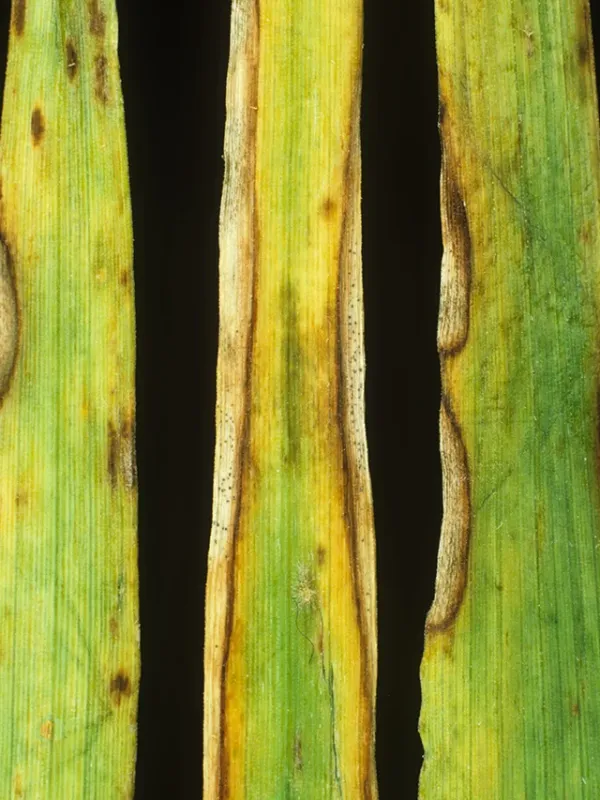
Symptoms typically start as small, light-colored or yellowish spots on the leaves, which expand to form distinct necrotic lesions.
A hallmark of this disease is the appearance of dark, pinpoint-sized pycnidia embedded within the dead tissue of the spots.
As the disease progresses, these lesions can merge, leading to extensive chlorosis and necrosis of the entire leaf surface.
While primarily affecting leaves and leaf sheaths, severe infections can also spread to stems, potentially causing plant lodging.
Microscopic examination of the lesions often reveals the presence of multi-celled conidia, which confirms the diagnosis of Ascochyta tritici.
Pathogen
The pathogen responsible for this disease is the fungus Ascochyta tritici, which is classified within the Sphaeropsidaceae family.
This fungus overwinters primarily in infected crop debris, straw, and sometimes in contaminated seeds, acting as a primary inoculum source.
During the growing season, the fungus produces pycnidia—small, flask-shaped structures—that release conidia spores into the environment.
Dissemination occurs through wind and water splashes, which carry the spores to healthy leaves of susceptible wheat plants.
The fungus thrives by colonizing plant tissues, causing localized lesions where new pycnidia are subsequently formed to repeat the infection cycle.
Conditions for development
Cool to moderate temperatures (around 15°C to 22°C) combined with high humidity are the most favorable conditions for disease outbreaks.
Frequent rainfall events provide the necessary moisture for the rapid germination of spores and their subsequent infection of the crop canopy.
Poor ventilation within dense wheat stands creates a microclimate that remains humid for long periods, encouraging fungal growth.
Plants under physiological stress, such as those grown in nutrient-poor soils, show increased susceptibility to the pathogen.
Dew and fog significantly contribute to the infection process by providing the continuous film of water required for spore penetration.
Why it matters
The primary economic impact is the reduction of the photosynthetic leaf area, which leads to lower grain yields and poor quality.
Infected crops often show reduced thousand-grain weight and decreased protein content, affecting the marketability of the wheat.
Early-season infections can stunt plant development, resulting in a thin stand and significantly reduced overall biomass.
Weakened stems caused by late-season infections can lead to lodging, which complicates harvesting and causes further yield losses.
Seed-borne infection reduces germination energy, causing poor establishment and early disease pressure in the subsequent crop season.
Protection
Crop rotation is the most effective cultural practice, breaking the cycle of infection by avoiding wheat on the same field for at least two years.
Tillage practices that incorporate crop residues into the soil promote the decomposition of infected matter and reduce inoculum levels.
The use of certified, clean, or treated seeds is essential to prevent the introduction of the pathogen into new areas.
- Application of systemic fungicides during stem elongation and heading phases.
- Selection of resistant or moderately resistant wheat varieties.
- Balanced fertilization to optimize crop health and stress resistance.
Regular scouting of fields during wet weather is crucial for the timely application of fungicides to prevent widespread epidemics.
Discussion
No discussions yet — be the first.