
Ascochyta leaf spot of onion
Ascochyta allii-cepae
Description
Symptoms
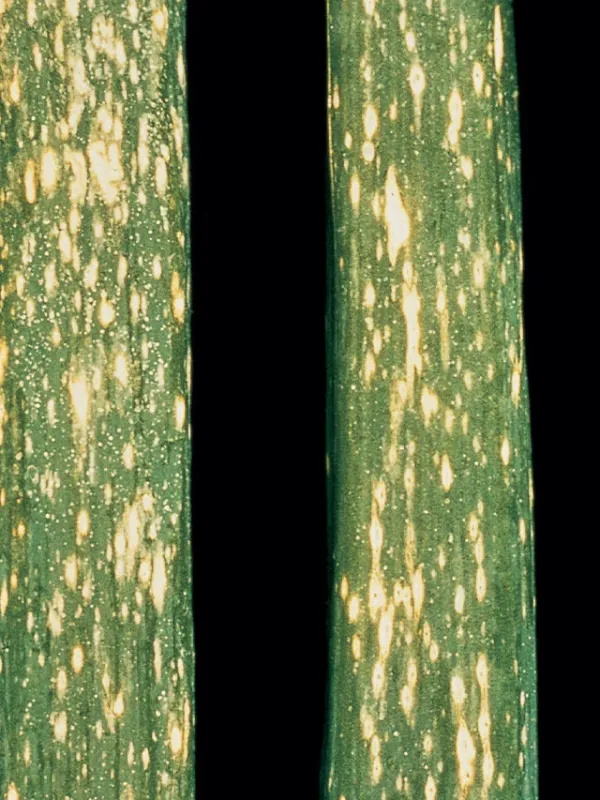
Symptoms initially appear as small, light gray or yellowish spots on the leaves. These spots are often elongated and may appear as white, necrotic lesions as the disease progresses.
The presence of tiny, dark-colored spots within the lesions, which are the pycnidia, is a key diagnostic feature of the disease. These dots are visible to the naked eye or with a hand lens.
As the infection advances, the leaves begin to yellow, starting from the tips and extending downwards. This leads to the eventual collapse and death of the leaf tissue prematurely.
A severe infection can lead to the total wilting of the onion tops, which severely hampers the plant's ability to undergo photosynthesis and store energy in the bulb.
Affected plants often look stunted, and the presence of numerous lesions can make the crop look sickly and unmarketable due to the rapid degeneration of the foliage.
Pathogen
The disease is caused by the fungus Ascochyta allii-cepae, which is classified within the group of deuteromycetes. This pathogen primarily affects members of the Allium genus, including bulb onions, garlic, and leeks.
The fungus overwinters in crop debris, soil, and on infected seeds as pycnidia, which are specialized reproductive structures. When environmental conditions become favorable, these structures release spores to initiate new infections.
These spores are primarily disseminated by wind, rain splashes, and irrigation water. Once they land on the leaves of a host plant, they penetrate the leaf tissue and start colonizing the plant, causing the characteristic spotting.
The life cycle of the pathogen is closely tied to humidity levels, which allow for successful sporulation and colonization of the plant tissue. Over time, the fungus continues to reproduce, spreading the disease throughout the field.
The long-term survival of the fungus in the soil makes it a persistent threat in regions where Allium crops are grown intensively without long-term crop rotation cycles.
Conditions for development
High humidity and moisture are the most critical factors for the development of Ascochyta allii-cepae. Frequent rain, heavy dew, and prolonged fog provide the necessary moisture for the spores to germinate.
The pathogen thrives in moderate temperatures, typically ranging from 15°C to 22°C. Under these conditions, the fungus can produce new generations of spores very rapidly.
Poor ventilation in dense fields creates a microclimate that remains moist for longer periods, which significantly increases the risk of a widespread outbreak of the leaf spot disease.
Excessive irrigation or poorly drained soil can also contribute to higher humidity at the base of the plant, promoting the survival and movement of the fungus in the field.
Mechanical damage to the leaves caused by hail, heavy wind, or pest activity provides easy access for the fungus to penetrate the plant's natural protective barriers.
Why it matters
The primary damage caused by Ascochyta leaf spot is a significant reduction in bulb size and quality, as the foliage dies off before the bulb has completed its growth cycle.
A lower yield is the direct consequence of the loss of photosynthetic leaf area, which limits the plant's ability to accumulate dry matter and nutrients in the onion bulb.
The damaged leaves serve as entry points for other opportunistic pathogens, leading to secondary infections and increased rates of rot during storage after the harvest.
Farmers face economic losses not only from reduced total weight but also from the increased costs associated with post-harvest sorting and the potential loss of entire batches of produce.
In cases of early-season infection, the crop stand can become significantly thinned, leading to an uneven harvest and the need for expensive replanting or intensive fungicide application programs.
Protection
- Practice long-term crop rotation by avoiding Allium crops in the same field for at least 3-4 years.
- Use certified disease-free seeds and consider seed treatments to eliminate potential pathogens.
- Deeply incorporate or remove and destroy crop debris immediately after harvest to reduce overwintering inoculum.
- Monitor fields regularly and apply fungicides as soon as the first symptoms are detected.
- Improve field drainage and avoid overhead irrigation during periods of high humidity to reduce moisture on foliage.
Discussion
No discussions yet — be the first.