
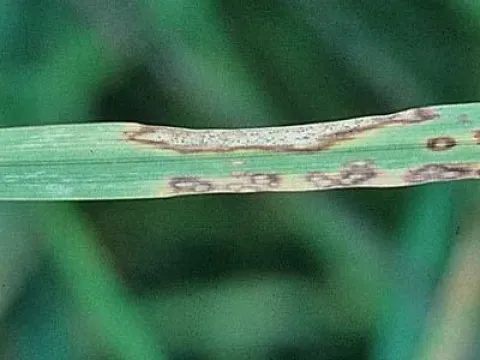
Ascochyta leaf spot of oats
Ascochyta avenae
The disease is caused by the fungus Ascochyta avenae, an anamorphic fungus that reproduces via pycnidia, small globose structures containing numerous conidia.
What the section contains
Ascochyta leaf spot of oats
The pathogen survives in crop debris and soil as dormant mycelium or pycnidia, waiting for favorable conditions to initiate a new infection cycle.
Dissemination occurs primarily through splashing rain and wind, which transport conidia to healthy leaf tissue during the growing season.
The fungus is capable of persisting in the soil for multiple seasons, which makes it a persistent threat in areas with continuous cereal cultivation.
Once inside the host tissue, the fungus grows intercellularly, secreting enzymes that lead to cell wall degradation and tissue necrosis.
Symptoms appear as small, light-colored spots with irregular margins, often surrounded by a dark brown or purplish border that defines the lesion.
As the disease progresses, these spots enlarge, frequently turning into elongated streaks that can cause the entire leaf to wither and die prematurely.
A distinctive diagnostic feature is the presence of small, black, pin-head-sized pycnidia embedded in the necrotic leaf tissue.
In cases of severe infestation, the disease can spread to the leaf sheaths and even the culms, leading to plant lodging or structural weakness.
Early symptoms are often overlooked or confused with other leaf spot diseases, making microscopic verification of pycnidia essential for diagnosis.
High humidity and moderate temperatures ranging between 18°C and 22°C are critical for the successful germination and penetration of the fungus.
Persistent rainfall, fog, and high morning dew promote the secondary spread of the disease during the vegetative stage of oat growth.
Dense crop canopies that limit air circulation exacerbate the risk of infection by maintaining high moisture levels in the lower leaf layers.
Host susceptibility is increased during periods of rapid vegetative growth, especially when crops are over-fertilized with nitrogen.
The pathogen spreads most rapidly during cool, wet spring seasons, which align with the early development stages of the oat crop.
The primary damage caused by Ascochyta avenae is the reduction of the leaf area, which significantly impacts the plant's photosynthetic capability.
This loss of green tissue leads to stunted grain development, resulting in lighter grain weight and reduced overall yield potential.
Affected plants often produce low-quality grain, which may have reduced germination rates, making it unsuitable for future seed use.
Premature leaf senescence caused by the pathogen can accelerate the plant's decline, making the crop more vulnerable to other opportunistic infections.
Economic losses vary based on the onset and severity of the disease, with significant yield losses documented in years with heavy moisture.
Management practices focus on breaking the disease cycle through crop rotation, avoiding planting oats in the same field for at least three consecutive years.
Deep plowing or mechanical incorporation of crop residues into the soil is highly recommended to accelerate the degradation of the fungal pycnidia.
The use of certified, fungicide-treated seeds serves as the first line of defense against seed-borne inoculum and seedling blight.
Foliar application of systemic fungicides during the stem elongation phase can provide effective control if disease pressure is high.
- Use of resistant or tolerant oat cultivars.
- Balanced application of phosphorus and potassium fertilizers.
- Maintenance of appropriate plant density for better aeration.
- Effective management of wild grasses that act as alternative hosts.