
Ascochyta leaf spot of sorghum
Ascochyta sorghi
Description
Symptoms
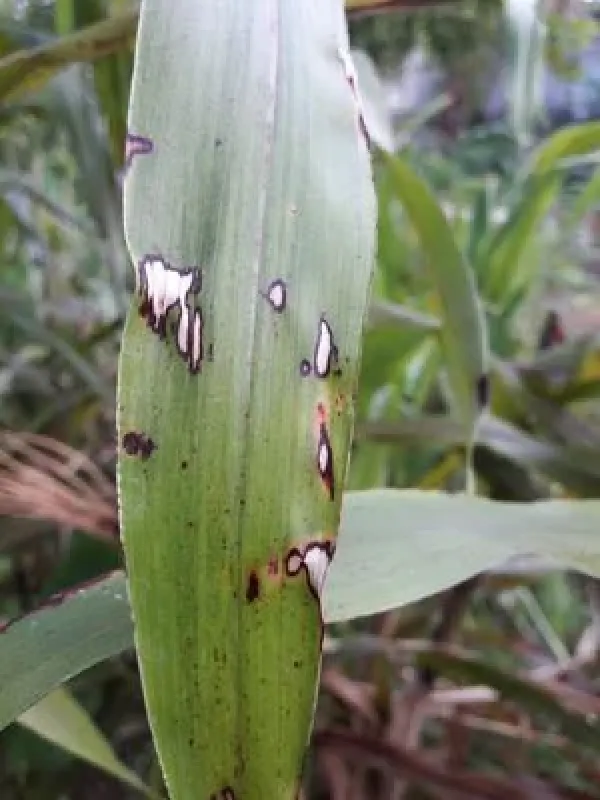
The initial symptoms appear as small, circular to irregular light-gray or tan spots on the leaves. These spots are often surrounded by a distinct dark brown or reddish-purple margin, which helps to identify the lesion.
As the spots mature, they enlarge, sometimes coalescing to form large, irregular necrotic patches that can cover significant portions of the leaf surface. Within these dead areas, the characteristic black pycnidia become visible.
Severely affected leaves often dry out and wither prematurely. This loss of functional leaf tissue reduces the plant's photosynthetic capacity, which is critical during the grain-filling stage.
In humid conditions, the lesions might exhibit a concentric ring pattern due to the periodic development of fungal growth within the necrotic tissue. The leaves become brittle and may tear in windy weather.
While primarily a foliar disease, symptoms are sometimes observed on leaf sheaths. Careful inspection of the pycnidia using a magnifying glass is necessary to distinguish this disease from other foliar spots.
Pathogen
The causal agent of this disease is the fungus Ascochyta sorghi, an imperfect fungus that belongs to the order Sphaeropsidales. The pathogen reproduces primarily through asexual spores called conidia, which are produced within small, spherical fruiting bodies known as pycnidia.
These pycnidia are typically found embedded within the necrotic leaf tissue, appearing as minute black dots. The fungus survives unfavorable conditions by overwintering as mycelium and pycnidia within infected crop debris left on the field surface or incorporated into the soil.
The pathogen specifically infects various types of Sorghum, including grain, forage, and sweet sorghum. It primarily affects the foliage, although leaf sheaths and occasionally stems can also show signs of colonization under severe conditions.
The biological cycle is driven by the production of numerous conidia, which are dispersed by wind and water splashes to healthy plants. This cyclic process can repeat several times throughout the growing season, especially under favorable environmental conditions.
As a specialized parasite, Ascochyta sorghi has adapted to the physiological characteristics of sorghum, effectively infecting plants through natural openings or small wounds in the plant tissue.
Conditions for development
The development of Ascochyta leaf spot is heavily dependent on high relative humidity and the presence of free moisture on the foliage, such as dew or rain. The optimal temperature for fungal infection ranges between 20°C and 25°C.
Rain splash is the primary mechanism for the localized spread of the disease within the field. Dense canopy cover further maintains high humidity levels around the lower leaves, providing an ideal microenvironment for pathogen activity.
Prolonged periods of overcast, rainy weather early in the growing season can lead to rapid disease outbreaks. The availability of susceptible host tissue and favorable climatic conditions are the two main drivers of epidemic potential.
Water-stressed or nutrient-deficient plants, particularly those with low potassium levels, often show increased susceptibility to the infection compared to well-nourished plants.
Dry, hot weather inhibits the pathogen's development and restricts the disease to existing lesions, limiting further spread until more favorable moist conditions return.
Why it matters
The primary impact of the disease is a significant reduction in the green leaf area available for photosynthesis. This decline leads to reduced energy production and stunted plant growth.
In grain sorghum, the disease can cause a reduction in yield and quality. Affected plants often produce smaller grain heads, and the seeds may be shriveled or lightweight, reducing the market value of the crop.
For forage sorghum, the disease reduces the nutritional value of the silage or hay, as the fungal infection degrades essential nutrients and proteins within the plant tissue.
Severe infestations can lead to premature senescence, which makes the crop more susceptible to stalk rot pathogens, potentially resulting in lodging and harvest difficulties.
The cumulative effect of these factors often results in a measurable decrease in overall field productivity, necessitating effective management interventions in high-risk areas.
Protection
- Crop rotation: Rotate sorghum with non-host crops for at least 2 years to break the infection cycle.
- Field sanitation: Thoroughly incorporate or destroy infected crop residues after harvest to reduce primary inoculum.
- Genetic resistance: Select and plant sorghum hybrids that have documented resistance or tolerance to local strains of the disease.
- Seed treatment: Use high-quality, fungicide-treated seeds to ensure a healthy start for the crop and reduce early-season infection.
- Fungicide applications: Apply approved foliar fungicides if weather conditions are conducive to disease development and symptoms appear early in the season.
Discussion
No discussions yet — be the first.