
Ascochyta leaf spot of honeysuckle
Neoascochyta desmazieri
Description
Symptoms
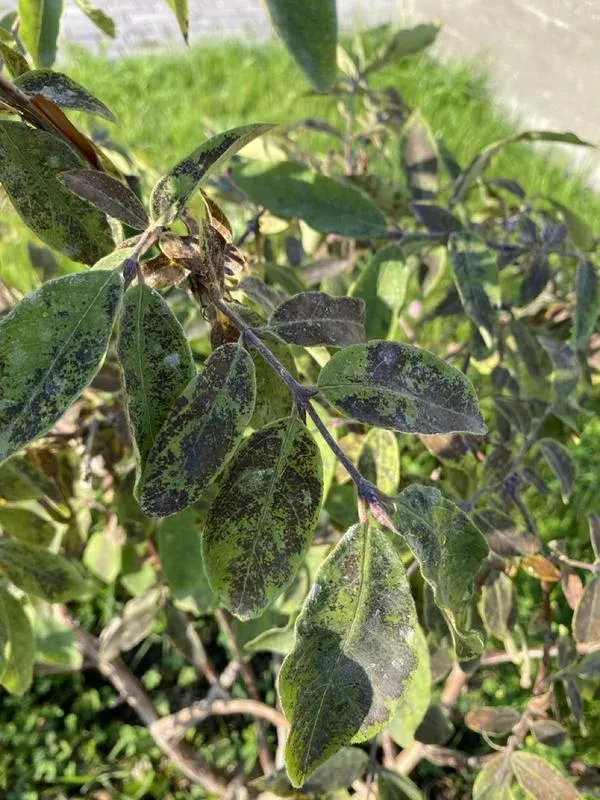
Initial symptoms include the appearance of small, circular, or irregular spots on the foliage, which are initially pale green or yellowish and eventually turn brown or gray.
A distinct dark or reddish-brown border often surrounds the lesions, creating a clear demarcation between the dead tissue and the healthy leaf area.
As the infection progresses, tiny black specks appear in the center of the lesions on the upper leaf surface; these are the mature pycnidia of the fungus.
Under favorable conditions, lesions can expand and coalesce, causing significant leaf tissue death and leading to early leaf drop (defoliation) by mid-to-late summer.
While primarily a foliage disease, it can occasionally affect petioles, which accelerates the wilting and detachment of the leaves from the main stem.
Pathogen
The disease is caused by the fungus Neoascochyta desmazieri (syn. Ascochyta desmazieri), an ascomycete pathogen specifically associated with honeysuckle (Lonicera) species.
The fungus produces pycnidia — flask-shaped fruiting bodies that develop within the necrotic lesions on the leaves, serving as the primary source of inoculum.
During its life cycle, the fungus survives the winter season as mycelium or pycnidia in fallen leaves and occasionally in diseased twigs still attached to the plant.
When environmental conditions become favorable in the spring, the pycnidia release spores that are disseminated to healthy tissues by rain splashes or air currents.
Once the spores land on a host leaf, they germinate and penetrate the epidermal layer, establishing an infection that leads to the development of characteristic spots.
Conditions for development
High humidity and frequent rainfall are the most critical environmental factors that promote the development and rapid spread of this fungal pathogen.
Poor air circulation within the shrub canopy creates a microenvironment that is constantly damp, allowing spores to germinate and infect tissues much more effectively.
The disease is most prevalent in dense, unpruned plantations where moisture remains trapped in the foliage for long periods after rainfall or morning dew.
Plants under physiological stress, such as those grown in nutrient-deficient soils or improperly watered, demonstrate higher susceptibility to infection.
The primary infection cycle typically occurs in late spring and summer when temperatures reach optimal levels for fungal metabolism and spore production.
Why it matters
The reduction of the functional leaf area directly impacts the plant's photosynthetic capacity, resulting in diminished plant vigor and slower growth rates.
Premature defoliation weakens the shrub, making it less capable of building up energy reserves for the following season's growth and blossom development.
Long-term infestation can lead to a general decline of the honeysuckle plant, making it more susceptible to environmental stressors and secondary pest attacks.
In nursery settings, the aesthetic damage caused by leaf spots reduces the commercial value of the plants, rendering them unfit for sale or professional landscaping.
The inability of the plant to properly harden off before the onset of winter due to early leaf loss can result in increased cold injury during harsh winters.
Protection
Sanitation is the most effective management strategy; removing and disposing of all fallen foliage in the autumn is essential to eliminate overwintering spores.
Pruning should be performed annually to ensure adequate light penetration and air movement through the canopy, which effectively reduces the humidity levels.
Avoiding overhead irrigation and opting for drip or base-level watering helps keep foliage dry, significantly reducing the chances of spore germination.
Fungicidal treatments, particularly those based on copper or systemic fungicides, should be applied at the first sign of symptoms during the early growing season.
- Regular monitoring of shrubs for early signs of leaf discoloration.
- Application of balanced fertilizers to support plant immune system health.
- Using sterilized pruning tools to prevent the mechanical spread of the fungus.
Discussion
No discussions yet — be the first.