
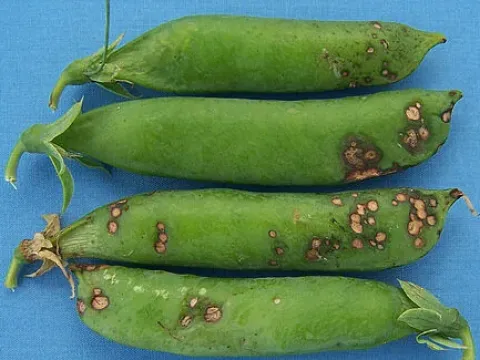
Ascochyta blight of peas
Ascochyta pisi
The disease is caused by the fungus Ascochyta pisi, which produces pycnidia — small, flask-shaped fruiting bodies containing spores (conidia). These spores act as the primary inoculums for the infection cycle.
What the section contains
Ascochyta blight of peas
The pathogen is highly persistent, capable of surviving for several years within infected seeds and on debris left in the soil after harvest. This makes it a recurring threat in agricultural systems.
During the growing season, the fungus spreads via rain splash and wind, transferring spores from crop residues or infected seedlings to healthy plant tissues, where it initiates new infections.
Biological development of the fungus is rapid under suitable conditions, as it penetrates the plant cells and draws nutrients, causing localized cell death and the characteristic lesions associated with the blight.
While Ascochyta pisi is specific to certain legumes, its ability to survive in various environments makes it a challenging pathogen for integrated pest management programs.
Symptoms initially appear as small, circular, or irregular lesions on leaves, stems, and pods. These spots are often pale brown in the center with a darker brown or black margin.
A diagnostic feature of the disease is the presence of tiny, dark black specks within the center of the lesions; these are the pycnidia, which are clearly visible under close inspection.
On stems, the lesions may elongate and become sunken, sometimes causing girdling of the stem, which weakens the plant and often leads to lodging or premature death.
Pod infection is particularly damaging, as the fungus penetrates the pod wall to infect the developing seeds, causing brownish, sunken spots and reducing the overall quality of the grain.
In cases of severe early-season infection, seedlings may develop root rot or stem lesions near the soil line, resulting in stunted growth or complete collapse of the plant.
The development of Ascochyta blight is strongly favored by cool to moderate temperatures and high humidity, particularly during the wet spring and early summer periods.
Frequent rainfall is the primary catalyst for the disease, as water droplets facilitate the discharge of spores from pycnidia and their subsequent transport onto healthy plant parts.
High-density planting configurations, which restrict airflow and maintain a damp microclimate within the crop canopy, significantly increase the risk of rapid disease expansion.
Inadequate soil drainage can lead to persistent humidity at the base of the plant, promoting initial infection through the splash of soil-borne spores onto lower leaves.
Late plantings or fields located in regions with frequent fog and mist are also at a significantly higher risk due to the extended leaf wetness periods that favor fungal germination.
The economic impact of Ascochyta blight is substantial, often manifesting as reduced yields due to defoliation, stunted plant growth, and direct pod damage.
Grain quality is severely compromised; infected seeds are often shriveled, have lower protein content, and possess significantly reduced germination vigor, making them poor choices for future planting.
Premature leaf drop forces the plant to divert resources away from seed filling, leading to smaller, lighter-weight grain that does not meet commercial market standards.
Physical damage to the plant structure, especially stem lesions, leads to crop lodging, which drastically complicates mechanical harvesting and causes further yield losses.
In heavily infested areas, the pathogen can force farmers to rotate out of peas for extended periods, reducing the flexibility of cropping systems and increasing management costs.
Using certified, disease-free seed is the most effective preventative measure to ensure that the pathogen is not introduced into new fields from the very beginning.
Implementing a strict crop rotation cycle of at least 3 to 4 years away from peas or other host legumes is essential to allow for the natural degradation of fungal inoculum in the soil.
Field sanitation practices, including the deep plowing of crop residues immediately after harvest, help bury the pathogen, which limits its ability to release spores in the next season.
Chemical control involving the use of systemic fungicides is recommended when environmental conditions are favorable for disease development or upon the first sighting of lesions.
Seed treatment with broad-spectrum fungicides provides a vital protective barrier, preventing early-season damping-off and helping seedlings establish a healthy root system.