
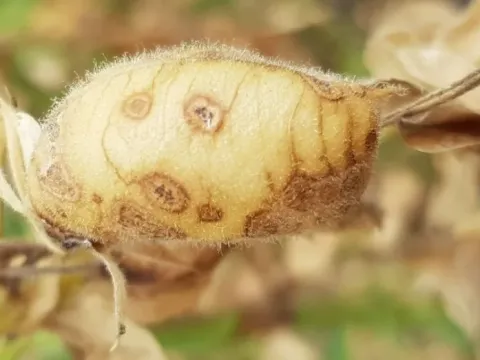
Ascochyta blight of chickpea
Ascochyta koolunga
The disease is caused by the fungus Ascochyta rabiei, which is highly specialized to chickpea. It is a severe necrotrophic pathogen capable of infecting all aerial parts of the plant throughout its life cycle.
What the section contains
Ascochyta blight of chickpea
The fungus survives on infected crop debris in the soil and is also seed-borne, meaning that infected seeds serve as the primary source of inoculum in newly sown fields.
Its reproductive structures, known as pycnidia, form in the necrotic spots and contain spores (conidia) that spread through rain splash and wind, facilitating rapid disease progression.
Different strains of the pathogen exist, which vary in virulence, making it difficult to maintain long-term resistance in cultivated chickpea varieties.
The pathogen's ability to remain viable in soil debris for several years necessitates strict agricultural management practices to break the disease cycle.
Symptoms appear as circular to irregular spots on leaves, which typically have a dark brown or black margin and a lighter center where tiny dark pycnidia develop.
On stems, the fungus causes deep, elongated lesions that can girdle the stem, causing it to weaken and eventually break, leading to the collapse of the plant.
Pods show sunken lesions that allow the pathogen to penetrate and infect the seeds directly, resulting in shriveled and discolored grains.
The presence of concentric rings of pycnidia within the lesions is the most reliable visual diagnostic marker for Ascochyta blight compared to other foliar diseases.
- Dark necrotic lesions on leaves and stems.
- Stem breakage and plant lodging.
- Sunken lesions on pods with visible pycnidia.
- Seed shriveling and discoloration.
- Premature yellowing and leaf fall.
Ascochyta blight thrives in cool, wet environments. The optimal temperature range for spore germination and infection is between 15°C and 25°C.
High relative humidity and frequent rainfall are critical for the spread of the disease, as water is required to splash the spores from infected debris to healthy plants.
Dense crop stands create a humid microclimate within the canopy, which promotes rapid colonization of the fungus on foliage and stems.
The disease spreads most aggressively during periods of overcast weather and frequent misty or rainy days, which are common in many chickpea-growing regions.
Wounds caused by insects or machinery act as entry points for the pathogen, significantly increasing the severity of the infection if they occur during favorable weather.
Ascochyta blight is considered the most destructive disease of chickpea, capable of causing total crop failure under severe epidemic conditions.
It severely impacts grain quality, making it unsuitable for commercial sale or use as seed, thereby causing major economic losses to farmers.
Early infections often lead to seedling blight, causing poor crop establishment and resulting in patchy stands that require costly reseeding.
The fungus reduces the photosynthetic area of the plant, leading to stunted growth, flower abortion, and a dramatic reduction in final grain weight.
In addition to yield loss, the cost of managing the disease with multiple fungicide applications adds significant overhead to the production budget.
The most important control measure is the use of disease-free, high-quality certified seeds treated with effective systemic fungicides.
Implementing a crop rotation strategy of at least 3–4 years away from chickpeas is essential to reduce the inoculum load present in the field soil.
Deep tillage or burying infected crop residues immediately after harvest helps accelerate the decomposition of infected material, effectively killing the fungus.
Fungicide sprays are necessary when conditions are conducive to disease, with timing based on weather monitoring and early detection of symptoms in the field.
Breeding for genetic resistance is the primary long-term goal, as it provides the most sustainable defense against the constantly evolving strains of the pathogen.