
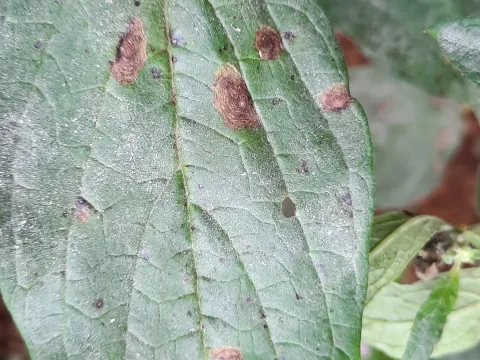
Alternaria leaf spot of sesame
Alternaria sesamicola
The causative agent of this disease is the imperfect fungus Alternaria sesamicola, which acts as a primary pathogen of sesame plants across various global agricultural regions.
What the section contains
Alternaria leaf spot of sesame
The fungus persists in infested soil debris and can be seed-borne, serving as a significant source of primary inoculum for subsequent planting seasons.
During the growing season, the pathogen produces numerous conidia that are disseminated through wind currents, splashing rain, and insect activity to healthy plant tissues.
The infection process involves the penetration of fungal hyphae through stomata or minor wounds in the epidermis, leading to the rapid colonization of host tissues.
The biology of Alternaria sesamicola is characterized by its high adaptability, allowing it to complete multiple infection cycles under favorable environmental conditions.
Initial symptoms are characterized by small, circular, or irregular brown-to-black lesions that appear on cotyledons and young leaves of the sesame seedlings.
These spots gradually enlarge and often exhibit concentric zonation, with the center of the lesion frequently covered by a dark, velvety layer of fungal conidiophores and spores.
Stems infected by the pathogen develop elongated dark cankers or lesions, which may girdle the stem, leading to lodging or the death of the plant parts above the lesion.
Sesame capsules (pods) are also susceptible; they develop sunken dark spots that hinder proper seed development and negatively affect the quality of the harvest.
Under conditions of high humidity, the lesions may coalesce, resulting in severe necrosis of leaves, defoliation, and overall stunted growth of the plant.
Development and spread of Alternaria leaf spot are highly favored by warm temperatures (ranging from +20°C to +28°C) accompanied by high relative humidity.
Frequent rainfall and prolonged periods of leaf wetness are critical factors that facilitate the germination of conidia and the infection of healthy foliage.
Dense planting configurations restrict airflow within the canopy, creating a microclimate with high humidity that accelerates the multiplication of the fungal pathogen.
Poor agricultural practices, including inadequate drainage and the presence of infected plant residue, significantly increase the risk of disease outbreaks in sesame fields.
Plants under physiological stress, often due to nutrient deficiencies or improper water management, show higher susceptibility to severe Alternaria attacks.
The disease causes significant economic losses by reducing both the yield volume and the quality of the extracted sesame seeds, including oil content.
Defoliation caused by the pathogen reduces the plant's photosynthetic capacity, which directly limits the energy available for grain filling in the capsules.
Severe infections lead to the production of shriveled, discolored, and light-weight seeds, which significantly reduces the market value of the crop.
Seed-borne infection reduces germination rates and seedling vigor, leading to poor plant stands and the necessity for replanting in heavily affected areas.
In regions where environmental conditions favor the fungus, crop losses can reach over 50% without the implementation of integrated disease management strategies.
Effective control strategies start with the selection of high-quality, disease-free seed and the application of appropriate chemical seed treatments.
- Practice a minimum 3-year crop rotation to break the cycle of the soil-borne pathogen.
- Deep plowing of harvested fields to bury infected plant residues, thereby preventing the buildup of inoculum.
- Monitoring the field regularly to detect early signs of infection and applying fungicides as a preventative or curative measure.
- Selecting sesame varieties that demonstrate resistance or tolerance to Alternaria leaf spot in local field trials.
Maintaining optimal soil fertility through balanced fertilization helps plants develop a stronger immune system, making them less prone to fungal infections.
Improved field sanitation and weed control measures further reduce the spread of the pathogen by eliminating alternative hosts and improving air circulation.