
Alternaria leaf spot of marigolds
Alternaria tagetica
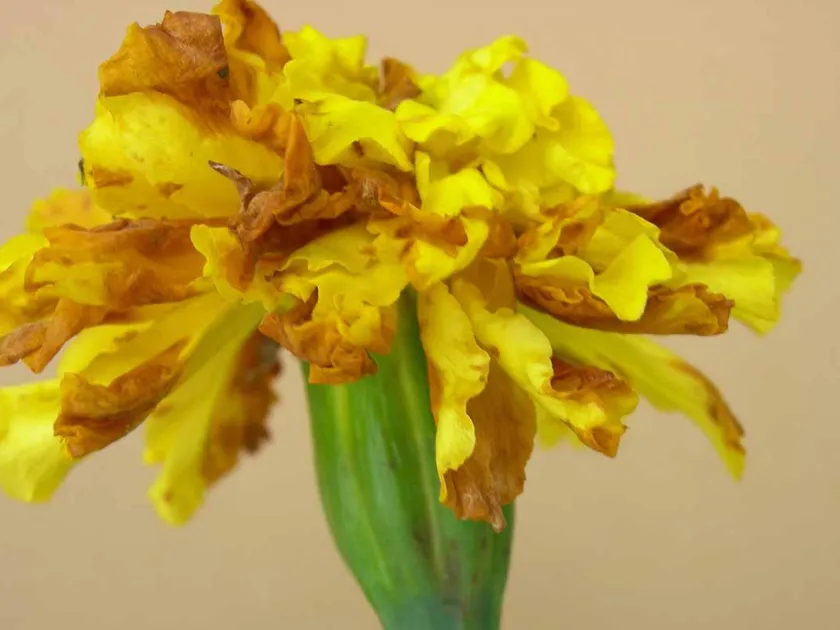
Description
Symptoms
Initial symptoms of Alternaria leaf spot on marigolds appear as small, water-soaked spots that are brown or dark in color, which gradually increase in size over time. These lesions often become circular or irregular and are eventually covered with a characteristic velvety olive-black fungal growth.
The disease typically starts on the lower, older leaves, which yellow and wither, leading to premature leaf drop and bare stems. As the infection progresses, it spreads to petioles and stems, forming elongated necrotic lesions that disrupt the plant's ability to transport nutrients.
Under conditions of high humidity, these spots can coalesce, causing large areas of the leaf tissue to die off. In severe cases, the flower buds are affected; they may rot before opening or become severely deformed, losing their aesthetic value.
Stem infections often manifest as dark, sunken cankers that can girdle the stems, causing them to collapse or break. Plants become severely stunted, losing vigor and becoming more susceptible to opportunistic secondary infections.
The overall appearance of an infected plant is characterized by progressive drying of the foliage, spreading from the base of the plant toward the upper canopy.
Pathogen
The pathogen responsible for this disease is the fungus Alternaria tagetica. This microorganism is capable of surviving for long periods in the soil or on plant debris in the form of mycelium and spores.
The fungus is a specialized parasite that causes leaf spots and tissue necrosis on a wide range of plants within the Asteraceae family. Its life cycle is heavily dependent on moisture and moderate temperatures, which are required for active sporulation.
Spores are dispersed by wind, splashing rain, or overhead irrigation, allowing the pathogen to move easily from infected plants to healthy ones. High plant density in beds creates favorable conditions for rapid infection spread.
Microscopic examination of affected tissue reveals chains of multicellular conidia. These spores are highly resistant to environmental stress, making them difficult to eradicate once they become established in a garden.
The pathogen can infect marigolds at all growth stages, from seedling emergence to full maturity, which poses a significant threat to commercial and home growers alike.
Conditions for development
The optimal conditions for Alternaria leaf spot development are temperatures between 22 and 28 degrees Celsius combined with relative humidity levels consistently above 80 percent.
Frequent rainfall, fog, and cloudy weather provide the perfect environment for spores to germinate on leaf surfaces. Prolonged leaf wetness, especially overnight, is a critical factor for infection.
Poor ventilation, resulting from overcrowding or improper planting distance, causes moisture to linger, which significantly accelerates disease transmission. Excessive overhead watering also serves as a major catalyst for the outbreak.
Plants that are over-fertilized with nitrogen tend to produce succulent growth, which is much more susceptible to fungal penetration. Failing to follow standard agricultural practices significantly increases the risk of an outbreak.
The inoculum load on a site increases if crop rotation is ignored and plant debris is left in the soil, which serves as the primary source of infection for the following season.
Why it matters
Alternaria leaf spot causes significant damage to the visual appeal of flower beds, rendering marigolds unsuitable for high-quality landscaping and floral displays.
Massive development of the disease causes widespread yellowing and death of the plant, resulting in total loss of garden aesthetic value and significant plant mortality.
The infection severely drains the plant's vitality, making it unable to withstand environmental stressors such as drought or extreme temperature fluctuations.
On seed production plots, the disease leads to a drastic reduction in seed quality; seeds often become shriveled, lose germination viability, and carry the fungus into the next growing season.
In nursery environments, the disease can wipe out entire batches of seedlings, leading to substantial economic losses for commercial flower producers.
Protection
To prevent disease spread, it is essential to manage irrigation carefully by avoiding leaf wetness and ensuring adequate spacing between plants to improve air circulation.
Rigorous soil management and crop rotation are critical; avoid planting marigolds in the same soil for at least 3 to 4 years to reduce the pathogen population.
Upon detection of initial symptoms, immediately remove and destroy infected plant parts or entire plants to sanitize the area and eliminate the inoculum source.
Effective management includes regular preventive and curative fungicide treatments using copper-based products, mancozeb, or difenoconazole, applied according to official guidelines.
- Use only healthy, certified seeds or transplants.
- Remove and destroy all plant debris at the end of the season.
- Apply potassium-phosphorus fertilizers to boost plant immunity.
- Sanitize garden tools to prevent mechanical transmission of spores.
Discussion
No discussions yet — be the first.