
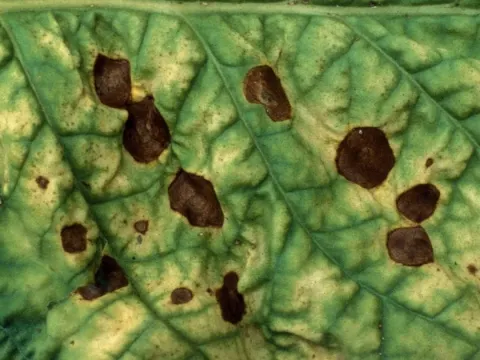
Alternaria leaf spot of ornamental plants
Alternaria ethzedia
The disease is caused by fungi of the Alternaria genus, specifically the species Alternaria ethzedia. This pathogen is a facultative parasite that thrives on a wide range of ornamental plant species by feeding on their tissues.
What the section contains
Alternaria leaf spot of ornamental plants
The fungus produces dark mycelium and chains of conidia, which are efficiently dispersed by wind, splashing water, and human activities. The spores enter the plant through natural openings like stomata or through small wounds in the plant cuticle.
Alternaria ethzedia is highly resilient, capable of surviving for long periods in infected plant debris or in the soil. This durability ensures that the pathogen remains a persistent threat within gardens and nurseries.
The life cycle of the pathogen is closely linked to environmental moisture. Upon reaching a host, the fungus colonizes the leaf tissue, secreting toxins that break down cellular structures and cause local necrosis.
Because the fungus accumulates in organic matter, it creates a cycle of infection that renews every season unless rigorous sanitation measures are implemented.
The primary symptom is the appearance of small, dark brown spots on the leaves. As the infection progresses, these spots often develop a characteristic concentric, target-like appearance.
Under conditions of high humidity, a fine, olive-black velvety layer develops on the necrotic spots. This layer consists of the fungus’s sporulation, serving as a primary indicator of active disease spread.
Over time, these spots coalesce, leading to severe chlorosis (yellowing) and premature senescence of the foliage. In advanced stages, infected leaves shrivel and fall off the plant.
The disease can also manifest on stems, causing dark, sunken lesions or cankers that compromise the plant's vascular system. If the pathogen affects the flower buds, it causes distortion and prevents normal blooming.
Symptoms typically progress from the bottom of the plant upwards, resulting in a gradual loss of foliage and overall plant decline.
The optimal temperature range for the development of the disease is between +22°C and +28°C. During these warm periods, the pathogen's metabolic activity and spore production increase dramatically.
Leaf wetness is the most critical environmental factor for infection. Frequent rain, overhead irrigation, and high relative humidity allow spores to germinate and colonize the tissue within a few hours.
Poor aeration within dense plantings promotes a microclimate where moisture persists for extended periods. This lack of airflow prevents leaves from drying out, facilitating the infection process.
Plants suffering from nutrient deficiencies or environmental stress exhibit weakened immune responses. Such plants are significantly more susceptible to Alternaria attacks compared to healthy, well-nourished ones.
In greenhouses, poor ventilation and condensation on leaves during the night provide an ideal environment for the rapid expansion of fungal colonies.
The most significant impact of Alternaria leaf spot is the degradation of the plant's aesthetic value. Since ornamental plants are grown for their appearance, the presence of leaf spots renders them unsuitable for display.
Systemic damage to the foliage impairs photosynthesis, slowing down the plant's growth and reducing its vigor. Weakened plants are less capable of surviving winter dormancy and are more susceptible to other pests.
For nurseries, this disease causes severe economic loss, as infected stocks cannot be sold or used for propagation. The rejection of diseased plants can lead to significant financial setbacks for growers.
If left untreated, perennial plants may undergo repeated defoliation, which eventually depletes their energy reserves and causes total plant death.
The disease forms long-term focal points of infection that require consistent and often expensive chemical intervention to manage in subsequent seasons.
Effective management begins with strict sanitation. Removing and destroying all infected plant debris at the end of the season significantly reduces the primary inoculum for the following year.
Improving air circulation by maintaining proper spacing between plants is essential. Always prioritize drip irrigation or soil-level watering to ensure the foliage remains dry.
Promoting plant health through balanced fertilization, with an emphasis on potassium and phosphorus, helps strengthen cell walls and improves natural resistance against fungal penetration.
When symptoms are detected, protective and systemic fungicides should be applied. The most effective active ingredients include:
- Difenoconazole;
- Mancozeb;
- Chlorothalonil;
- Pyraclostrobin;
- Copper-based compounds.
Regular applications, particularly during periods of wet weather, are necessary. It is crucial to rotate products with different modes of action to prevent the development of fungicide resistance in the fungal population.