
Xenorhabdus
Xenorhabdus
The genus Xenorhabdus comprises Gram-negative rod-shaped bacteria belonging to the Morganellaceae family. These bacteria maintain an obligatory symbiotic relationship with entomopathogenic nematodes of the Steinernema genus.
What the section contains
Xenorhabdus
It is crucial to clarify that these bacteria are not plant pathogens and do not cause diseases in agricultural crops. Instead, they play a vital role in biological pest control by killing soil-dwelling insects.
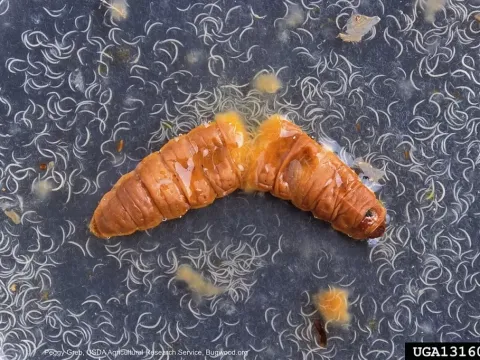
The bacteria reside in the gut of the nematode. When the nematode infects an insect larva, the Xenorhabdus bacteria are released into the insect's hemolymph, where they multiply rapidly and produce specialized toxins.
These toxins kill the host insect quickly. Subsequently, the bacteria decompose the insect's tissues, providing essential nutrients that support the development and reproduction of the nematode population.
Because these bacteria are highly specialized to infect insects, they have no impact on the physiology or health of plants. Their use is considered an environmentally friendly alternative to chemical pesticides.
The activity of the Xenorhabdus complex is dependent on the mobility of the nematodes, which requires adequate soil moisture. The ideal temperature range for the activity of the bacteria-nematode complex is between 15 and 25 degrees Celsius.
Xenorhabdus bacteria are highly sensitive to UV light and desiccation, which means they must be applied directly into the soil or through irrigation systems. Outside the nematode or the host cadaver, these bacteria cannot survive for extended periods.
Soil texture and pH levels play a significant role in the effectiveness of the treatment. Light, well-aerated soils facilitate the movement of the nematodes, ensuring a more rapid distribution of the bacteria within the root zone.
During periods of severe drought, the effectiveness of the treatment decreases significantly. Maintaining soil moisture is essential for the continued success of the biological control agent.
Good soil management, including the addition of organic matter, helps create a stable environment for these biological agents to thrive and persist in the field after application.
There is no harm caused to agricultural plants by Xenorhabdus. Labeling them as a "plant disease" is a misunderstanding of their biological function, as they are strictly beneficial organisms in the context of crop management.
No negative impacts on plants, humans, or beneficial fauna have been documented. The use of these bacteria contributes to the reduction of chemical residues in the environment, supporting sustainable farming practices.
The only potential risk is the improper application of commercial formulations if they are contaminated with secondary agents, but the bacteria themselves are inherently safe for agricultural systems.
Insects infested with these bacteria cease feeding almost immediately. This rapid cessation of damage protects crops from root-feeding and soil-borne pests more effectively than many slow-acting chemical agents.
By effectively suppressing pest populations, Xenorhabdus helps prevent indirect damage caused by insects that often act as vectors for other true plant pathogens.
Control methods involve the application of products containing entomopathogenic nematodes as carriers for the Xenorhabdus bacteria. The goal is to maximize the interaction between the carrier nematodes and the target pest larvae.
- Application via drip irrigation systems.
- Soil drenching around the root zone of crops.
- In-furrow application during planting.
When implementing biological control, it is essential to avoid using strong fungicides that might inhibit the bacterial population. Proper timing of chemical and biological treatments is necessary for success.
Storage conditions must be strictly followed, as heat and light can kill the symbiotic bacteria within the nematodes, rendering the product ineffective. Always store in a cool, dark place as directed by the manufacturer.
Successful management requires monitoring pest populations to time the application when larvae are most susceptible. Using these biological agents at the right time ensures robust protection throughout the growing season.