
Woronichinia
Woronichinia
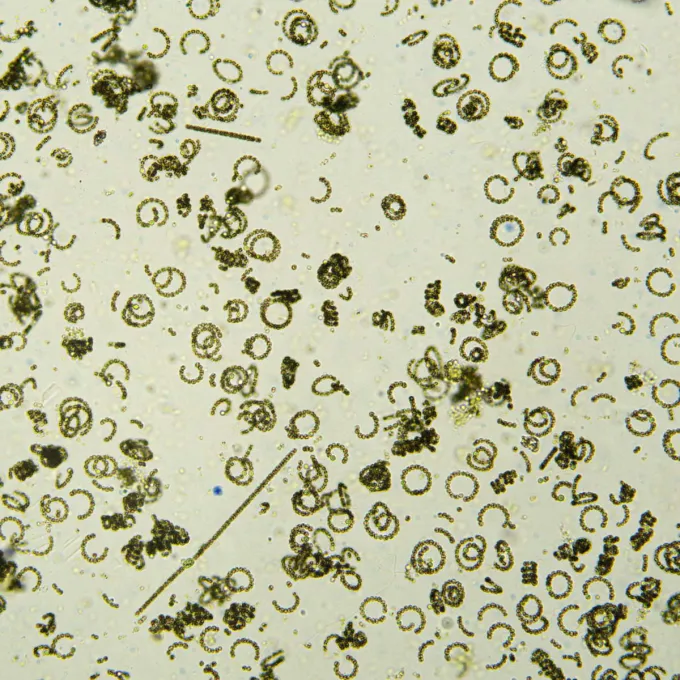
Description
Symptoms
The most visible sign of Woronichinia presence is the distinct, bright blue-green coloration of water in reservoirs or irrigation tanks.
A slimy, gelatinous biofilm forms on the interior walls of pipes, nozzles, and hydroponic gutters, often clogging the system components.
Plants affected by contaminated water may show signs of stress, including leaf wilting and a lack of vigor despite adequate fertilization.
Roots in hydroponic setups often exhibit browning and a slimy texture, which severely hinders the uptake of nutrients and dissolved oxygen.
Small, granular green clusters can be observed floating in the water or accumulating near filter screens and pressure regulators.
Pathogen
Woronichinia is a genus of cyanobacteria that acts as a significant biological contaminant in agricultural water sources and irrigation systems.
The organism forms colonial structures encased in a mucilaginous sheath, which allows it to persist in various environmental conditions.
In a horticultural context, it is considered an indicator of poor water quality or excessive nutrient loading in irrigation reservoirs.
Its ability to reproduce rapidly through cellular division makes it a persistent challenge in closed-loop systems such as hydroponics.
While not a traditional plant pathogen invading tissues, it creates micro-environments that facilitate the development of harmful secondary flora.
Conditions for development
High water temperatures, typically ranging from +20°C to +30°C, significantly accelerate the growth rate of Woronichinia colonies.
Excessive concentrations of nitrogen and phosphorus, resulting from nutrient runoff or over-fertilization, provide ideal fuel for the bloom.
Stagnant water in uncirculated sections of irrigation networks creates a stable environment for the rapid expansion of these cyanobacteria.
Extended exposure to sunlight in open-air reservoirs triggers intensive photosynthesis, leading to massive blooms of the microorganism.
High pH levels in the water (alkaline conditions) generally favor the physiological processes of this genus, leading to more resilient colonial structures.
Why it matters
The primary harm is the mechanical clogging of irrigation equipment, specifically drip emitters and spray nozzles, leading to irrigation non-uniformity.
Decomposing colonies release toxic metabolites that can exert negative allelopathic effects on the root systems of sensitive crop plants.
The buildup of biological slime reduces the amount of dissolved oxygen available to the roots, potentially inducing hypoxic stress.
Microbiological contamination of water reduces the overall sanitary quality of the crop, posing risks for food safety regulations.
Increased maintenance costs associated with system flushing, filter replacement, and chemical disinfection represent a significant economic loss.
Protection
Mechanical filtration systems, particularly sand or disc filters, are essential for removing colonial biomass from the irrigation water supply.
Ultraviolet (UV) radiation treatment is highly effective at neutralizing the cells of Woronichinia, preventing further growth in closed systems.
Regular disinfection of the irrigation infrastructure using hydrogen peroxide or peracetic acid helps to dissolve and remove stubborn biofilms.
Covering open water storage tanks with opaque materials prevents light penetration, effectively starving the microorganisms of energy for photosynthesis.
Periodic monitoring of water nutrient levels and strict adherence to fertilization schedules prevent the eutrophication that promotes blooms.
Discussion
No discussions yet — be the first.