
Yellow disease of hyacinths
Xanthomonas hyacinthi
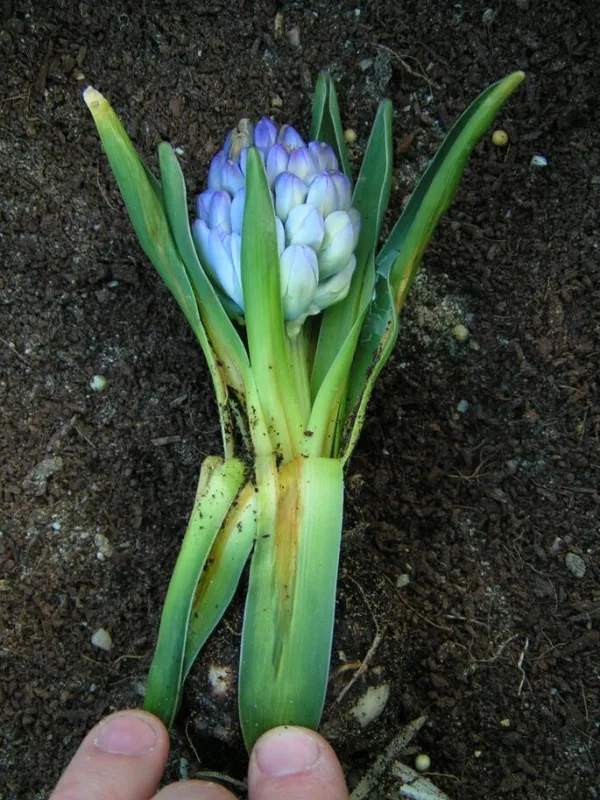
Description
Symptoms
The first external signs of infection appear on the leaves as long, pale yellow to translucent streaks. Over time, these streaks become necrotic and turn brown.
As the disease progresses, the flower stalks become stunted, twisted, and often fail to develop or bloom properly, turning dry and brittle prematurely.
When an infected bulb is cut open, one can observe severe internal rot. The scales become soft, mushy, and yellow in color, emitting a distinct foul odor characteristic of bacterial decay.
The root system of heavily infected plants deteriorates quickly, causing the plant to lose its grip on the soil. In humid conditions, a slimy bacterial exudate covers the affected surface.
- Long yellow streaks on foliage
- Stunted and twisted flower stalks
- Soft, mushy rot of bulb scales
- Yellowish foul-smelling bacterial slime
Pathogen
The causative agent of this disease is the phytopathogenic bacterium Xanthomonas hyacinthi. It is a highly specialized pathogen that specifically infects hyacinth bulbs and leaves.
The bacteria invade the plant vascular system through natural openings, such as stomata, or through wounds caused by insects, harvesting, or improper handling of the bulbs.
Once inside, the bacteria multiply rapidly within the xylem vessels, producing specific enzymes that break down the host cell walls, leading to the collapse of internal tissues.
The pathogen survives through the dormancy period inside infected bulbs. It can also persist in contaminated soil where remnants of diseased plants have decayed.
The survival strategy of Xanthomonas hyacinthi involves maintaining a stable population density within the infected host, allowing it to re-emerge during the next growth season.
Conditions for development
High humidity and prolonged periods of wet weather are the primary catalysts for the development of yellow disease. Moisture facilitates the movement of bacteria from the soil to the plants.
The pathogen thrives at temperatures between 20°C and 25°C. Warm and wet conditions during the growing season significantly increase the rate of infection spread.
Inadequate ventilation during bulb storage is a major risk factor. When moisture accumulates on the surface of stored bulbs, the bacteria can easily spread from one bulb to the entire stock.
Physical injuries to the bulbs, whether from soil pests or improper digging, provide an entry point for the bacteria to colonize the healthy tissue.
Short-term crop rotation is another favorable condition for the disease. Planting hyacinths in the same plot too frequently allows the bacterial population in the soil to reach critical levels.
Why it matters
Yellow disease is considered one of the most destructive bacterial infections for hyacinths, often rendering infected bulbs completely useless for propagation.
The disease effectively stops the biological cycle of the plant, preventing it from producing flowers and offspring. This causes significant financial losses for both commercial growers and amateur gardeners.
The rapid spread of the disease under favorable conditions can wipe out entire flower beds or storage inventories, making it a major concern in hyacinth cultivation.
Because the infection can be latent (hidden) inside the bulb, it is often introduced into new areas unnoticed, making its management a challenging task.
Surviving plants are usually severely weakened, showing poor growth and extreme susceptibility to secondary fungal infections that further degrade the quality of the bulbs.
Protection
Strict quarantine measures are the most effective way to manage the disease. Any plant showing symptoms must be immediately removed and destroyed to prevent spread.
A rigorous inspection of all bulbs before storage and planting is mandatory. Any bulb showing spots, softness, or an unusual smell should be discarded.
Prophylactic treatment of bulbs with antibacterial copper-based fungicides before planting can provide a protective layer against the initial infection.
Maintaining optimal storage conditions is vital: bulbs must be kept in a dry, cool, and well-ventilated environment to prevent the accumulation of condensation.
Cleaning and disinfecting gardening tools with alcohol or a bleach solution after handling infected material is essential to prevent mechanical transmission of the pathogen.
Discussion
No discussions yet — be the first.