
Xylella fastidiosa
Xylella
Description
Symptoms
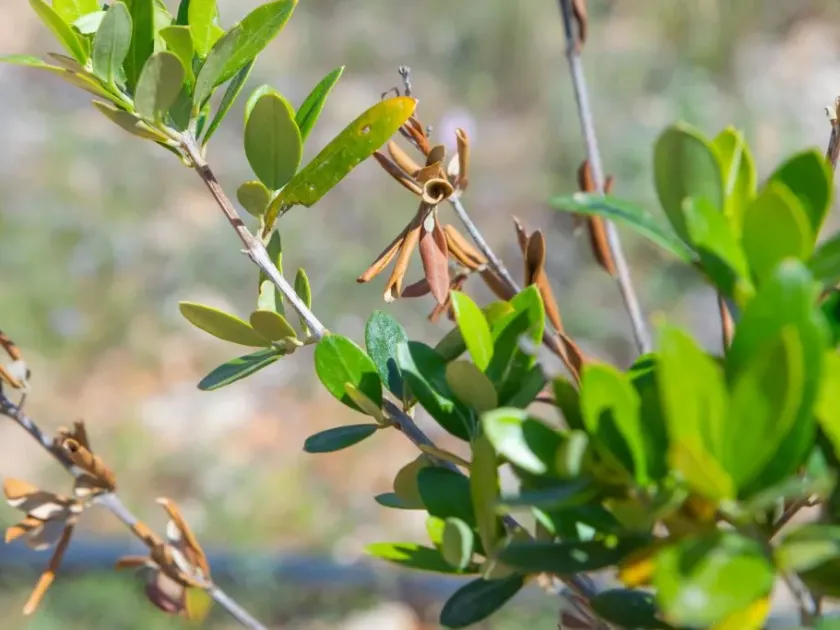
The primary symptom of the disease is a condition known as quick decline, characterized by the rapid browning and scorching of leaf margins.
As the infection progresses, the scorched leaves often remain attached to the branches, while the canopy of the tree gradually thins out.
Infected olive trees exhibit a specific syndrome where the canopy dies back, and the tree eventually succumbs to systemic water stress.
Grapevines show signs of uneven maturation and necrosis on the leaf blades, which can lead to the total collapse of the vine structure.
Early-stage infection may manifest as localized wilting, where only specific branches show stress symptoms while others remain apparently healthy.
Pathogen
Xylella fastidiosa is a Gram-negative, xylem-limited bacterium that colonizes the plant's vascular tissue, specifically the xylem vessels.
The bacteria proliferate and form biofilms within the xylem, which physically obstruct the transport of water and nutrients from roots to the leaves.
This pathogen has a remarkably broad host range, infecting hundreds of species across woody, shrubby, and herbaceous plant categories.
Transmission occurs through xylem-feeding insects, most notably sharpshooters and spittlebugs, which transfer the bacteria while feeding on plant sap.
Once an insect acquires the pathogen, it remains an effective vector for the rest of its life, facilitating the rapid spread of the disease within an orchard.
Conditions for development
Xylella fastidiosa thrives in warm temperate climates where mild winters allow insect vectors to survive and remain active throughout the year.
The bacterium's optimal growth temperature aligns with summer conditions, typically ranging from 20°C to 30°C, which accelerates colony formation.
Long-distance dissemination is primarily human-mediated, occurring through the international and regional movement of infected planting materials and nursery stock.
Local spread is driven by the density of the insect vector population, which creates a high-pressure environment for healthy plants in surrounding areas.
Insufficient phytosanitary inspections and the lack of robust early-detection systems significantly contribute to the risk of widespread epidemics.
Why it matters
The economic impact of Xylella is severe, as it causes permanent damage to long-term crops like olives, almonds, and grapes with no known cure.
Massive yield losses are inevitable, and in many cases, infected plantations must be completely uprooted to prevent further spread of the pathogen.
Beyond crop loss, the disease necessitates costly quarantine programs and environmental management efforts to control potential outbreaks.
Chronic water stress caused by the bacterial obstruction weakens the plants, making them more susceptible to opportunistic secondary pests and diseases.
The presence of Xylella fastidiosa acts as a major trade barrier, leading to strict restrictions on the export of plant products from affected regions.
Protection
The foundation of Xylella management is the use of certified, disease-free nursery stock, which is critical to preventing new outbreaks.
Regular surveillance and molecular testing (such as PCR) are essential for the early detection and management of localized infection clusters.
Integrated Pest Management (IPM) strategies, including the control of spittlebugs and other vectors, are necessary to reduce the transmission rate.
Sanitation practices, such as the removal of symptomatic branches and the elimination of weed hosts, help to lower the inoculum reservoir.
- Mandatory quarantine for all plant materials entering high-risk areas.
- Use of resistant or tolerant plant varieties if commercially available.
- Disinfection of pruning tools to avoid cross-contamination.
- Enhanced public awareness programs for farmers and nursery owners.
Discussion
No discussions yet — be the first.