
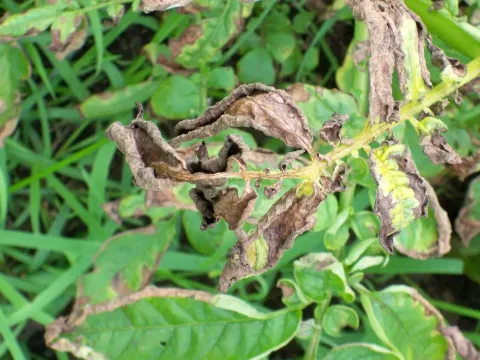
Potato marginal leaf burn
Potato marginal
Potato marginal leaf burn is not a biotic disease caused by pathogens such as fungi, bacteria, or viruses. It is classified as a physiological disorder arising from nutritional imbalances or environmental stress.
What the section contains
Potato marginal leaf burn
The primary driver of this condition is a deficiency of potassium within the plant tissues. Potassium is vital for enzyme activation, water regulation, and the translocation of sugars from leaves to tubers.
When the plant cannot access sufficient potassium, the marginal edges of the leaves—which are the furthest points from the supply source—begin to exhibit signs of metabolic failure and tissue necrosis.
Other nutritional imbalances, particularly an excess of nitrogen, can interfere with potassium uptake, thereby triggering the symptoms even if potassium is present in the soil in moderate amounts.
The condition represents a breakdown in the plant's internal homeostasis, where the physiological functions of leaves are compromised due to the inability of the roots to supply essential nutrients during periods of high demand.
The earliest visual symptoms typically appear on the lower and mid-canopy leaves. The margins of the leaflets start to lose their healthy green color, turning yellowish before progressing to a distinct brown.
The necrotic tissue follows the periphery of the leaf, creating a burnt appearance. This scorched edge often becomes brittle and may curl or roll, leading to significant structural damage to the leaf blade.
A diagnostic feature of marginal leaf burn is that the center of the leaflet often remains green and functional for a prolonged period, distinguishing it from most infectious leaf spots.
As the disorder progresses, the necrotic areas may expand inward between the leaf veins. In severe cases, the entire margin may die, leading to premature senescence and drop of the affected leaves.
Because the disorder is systemic in its nutritional source, it usually affects the older foliage first, as the plant mobilizes remaining potassium to support the younger, rapidly developing leaves.
The disorder is most prevalent in light-textured soils such as sands or sandy loams. These soils have low cation exchange capacity, making potassium susceptible to leaching during heavy rains.
Environmental stress, particularly high temperatures and low soil moisture, exacerbates the condition. Increased transpiration rates demand more potassium, which the roots cannot provide if the soil is dry.
Poor soil aeration caused by compaction hinders root development and nutrient uptake. In such environments, the roots cannot effectively explore the soil volume, limiting their access to potassium reserves.
Soil pH plays a critical role, as acidic conditions can render potassium less available to the potato plant. Maintaining an optimal pH range is essential for nutrient solubility and plant uptake efficiency.
High levels of competing ions, such as sodium or magnesium, can also create an antagonistic effect, further reducing the plant's ability to absorb the necessary potassium for leaf stability.
The reduction in green leaf surface area limits the plant's photosynthetic capacity. Consequently, the production of carbohydrates, which are stored in the tubers as starch, is significantly hampered.
Yield loss is the most direct consequence, as plants fail to reach their full potential. Tubers are often smaller, lower in specific gravity, and may have inferior storage characteristics.
Weakened plants are significantly more vulnerable to secondary opportunistic infections. Dying tissues provide easy entry points for various pathogens, potentially leading to widespread rot.
Overall plant vigor is decreased, which may shorten the growing season and prevent the crop from reaching full maturity before harvest, ultimately reducing the total marketable yield.
Economic losses arise not only from reduced tonnage but also from decreased quality. Markets often penalize crops that exhibit physiological stress, as they may not meet processing or culinary standards.
Effective management begins with soil testing to determine current nutrient levels. Applying potassium fertilizers such as potassium sulfate is the most direct way to correct the deficiency.
Providing adequate and uniform irrigation is crucial. Consistent water supply helps maintain plant turgor and facilitates the continuous movement of nutrients from the soil to the leaves.
Avoiding excessive nitrogen applications is essential to ensure a balanced nutrient ratio. Fertilizer management should be phased to align with the plant's growth stages to prevent nutritional competition.
Amending the soil with organic matter improves its structure and nutrient-holding capacity. This helps stabilize the root zone environment and ensures better access to available nutrients.
- Apply balanced potassium-based fertilizers based on soil analysis.
- Maintain consistent soil moisture through regular irrigation.
- Avoid over-application of nitrogen to prevent nutrient antagonism.
- Perform foliar feeding with potassium for rapid emergency correction.