
Potato star scab
Streptomyces stelliscabiei
Description
Symptoms
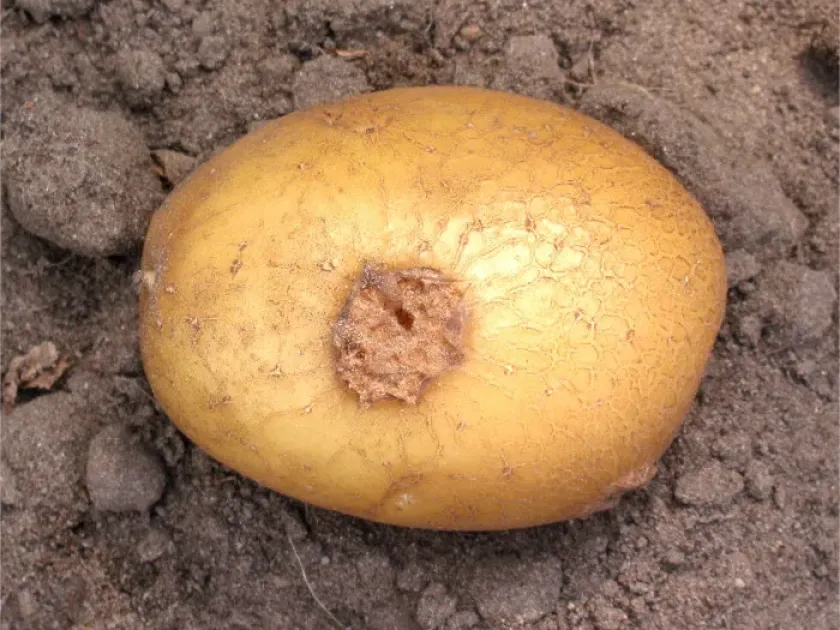
The primary symptom of star scab is the appearance of specific lesions on the tuber surface in the form of deep ulcers resembling star-shaped cracks.
Unlike common scab, the edges of these ulcers are often raised, and their shape is characterized by a distinct radial structure that makes the affected areas very noticeable during storage.
The damage affects the tuber periderm, and the tissues inside the ulcer can take on a corky structure, leading to deformation of the potato's marketable appearance.
The disease may manifest not only on tubers but also on underground parts of the stems, causing partial necrosis under conditions of high soil moisture.
Visually, such tubers look unattractive, which sharply reduces their market value and suitability for long-term storage due to the risk of secondary infections.
Pathogen
The pathogen responsible for this disease is a soil-borne bacterial microorganism — an actinomycete (filamentous bacterium) known as Streptomyces stelliscabiei.
This pathogen is a typical inhabitant of soil microflora, capable of surviving in the ground for a long time by feeding on organic residues.
The bacteria penetrate the tuber mainly through lenticels or micro-cracks that form during potato growth, making the plant vulnerable during early stages of yield development.
The organism belongs to the group of actinomycetes, which are capable of producing specific enzymes that break down the cell walls of the host plant tissues.
A biological feature of the pathogen is its high resistance to extreme temperatures and its ability to survive in a wide range of soil pH environments.
Conditions for development
The development of star scab is most favored by alkaline or neutral soil reactions, which is an important factor to consider when planning fertilizer applications.
Excessive application of fresh manure or lime, which raises soil pH, creates a favorable environment for the active reproduction of this strain of streptomycetes.
Optimal conditions for infection are observed during periods of dry weather when surface soil layers dry out, while tuber development requires increased nutrition.
A lack of moisture during the tuberization period weakens the plant's immune system, facilitating bacterial access to the delicate tissues of the potato periderm.
The infection spreads actively through contaminated planting material and when using soil-tilling tools that carry the pathogen's spores.
Why it matters
The main damage lies in a significant loss of marketable appearance, making the tubers unsuitable for sale in retail trade networks.
Star scab significantly increases the risk of dry and wet rot development, as the ulcers serve as open gateways for fungal and bacterial infections during storage.
With intense infestation, a decrease in tuber mass is observed, leading to a loss in total potato yield in fields with a high infectious background.
The taste quality of affected potatoes may deteriorate, and the starch content in damaged tissues decreases due to metabolic disturbances in the tuber.
Heavily infested potato batches do not store well, leading to significant economic losses for agricultural producers and farms.
Protection
The main control method is compliance with crop rotation, which prevents planting potatoes on the same field more than once every 3-4 years.
It is recommended to plant resistant varieties that possess a denser skin, making it difficult for the pathogen to penetrate the plant tissues.
An important technique is soil acidification by applying physiologically acidic fertilizers, such as ammonium sulfate, which suppresses the development of streptomycetes.
Using healthy, treated planting material significantly reduces the risk of initial soil contamination on clean plots.
- Irrigation during the tuberization period.
- Avoidance of fresh manure application.
- Regular disinfection of agricultural equipment.
Discussion
No discussions yet — be the first.