
Potato Pectobacterium rot
Pectobacterium polonicum
The causal agent of this disease is the gram-negative bacterium Pectobacterium polonicum. This pathogen belongs to the Pectobacteriaceae family and is known for producing specialized enzymes that break down plant cell walls.
What the section contains
Potato Pectobacterium rot
The infection manifests as soft bacterial rot, a destructive condition that affects both tubers and vegetative plant parts. The bacterium is highly mobile and exhibits aggressive colonization characteristics within host tissues.
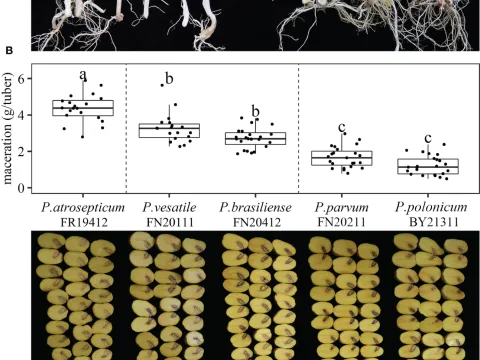
As a relatively newly identified species, Pectobacterium polonicum has shown significant virulence, particularly towards potato cultivars. Its ability to survive in soil and on plant debris makes it a persistent threat.
The transmission of the pathogen occurs primarily through infected tubers, infested soil, and via the movement of water during irrigation or heavy rain. Insects can also act as vectors for the bacteria.
Its biological flexibility allows it to thrive in various temperate and subtropical climates, making it a significant concern for global potato production security.
The most distinctive symptom is the development of soft, watery rot on tubers. Affected tissue rapidly loses its cellular structure, turning into a mushy, discolored mass with a foul odor.
Above-ground symptoms often include yellowing, wilting, and premature senescence of the foliage. In severe cases, the entire stem may collapse near the soil line, appearing soft and darkened.
A cross-section of an infected tuber typically reveals a sharp, often dark boundary between the decaying diseased tissue and the remaining healthy portion of the potato.
In the field, the infection often appears in patches. These localized outbreaks are usually associated with areas of high soil moisture or drainage issues that facilitate bacterial movement.
Diagnosis in the field can be challenging due to the similarity of symptoms with other soft rot species. Accurate identification of Pectobacterium polonicum necessitates molecular laboratory assays.
Excessive soil moisture is the primary driver of disease development. High humidity levels in the field or saturated soil conditions significantly enhance the ability of bacteria to enter and move through plant tissues.
The pathogen thrives in temperatures between 20°C and 28°C. During warm, moist growing seasons, the bacterial activity and infection rate increase dramatically.
Mechanical injuries sustained during harvesting, handling, or transportation provide easy entry points for the pathogen. Damaged skin is a major vulnerability for potato tubers.
Inadequate ventilation in storage facilities creates conditions for rapid secondary infection. The accumulation of condensation on tuber surfaces is a major trigger for massive rot outbreaks.
Poor crop rotation practices, where potatoes are grown consecutively or alongside other susceptible host plants, allow the bacterial population to build up in the soil.
The primary economic impact is the total loss of marketability of infected tubers. Once rot sets in, the affected batch often becomes a complete loss for both processing and fresh market sale.
The disease poses a severe risk to storage longevity. Even a small number of infected tubers can cause a rapid spread, compromising entire warehouses of harvested potatoes.
Yield loss is significant, especially in regions with high rainfall during the late growing season. It affects both the quantity and the physical quality of the potato crop.
The use of infected seed tubers reduces plant vigor and stand uniformity. This leads to increased costs for growers who must replant or manage patchy fields.
Stringent export regulations often restrict the movement of potatoes from affected regions, impacting the global trade and profitability of the potato industry.
- Plant only certified, disease-free seed potatoes to prevent introducing the pathogen to your fields.
- Implement strict crop rotation schedules, avoiding host plants for at least 3–4 years.
- Maintain optimal storage conditions with low temperatures and sufficient airflow to prevent moisture accumulation.
- Minimize mechanical damage to tubers during all stages of harvest and grading processes.
- Sanitize all farming equipment, storage crates, and facilities to reduce the overall inoculum pressure on the farm.