
Description
Symptoms
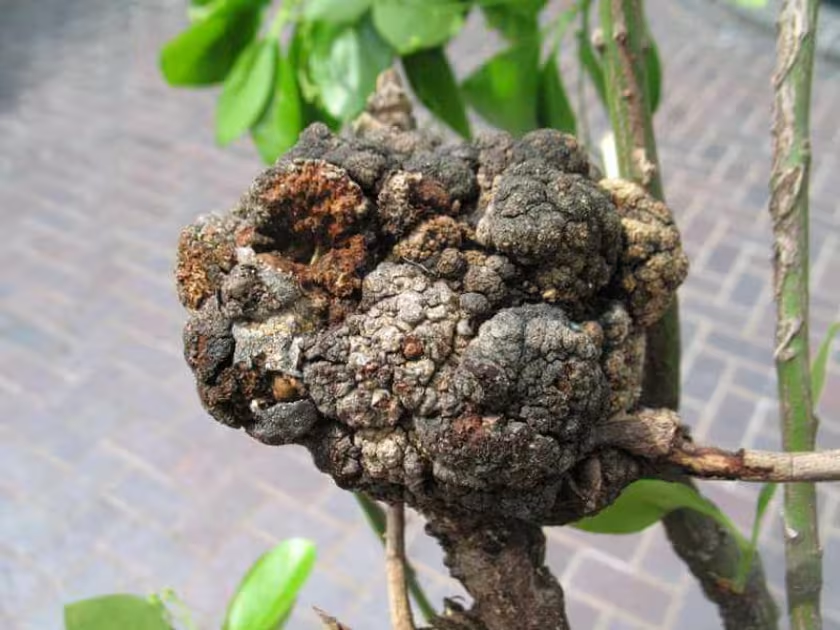
The most prominent sign is the formation of tumors or galls on roots, stems, and leaf petioles. These growths are physical manifestations of the virus-induced disruption in normal developmental signaling within the plant.
Tumors can range from small, inconspicuous nodules to large, deformed tissue masses. When these occur on the root system, they significantly hinder the plant's ability to absorb water and essential nutrients effectively.
Affected tobacco plants typically display stunted growth and reduced vigor. Foliage may exhibit chlorosis and general weakness, as the virus reallocates the plant's metabolic energy toward supporting these pathogenic growths.
In advanced stages of infection, the structural integrity of the plant is compromised. The presence of large galls on the stem can lead to brittleness, increasing the risk of breakage due to environmental stress like strong winds.
Systemic symptoms often include an overall decrease in biomass and poor development of the root system. These physiological changes ultimately result in lower quality yields for commercial tobacco growers.
Pathogen
The causal agent of this disease is the Wound tumor virus (WTV), which belongs to the Reoviridae family. This virus contains a double-stranded RNA genome and exhibits unique biological characteristics in its host interactions.
It is a systemic pathogen capable of replicating in both the plant host and its insect vector. This duality allows the virus to maintain itself within the ecosystem, moving between diverse plant species and their respective insect populations.
The primary transmission mechanism involves leafhoppers, which serve as both vectors and reservoir hosts. The virus undergoes transovarial transmission within the insect population, meaning that infected females pass the pathogen to their offspring.
The host range is broad, including several agricultural crops and common weeds. Tobacco and other solanaceous plants are particularly susceptible, making the disease a concern for various agricultural sectors globally.
The infection process targets meristematic tissues, which are actively dividing. By hijacking the plant's cellular machinery, the virus induces abnormal and uncontrolled cell division, which leads to the characteristic tumor-like growths.
Conditions for development
Disease development is heavily dependent on the population dynamics of the leafhopper vector. Warm and humid environmental conditions are highly favorable for vector proliferation, leading to increased transmission rates.
Higher ambient temperatures can accelerate the viral replication process within the plant tissues. This results in a shorter incubation period and more rapid onset of severe symptoms during the growing season.
The presence of wild host plants acts as a consistent reservoir for the virus. These weeds allow the pathogen to persist in the field environment throughout the year, even when the primary crop is not present.
Mechanical damage to the roots or stems, often caused by tillage or improper cultivation practices, provides entry points for the virus. This increases the susceptibility of the crop to localized infections that develop into tumors.
Nutritional imbalances or environmental stressors make plants more vulnerable to successful viral infection. Robust, healthy plants are better able to tolerate initial challenges compared to those experiencing physiological stress.
Why it matters
The primary economic impact stems from significant losses in both yield and quality. The energy required to sustain the tumorous growths is diverted from productive biomass, such as leaves in the case of tobacco.
Affected plants are often unfit for commercial processing due to their deformed morphology and reduced chemical quality. This leads to direct financial losses and potential rejection of the crop by buyers.
Damage to the vascular system limits the plant's ability to transport water, leading to localized wilting and premature senescence of organs. In severe cases, the entire plant may die before maturity.
The disease is extremely difficult to manage once established, as there are no chemical cures for systemic viral plant infections. Consequently, outbreaks often necessitate expensive containment strategies.
Long-term infestation of an area creates a hostile environment for sensitive crops. The persistence of the virus in vector populations requires farmers to implement multi-year management plans to recover field productivity.
Protection
Effective management focuses on controlling the vector populations. Regular applications of systemic insecticides during peak leafhopper migration periods are essential to disrupt the transmission cycle.
Sanitation practices, such as removing weeds around the field edges, are crucial. By eliminating these secondary hosts, the overall viral pressure on the primary crop is significantly reduced.
The use of certified disease-free seeds and the selection of resistant cultivars are the most sustainable approaches. Breeding efforts aim to minimize the attractiveness of the plant to vectors or enhance internal resistance.
Proper crop rotation is a vital tool to break the transmission cycle. By alternating host crops with non-host species, the prevalence of the virus in the field environment can be progressively lowered.
Ongoing monitoring of fields for vector presence and early identification of symptomatic plants are key. Removing and destroying infected individuals immediately helps to limit the spread within the population.
Pathogens and affected parts
Affects crops · 1
Discussion
No discussions yet — be the first.