
Description
Symptoms
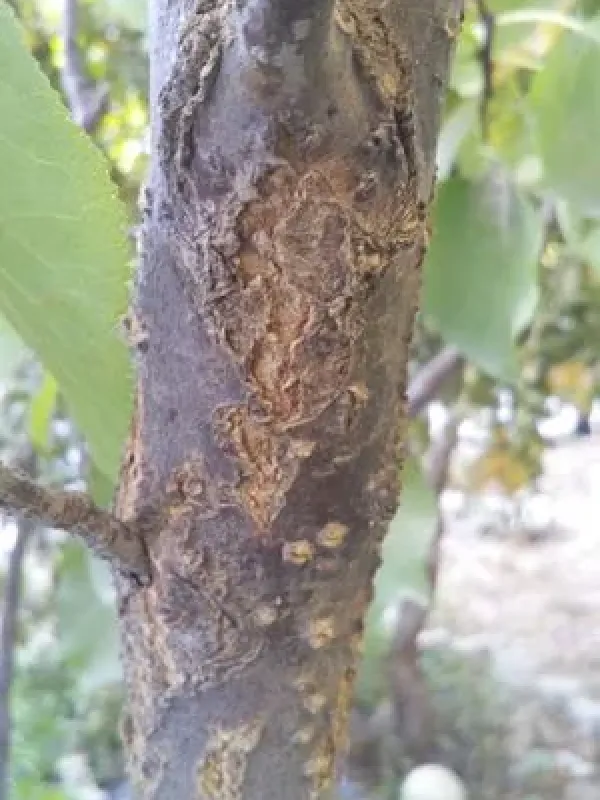
Early symptoms include the appearance of depressed, discolored areas on the bark of the trunk or main scaffold branches, which later turn reddish-brown.
As the disease progresses, the infected bark becomes dry, brittle, and eventually cracks. The surface becomes studded with small, erupted fruiting bodies characteristic of the fungus.
The necrosis often encircles the branch or trunk. Once girdled, the plant parts above the infection site begin to wilt, turn yellow, and ultimately die.
When the bark is peeled back in an infected area, the underlying wood often shows distinct browning and tissue death, sometimes accompanied by a sour or putrid odor.
In advanced cases, the tree exhibits a general decline in vigor, sparse foliage, and progressive dieback of entire branches, eventually leading to tree death.
Pathogen
The causative agent of the disease is the ascomycete fungus Valsa ceratosperma (anamorph Cytospora ceratosperma). It primarily targets the bark and cambium layers of fruit trees.
This pathogen acts as a wound parasite. It colonizes host tissue primarily through natural cracks, winter injury, sunscald, or improper pruning cuts where the wood is exposed.
Inside the infected bark, the fungus produces clusters of stroma. These appear as small, pimple-like fruiting bodies that emerge through the lenticels of the bark.
The disease spreads predominantly via conidia, which are disseminated by splashing rain, irrigation water, wind, and various insects that visit the open cankers.
The fungus is highly persistent and can survive within the dead bark and wood, serving as a continuous source of inoculum for surrounding healthy trees.
Conditions for development
Valsa canker is most prevalent in trees weakened by environmental stress factors such as prolonged drought, waterlogging, or severe winter frost damage.
High humidity and mild to moderate temperatures create optimal conditions for spore germination and the colonization of new host tissues by the fungal hyphae.
Open wounds are the primary entry points. Improper pruning techniques, such as leaving large stubs, significantly increase the tree's vulnerability to infection.
The disease frequently develops during the dormant season and early spring, when trees are less active and the bark is more susceptible to environmental insults.
Poor orchard sanitation and overcrowding contribute to higher disease pressure, as these conditions favor the buildup and rapid movement of fungal spores.
Why it matters
Valsa canker is a destructive disease that can cause significant economic losses in commercial apple and pear orchards due to the reduction of productive tree lifespan.
The pathogen severely affects common species such as Malus domestica and Pyrus communis, often leading to total scaffold branch loss.
The disease hinders nutrient and water transport by destroying the vascular tissues within the bark, resulting in stunted growth and a rapid decline in fruit quality.
Once a trunk becomes infected, the tree usually cannot be saved and must be removed to prevent the spread of the disease to adjacent healthy trees.
The inability to easily eradicate the fungus once it is established inside the wood makes it a major concern for fruit growers worldwide.
Protection
Maintaining high horticultural standards is the most effective way to manage Valsa canker. A vigorous tree can better isolate and heal small infections.
Sanitation is critical; all infected branches should be pruned back to healthy wood and immediately destroyed by burning to reduce the inoculum level in the orchard.
All pruning cuts and physical injuries must be treated with appropriate fungicides and sealed with wound dressings or specialized paints to prevent fungal entry.
Routine applications of copper-based fungicides during the dormant season help protect the bark and suppress the growth of spores on the tree surface.
Protecting the trunks from sunscald by using whitewash or white latex paint is essential, as sun-damaged bark is highly susceptible to Valsa infection.
Pathogens and affected parts
Affects crops · 2
Discussion
No discussions yet — be the first.