
Description
Symptoms
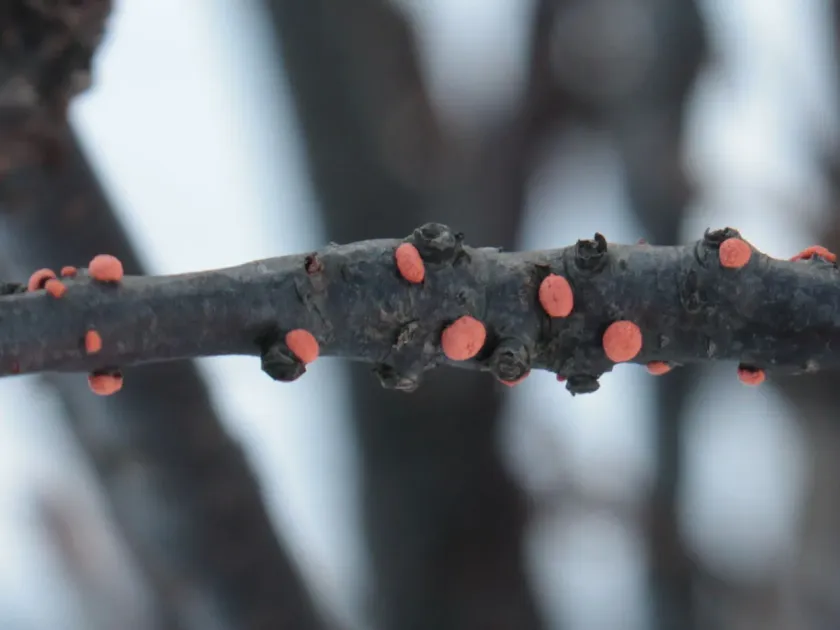
The most recognizable sign is the emergence of small, reddish-orange or pink pustules on the bark of twigs, branches, or main stems. These are the fruiting bodies of the fungus and indicate an active infection.
Infected bark areas become discolored, sunken, and necrotic. Over time, these areas develop into cankers that can completely girdle a branch, cutting off all water and nutrient transport.
Leaves above the affected area often wilt, yellow, and drop prematurely. As the disease progresses, large portions of the canopy may die back, giving the tree a ragged, unhealthy appearance.
If the bark is removed from an infected area, the underlying wood often shows dark staining and necrosis. This internal discoloration confirms that the pathogen has successfully established itself.
Winter damage is also common, as trees weakened by the pathogen are less capable of surviving cold stress. Bark shriveling on young shoots is a frequent indicator of the disease's presence.
Pathogen
The disease is caused by the fungus Tubercularia ulmea, an anamorphic stage of Pseudosphaeria ulmi. It acts as a parasitic pathogen that primarily invades the bark and vascular tissues of woody plants.
The pathogen typically enters the host through physical wounds, frost cracks, or improper pruning cuts. Once inside, it colonizes the inner bark and cambium, disrupting nutrient flow.
The fungus produces conidial spores in small, dense, orange-red or pink fungal fruiting bodies. These spores serve as the primary source for the rapid spread of the infection during the growing season.
The mycelium of the fungus can remain viable in dead or dormant tissues for extended periods. This persistence allows it to survive in unfavorable conditions and infect new areas as soon as the plant is stressed.
While primarily associated with elms, the pathogen is also known to attack sweetgum (Liquidambar) trees, making it a concern for diverse landscape plantings and nursery operations.
Conditions for development
Temperature fluctuations, particularly in early spring, are a major trigger for the disease. Frost cracks caused by rapid cooling are ideal entry points for the fungal spores to colonize the tree.
High humidity and consistent rainfall facilitate the spread of spores from infected bark to healthy tissue. Rain splashes effectively transport the pathogen, especially in dense tree stands.
Trees suffering from environmental stress—such as drought, poor soil, or improper site conditions—are significantly more susceptible. Their weakened immune response makes them easy targets for colonization.
Overcrowding in nurseries or landscapes prevents adequate air circulation, creating a humid microclimate that favors fungal growth. Good ventilation is essential for disease prevention.
Poor maintenance practices, such as pruning with non-sterilized tools or leaving large, irregular stubs during branch removal, allow the fungus to enter and thrive in vulnerable spots.
Why it matters
The disease is particularly destructive to young saplings in nurseries, often leading to total loss of the stock. It can rapidly stunt development and ruin the aesthetic value of the trees.
For mature trees, the persistent limb dieback compromises the tree's health and structural integrity. Damaged branches become brittle and represent a safety hazard in public or residential areas.
The weakening of the tree's vascular system invites secondary infestations by wood-boring insects. This combination of fungal infection and insect damage frequently kills the tree within a few years.
Economic losses include not only the loss of specimen trees but also the significant cost of frequent sanitation pruning and tree removal. Management in parks can be labor-intensive and costly.
The reduction in tree vigor impacts the overall ecological health of urban forests. Since elms and sweetgums are key landscape species, their decline negatively affects urban greenery goals.
Protection
The primary control measure is rigorous sanitation. Pruning out infected branches is essential, ensuring that cuts are made well into healthy, non-discolored wood to remove all hidden mycelium.
Disinfecting pruning tools between every single cut is crucial. A simple alcohol wipe or a copper-based disinfectant solution prevents the mechanical transfer of spores to healthy branches.
Prophylactic applications of copper-based fungicides in early spring can help suppress spore germination. This proactive approach is especially important for trees in high-risk environments.
Maintaining optimal tree vigor is the best defense. This includes proper watering, fertilization, and protecting trunks from sunscald or frost damage to minimize potential entry wounds.
Monitoring the health of plantings regularly allows for the early detection of the disease. Isolating or removing infected trees early can prevent the spread of the pathogen to the rest of the collection.
Pathogens and affected parts
Affects crops · 2
Discussion
No discussions yet — be the first.