
Description
Symptoms
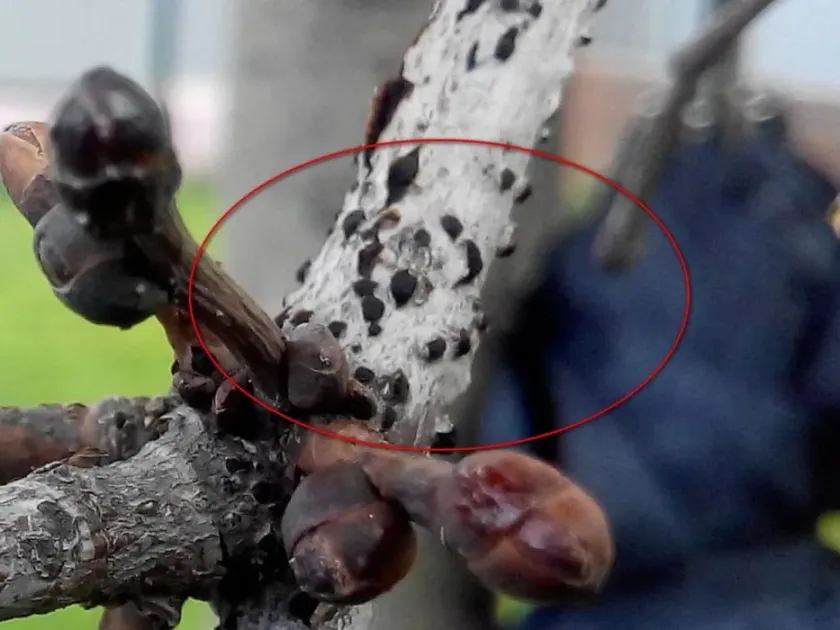
The primary symptom of infection is the appearance of characteristic spots or necrotic lesions on the bark of branches and trunks. Over time, the bark in these areas cracks, becomes sunken, and dies.
On the surface of the dead bark, numerous fungal spore cushions are clearly visible. They appear as small, compact bumps or dark spots that may coalesce into a dense layer.
As the disease progresses, individual branches begin to dry out, eventually leading to the death of the entire tree. Affected areas often contrast sharply in color with healthy bark.
Premature yellowing and leaf drop on infected branches are also characteristic signs. This occurs because the fungus blocks the tree's vascular tissues.
The tree takes on a sickly appearance, with a sparse canopy, and the tips of the shoots frequently become deformed or die back completely.
Pathogen
The causative agent of this disease is the imperfect fungus Stigmina compacta (synonym Thyrostroma compactum). This pathogen specifically affects the tissues of woody species, primarily those in the genus Ulmus.
The fungus is classified among the mycoses that colonize the bark and cambium of young branches and trunks. The life cycle of the pathogen involves the production of spores within the host tissue, which are dispersed by wind or splashing rain.
The fungal mycelium develops actively within the tree tissues, gradually occupying intercellular spaces and destroying living cells. This disrupts the tree's internal transport system and prevents nutrients from reaching affected areas.
The pathogen overwinters as mycelium in the infected bark and deadwood. In spring, when temperatures become favorable, it resumes spore production.
Thyrostroma canker is a host-specific disease, posing a significant threat to forest belts, urban parks, and landscape plantations of elms.
Conditions for development
Thyrostroma canker development is favored by high humidity and moderately warm weather. Frequent rainfall and prolonged fog provide ideal conditions for spore germination.
Weakened trees, suffering from stress due to unfavorable environmental factors, drought, or mechanical damage, become infected much more rapidly.
Infection spreads most intensely during the spring and summer. Spores are easily carried from infected to healthy trees by wind, insects, and gardening tools.
Densely planted elm groves, where air circulation is restricted, create a local microclimate with increased humidity that promotes disease outbreaks.
Poor horticultural practices, including a lack of sanitary pruning and failure to remove diseased wood, contribute to a higher pathogen load in the area.
Why it matters
Thyrostroma canker is a highly destructive disease capable of leading to total tree death. Damage to the trunk destroys the cambium layer, making further growth impossible.
The disease reduces the ornamental value of urban and park elms, rendering them unsuitable for landscaping. In the end, these trees must be removed.
Mass infections can lead to the loss of valuable forest stands and a disruption of the local ecological balance.
The fungus weakens the tree, making it highly susceptible to secondary pests such as bark beetles, which accelerates the decline and death of the elm.
The economic impact includes the high cost of tree removal, efforts to contain the spread of the infection, and the loss of the urban green canopy.
Protection
The basis of control is the sanitary pruning of all infected branches. All removed wood must be burned immediately to prevent the spread of fungal spores.
When performing tree maintenance, it is essential to disinfect tools to avoid transferring the pathogen to healthy plants. Alcohol solutions or chlorine-based disinfectants are recommended.
Preventive fungicide sprays at the beginning of the growing season are recommended. Copper-based products are effective in suppressing fungal spore development.
Maintaining high standards of arboricultural care, including proper watering, fertilization, and protecting the bark from mechanical injury, is a critical preventive measure.
- Regular inspections of elm stands to detect the first signs of disease.
- Timely removal and disposal of dead or dying elm trees.
- Boosting tree immunity using growth stimulants to aid recovery.
Pathogens and affected parts
Affects crops · 1
Discussion
No discussions yet — be the first.