
Golden brittlegill
Russula risigallina
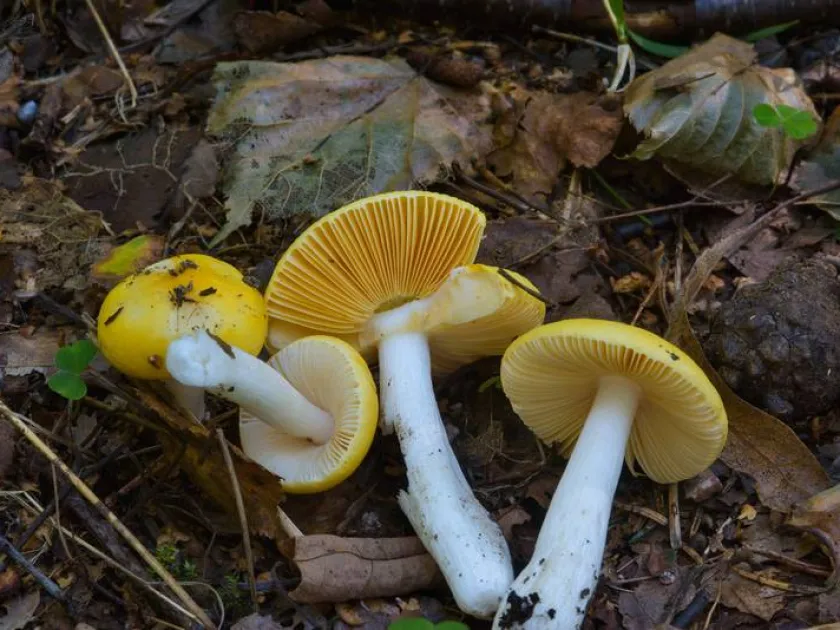
Description
Symptoms
The mushroom features a distinctive golden-yellow to apricot-colored cap, ranging from 3 to 7 cm in width.
The gills are typically yellowish and brittle, a key diagnostic feature for the Russula genus.
Its stem is white and firm, often showing a smooth texture and remaining uniform in color even when handled.
The flesh is known for having a mild flavor and a subtle fruity scent, differentiating it from more pungent varieties.
Spore prints are generally deep yellow, which helps in professional mycological classification.
Pathogen
The Golden brittlegill (Russula risigallina) is not a plant pathogen or a cause of crop diseases.
It is a mycorrhizal fungus that exists in a symbiotic relationship with trees rather than parasitizing them.
Agronomically, this fungus plays a positive role in soil health and nutrient cycling within forest environments.
It does not pose a threat to agricultural productivity and should not be classified as a disease agent.
The organism supports plant development by assisting in the uptake of water and minerals through its extensive mycelial network.
Conditions for development
This species is commonly found in deciduous and coniferous forests where mycorrhizal partners are available.
It thrives in moist environments and requires high soil organic content for the mycelium to establish itself effectively.
Growth is seasonal, peaking during periods of high humidity and moderate temperatures in summer and early autumn.
The fungus is sensitive to soil acidity and pollution, making it a reliable bioindicator for forest health.
Mycelial development relies on long-term ecological stability, as the fungus does not colonize disturbed agricultural soils.
Discussion
No discussions yet — be the first.