
Poplar stem canker
Plagiostoma populinum
Description
Symptoms
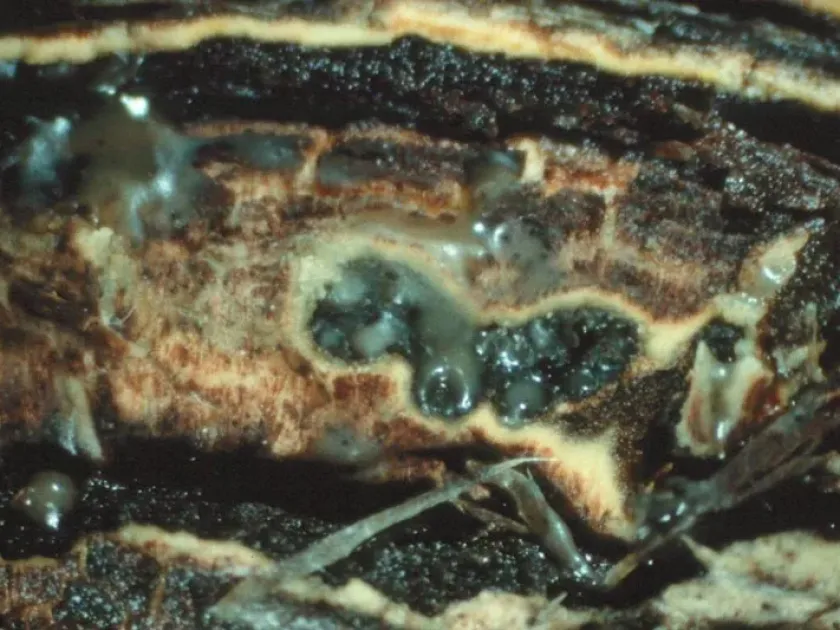
The primary symptom of poplar stem canker is the appearance of distinct discolored areas on the bark. These lesions usually become sunken as the underlying tissue dies.
Over time, the necrotic bark may crack, revealing the wood beneath. These open cankers or deep fissures are focal points for secondary fungal and insect infestations.
Small, dark, pimple-like structures, which are the perithecia of the fungus, can often be observed on the surface of the dead bark during the spring months.
In advanced stages of infection, the tree exhibits crown dieback. Leaves may turn yellow prematurely, and the overall growth rate of the tree declines significantly.
- Sunken necrotic lesions on the stem
- Bark cracking and deep canker formation
- Presence of black fruiting bodies on bark
- Crown dieback and reduced vitality
- Premature yellowing of foliage
Pathogen
The causative agent of this disease is the ascomycete fungus Plagiostoma populinum. It is a specialized pathogen that primarily targets species of the Populus genus, including hybrid poplars and aspen.
The life cycle of the pathogen involves the production of perithecia, which are small black fruiting bodies that develop on the bark of infected branches and trunks. These structures release spores during wet conditions.
Once released, the spores are dispersed by rain and wind. Upon landing on susceptible hosts, particularly through bark fissures, the spores germinate and initiate the infection process.
The fungus colonizes the inner bark and cambium layers. The mycelium grows horizontally and vertically, causing cell necrosis and interrupting the transport of nutrients in the tree.
The pathogen is capable of surviving in dead bark and fallen plant debris for several years. This persistence makes it a recurring problem in nurseries and established plantations.
Conditions for development
High moisture levels are the most critical factor for the development of the disease. Prolonged rainy weather provides the necessary conditions for spore germination and movement.
Dense plantations with limited airflow are at a much higher risk of infection. Poor ventilation creates a persistent humid microclimate around the trunks, facilitating colonization.
Trees that are already stressed by environmental factors, such as drought, poor soil quality, or air pollution, are significantly more susceptible to Plagiostoma populinum.
Temperatures ranging from 18°C to 25°C are optimal for fungal growth. While the pathogen is most active during the growing season, infections can remain latent for extended periods.
Mechanical damage to the bark, caused by maintenance equipment or environmental events like hail, serves as an easy entry point for the fungus to establish its infection.
Why it matters
Poplar stem canker causes significant degradation of wood quality, rendering logs unsuitable for commercial timber purposes. This leads to major financial losses in forest industries.
The disease weakens the structural integrity of the tree, making it prone to windthrow or stem breakage, which creates hazards in public areas and managed forests.
Increased susceptibility to secondary pests like wood-boring insects often accelerates the death of the tree. The fungus works in synergy with these pests to kill the host.
In urban landscapes, the aesthetic value of poplars is lost as cankers deform the trees. The replacement of dead trees entails significant labor and maintenance costs.
Without proper management, the disease can spread rapidly throughout a stand, creating large areas of dead and dying timber that serve as sources of inoculum for years.
Protection
The most effective management strategy is rigorous sanitation. All infected branches and severely diseased trees should be removed and destroyed to reduce the inoculum load.
Proper site selection and spacing during planting are essential. Ensuring adequate distance between trees allows for better light penetration and airflow, reducing humidity.
When selecting planting material, it is advisable to choose clones or cultivars that have documented resistance to stem-inhabiting fungal pathogens.
Preventative fungicide applications may be utilized in forest nurseries to protect young saplings during the most vulnerable early stages of their growth.
Maintaining high tree health through adequate irrigation and minimizing bark damage helps the trees build their natural defenses against fungal invasions.
Discussion
No discussions yet — be the first.