

Description
Symptoms
The initial symptom is often sudden wilting of the foliage during the warmest parts of the day, with partial recovery occurring during the cooler night hours.
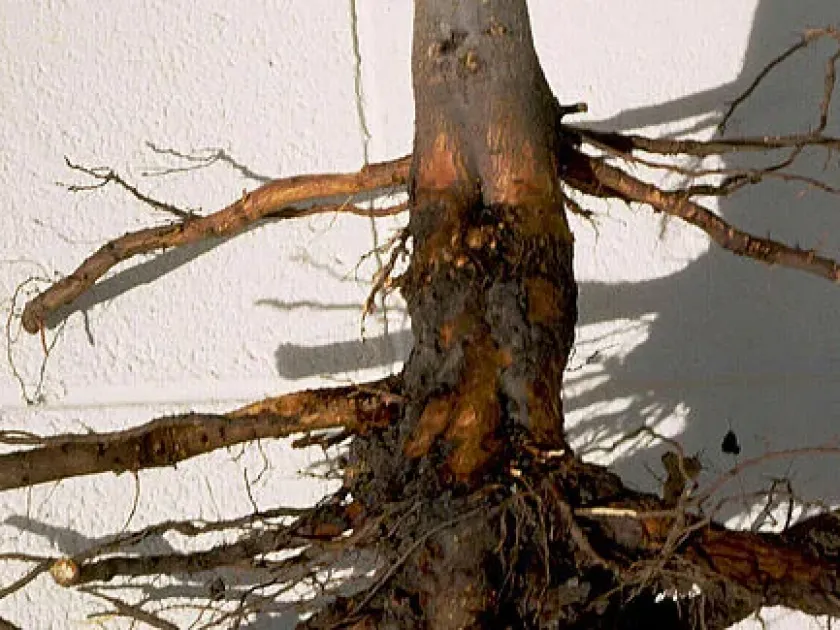
Root system inspection reveals discoloration ranging from light brown to black. In advanced stages, the roots appear mushy, soft, and necrotic due to tissue degradation.
Stem lesions often appear near the soil line, manifesting as dark, water-soaked patches that can expand around the circumference of the stem, effectively girdling it.
In lettuce, the disease manifests as root decay, leading to stunting of the plant and the collapse of the leaf rosette, often with brown lesions on the lower stem.
Under humid conditions, secondary fungi and bacteria may colonize the decaying tissues, masking the initial symptoms caused by the Phytophthora pathogen.
Pathogen
Phytophthora species are oomycetes, often referred to as water molds, which are highly destructive plant pathogens capable of causing severe root and stem rots.
These organisms are known for producing zoospores, which are mobile spores that navigate through water films in the soil to locate and infect host plant tissues.
The pathogen attacks the root system, destroying the vascular tissues and preventing the uptake of water and nutrients, which eventually leads to the wilting and death of the plant.
Phytophthora survives in the soil through thick-walled structures called oospores, which can remain dormant for years, enduring harsh weather and environmental changes.
Many vegetable crops, including lettuce (Lactuca sativa), are highly susceptible to these pathogens, making it a major concern for both commercial farms and home gardens.
Conditions for development
Soil moisture is the primary driver of disease development. Saturated soil or poor drainage provides the necessary environment for zoospores to swim and infect new hosts.
Temperatures between 15°C and 25°C are generally ideal for the growth and reproduction of most Phytophthora species, matching the peak growing season for many vegetables.
Compacted soil with low oxygen levels stresses the plants, making them more susceptible to infection and inhibiting the natural defense mechanisms of the roots.
Irrigation water contaminated with zoospores from rivers, ponds, or recycled runoff is a common way the disease is introduced into healthy field areas.
Frequent cropping of susceptible host plants in the same soil without adequate rotation leads to a rapid buildup of the pathogen population.
Why it matters
The economic impact of Phytophthora rot is significant, as it can cause total crop failure in susceptible fields within a very short period of time.
Infected plants show stunted growth and reduced quality, rendering them unmarketable, which leads to major financial losses for farmers.
The disease reduces the storage life of crops, as rotting can progress rapidly after harvest if the produce was contaminated in the field.
Managing the disease is challenging because once the pathogen is established in the soil, it is extremely difficult to eradicate completely.
Prevention is vital because systemic damage to the vascular system of the plant means that recovery is rarely possible once symptoms are visible.
Protection
Crop rotation is the most effective cultural practice; avoid planting susceptible species in infested soil for at least three to four years.
Improving soil drainage through raised beds or tile drainage systems helps prevent water saturation, which is essential for minimizing Phytophthora activity.
Using certified, pathogen-free seeds and transplants is the first step in ensuring a healthy start for any vegetable crop production.
Chemical control involving fungicides can provide protection; however, these must be applied proactively or at the very first signs of infection.
- Sanitize tools and equipment regularly
- Remove and destroy infected plant debris
- Use resistant or tolerant cultivars
- Ensure irrigation water is clean or treated
In brief
1
Affects crops
Biology
Pathogens and affected parts
Affected plant parts
rootstem
Content graph
Affects crops · 1
Content graph
Connections · Phytophthora root and stem rot
Most often together:
Marketplace
Products · 1
Community
Discussion
No discussions yet — be the first.