
Description
Symptoms
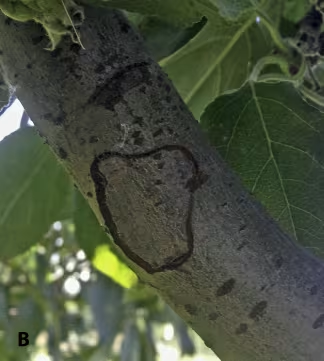
The primary symptom of the disease is the development of sunken lesions on the bark, which eventually become deep, necrotic cankers with concentric patterns.
As the infection progresses, the tree often attempts to heal, causing the formation of callus tissue around the margins of the cankers, resulting in a multilayered, swollen appearance.
During humid conditions, small, cream-colored fruiting bodies emerge from the surface of the cankers, signaling the active production of fungal spores.
The fungus also severely affects fruits, manifesting as circular brown spots with a lighter center, commonly known as bull's eye rot, which leads to fruit decay.
In severe cases, the disease leads to the dieback of entire branches and can eventually cause the death of the main trunk if the infection is not treated.
Pathogen
The causal agent is the ascomycete fungus Neofabraea perennans, a persistent pathogen that thrives as a parasite on woody tissues of pome fruits.
This fungus maintains its presence in perennial cankers throughout the year, ensuring that the tree remains a constant reservoir for further infection.
The pathogen spreads through the dispersion of conidia, which are easily transported by water splashes, rainfall, wind, and contaminated pruning tools.
It acts as an opportunistic parasite, infiltrating host tissues through natural openings, mechanical damage, or unhealed wounds caused by pruning or frost.
Host range is primarily limited to Malus domestica (apple) and Pyrus communis (pear), where it causes both bark lesions and storage fruit rot.
Conditions for development
The development of the fungus is highly dependent on environmental factors, particularly cool, wet weather conditions throughout the growing season.
Orchards with high density and poor air circulation create microclimates that retain moisture, significantly increasing the probability of fungal colonization.
Trees that have been weakened by environmental stress, nutritional deficiencies, or pest attacks show a higher susceptibility to rapid colonization by the pathogen.
Frequent rainfall episodes are critical for the splash dispersal of spores, which contributes to the rapid spread of the disease within the orchard environment.
Lack of sanitation, such as failing to remove infected wood or properly dispose of debris, fosters a buildup of inoculum that threatens the entire crop.
Why it matters
The disease causes significant economic loss by reducing the tree's overall vigor and fruit production capacity due to branch dieback.
Fruit decay, especially post-harvest, can result in high cull rates, making the harvest unsuitable for long-term storage or fresh market distribution.
Chronic infection weakens the structural integrity of trees, potentially leading to long-term damage that requires premature removal and replacement of orchards.
The presence of the fungus necessitates recurring expenditure on fungicides, thereby increasing the overall cost of production for the orchardist.
If left unmanaged, the cumulative effect of the disease can cause systemic decline, leading to a significant decrease in the lifespan of the fruit trees.
Protection
Effective management begins with rigorous sanitary practices, including the systematic pruning and burning of all visible cankered branches to remove inoculum.
Wound management is essential: all cuts should be protected with fungicides or wound sealants, and tools must be disinfected between trees to prevent cross-contamination.
Protective spraying schedules using copper-based or systemic fungicides during the dormant and early growth periods are necessary to prevent new infections.
Maintaining optimal orchard health through balanced fertilization and appropriate pest control helps the trees develop the resilience needed to combat infections.
- Selection of tolerant or resistant cultivars if available.
- Ensuring adequate tree spacing to allow for good drying conditions.
- Regular orchard monitoring for early detection of necrotic symptoms.
Pathogens and affected parts
Affects crops · 2
Discussion
No discussions yet — be the first.